 Hable con un agente al (888) 572-7520
  Enviar mensaje a un agente

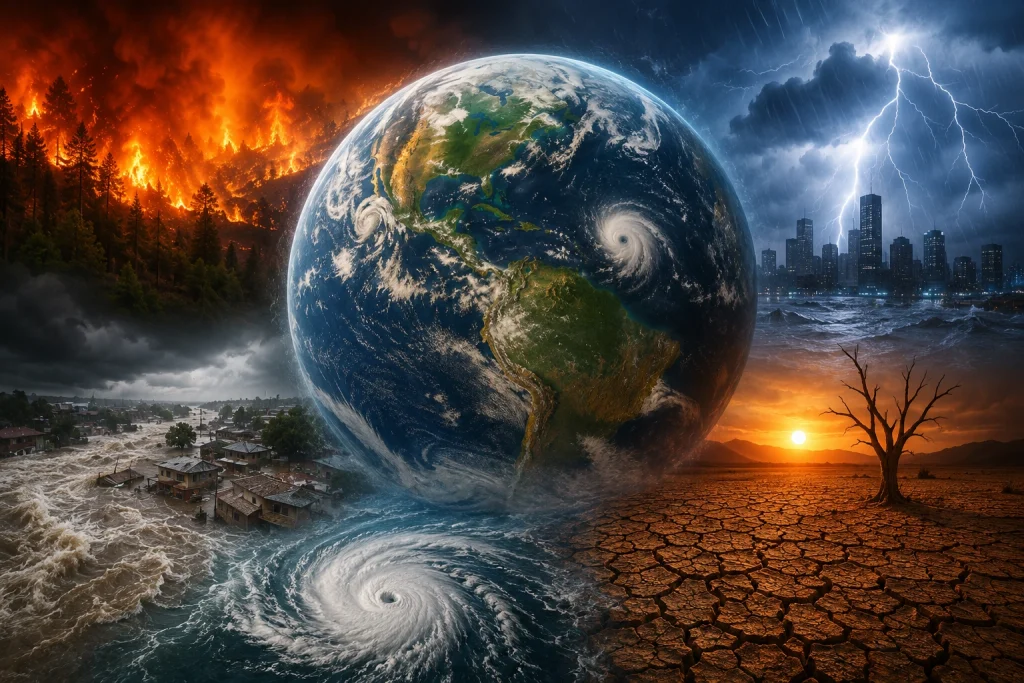

From record-breaking heatwaves and massive wildfires to catastrophic floods and historic snowfall, Earth is experiencing one of its most extreme weeks of the year.
This week, nearly every continent has been affected by an extraordinary concentration of severe weather events. Europe is battling record-breaking temperatures and destructive wildfires, Asia is struggling with devastating monsoon floods, North America continues to fight extreme heat and large-scale fires, South America is enduring powerful winter storms, and Oceania is facing intense cold waves and historic snowfall.
While each event is different, they all share one striking characteristic: they are happening simultaneously across much of the world.
Across the Northern Hemisphere, summer heat has fueled exceptional wildfire activity in France, Spain, Portugal, Canada, and the western United States. Thousands of residents have been forced to evacuate, major highways have been closed, and critical infrastructure and freight operations have been severely disrupted.
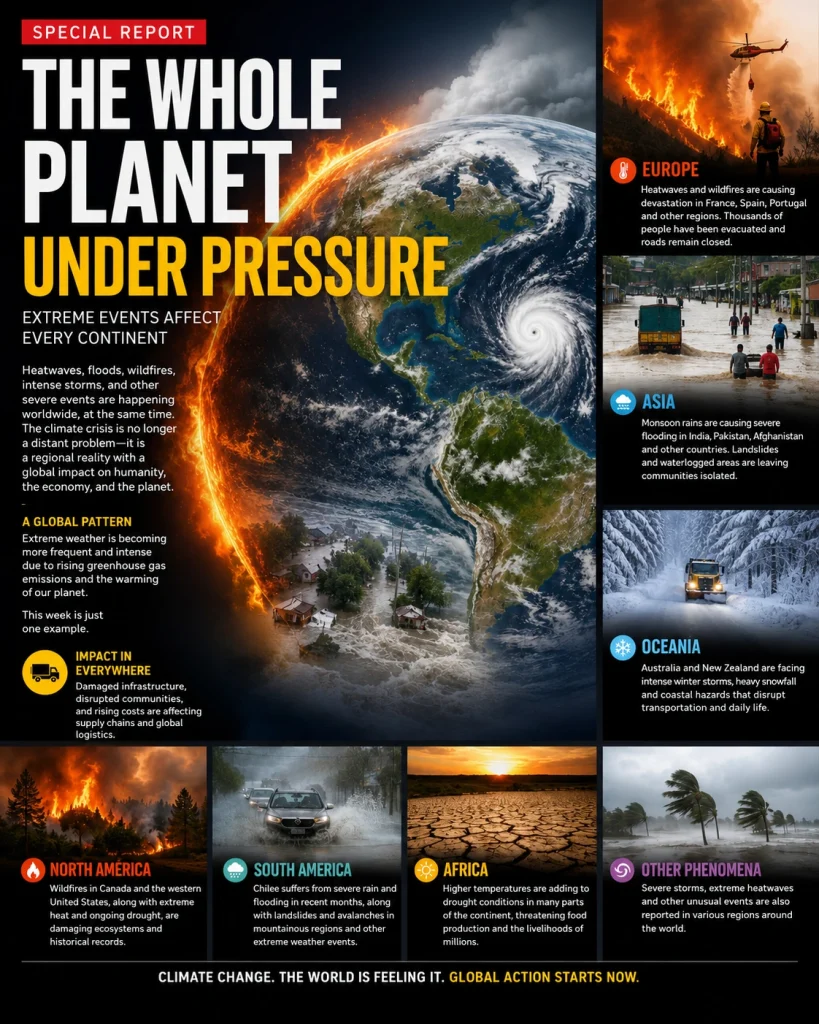
At the same time, the Asian monsoon is bringing torrential rainfall and widespread flooding to India, Pakistan, Afghanistan, and neighboring countries. Overflowing rivers, landslides, and damaged roads and bridges are disrupting transportation networks and limiting the movement of both people and cargo.
The Southern Hemisphere Faces Snow, Storms, and Extreme Cold
Extreme weather is also impacting the Southern Hemisphere. Chile is experiencing one of its most severe winter storms in years, with widespread flooding, mudslides, and thousands of people affected. Argentina has recorded significant temperature anomalies alongside exceptional snowfall across the Andes, while Australia and New Zealand are dealing with powerful cold waves, snowstorms, and harsh winter conditions.
The contrast is remarkable. While one half of the planet is battling scorching temperatures, drought, and wildfires, the other is confronting heavy rainfall, flooding, snow, and freezing temperatures.
For the transportation and logistics industry, the simultaneous occurrence of these events presents an unprecedented challenge. Extreme heat increases the risk of mechanical failures, tire blowouts, and pavement deterioration. Wildfires force highway closures, floods damage critical infrastructure, and heavy snowfall disrupts key freight corridors and international border crossings.
Climate experts have warned for years that extreme weather events are becoming more frequent, more intense, and more widespread. The events unfolding this week appear to reinforce that warning. Nearly every region of the world is experiencing severe weather at the same time, creating significant impacts on public safety, economic activity, and global supply chains.
In today’s interconnected economy, where logistics link continents in real time, a wildfire in Europe, flooding in Asia, or a snowstorm in South America can quickly generate consequences far beyond national borders.
Extreme weather is no longer a regional concern.
It has become a global challenge that affects economies, transportation networks, businesses, and communities around the world.
 Business hours: Monday to Friday from 8:00 AM to 5:00 PM. California time