 Hable con un agente al (888) 572-7520
  Enviar mensaje a un agente

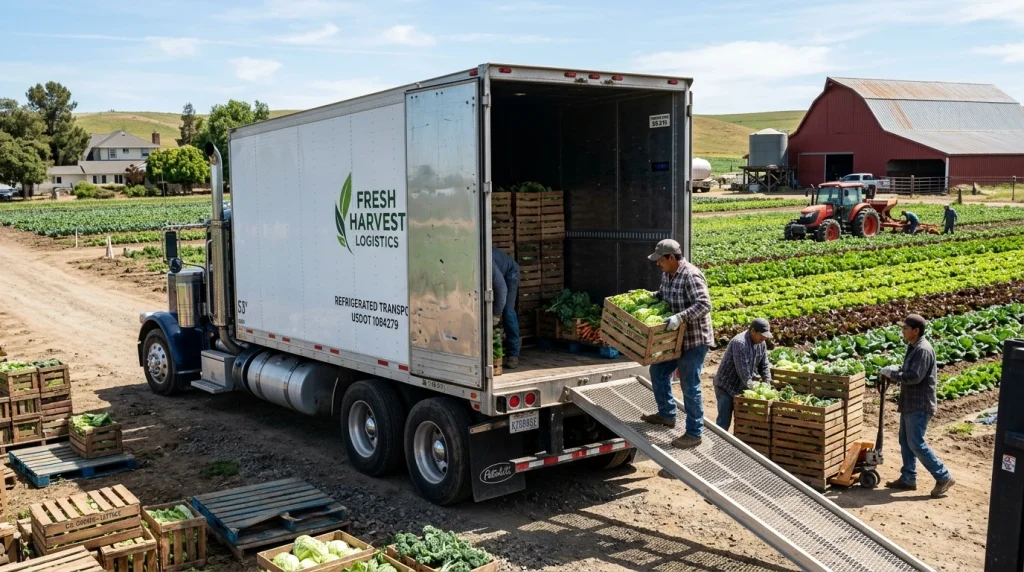

A cyclosporiasis outbreak linked to recalled iceberg lettuce has now spread across 20 states, with more than 11,000 confirmed cases.
The health alert also has implications for the logistics chain. When a widely distributed food product becomes subject to a recall, carriers, distribution centers, and logistics operators may need to locate shipments, identify affected lots, and trace the product through the supply chain.
The U.S. Food and Drug Administration (FDA) reported that government scientists identified cases in three additional states — Georgia, Tennessee, and Texas — bringing the number of people affected by Cyclospora to 11,458.
The investigation by the FDA, the Centers for Disease Control and Prevention (CDC) and state health authorities has focused on lettuce grown at a farm in central Mexico operated by Taylor Farms, a major supplier of fresh produce in the United States.
U.S. authorities continue inspections and testing in cooperation with Mexican officials. At the same time, the FDA has said it is confident that the recalled iceberg lettuce specifically associated with this outbreak is no longer available for sale.
For the transportation industry, however, an incident like this raises an important question: What happens when a product that has already traveled hundreds or thousands of miles through the supply chain becomes subject to a recall?
From the Farm to the Store: A Supply Chain That Depends on Trucking
Fresh produce such as lettuce has one characteristic that separates it from many other types of freight: time matters.
From the moment produce leaves growing regions until it reaches distribution centers, restaurants, or supermarkets, it depends on a coordinated operation involving growers, shippers, carriers, brokers, warehouses, and distributors.
Reefer trucking plays a critical role in that system.
A shipment can leave an agricultural facility, move through several logistics points, cross the U.S.-Mexico border, enter a distribution center, and later be divided into multiple shipments headed to different cities and states.
That is why a food safety alert involves much more than simply removing a product from a grocery store shelf.
The entire journey may need to be reconstructed.
Which lot left the facility? Which trailer transported it? When was it loaded? Which warehouse received it? Where was it unloaded? Is the product still being stored somewhere? Is part of the shipment still in transit?
That is where freight traceability becomes critical.
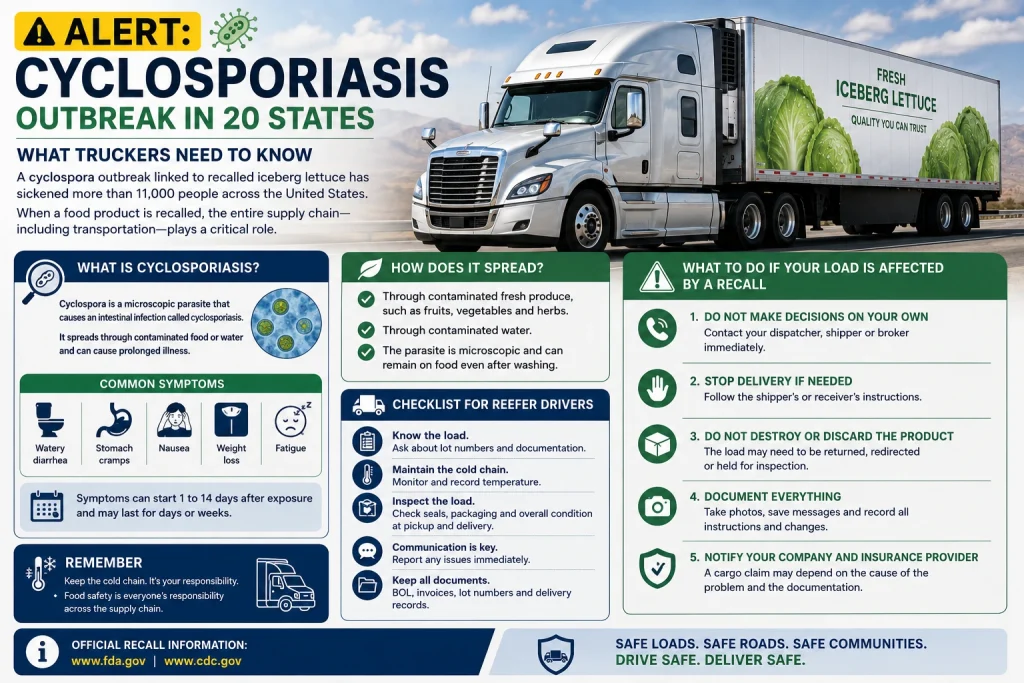
What Happens When a Recall Reaches a Load in Transit?
For a trucker, learning that the product being hauled may be included in a recall can completely change a routine delivery.
A load that left the shipper under normal conditions may suddenly be placed on hold while the carrier waits for instructions. The receiver may reject it. The product may need to be segregated from other freight or redirected to another location.
In these situations, drivers should not make independent decisions about what happens to the freight.
The priority should be contacting the dispatcher or carrier and following instructions from the shipper, broker, receiver, or other party responsible for the load. Depending on the circumstances, the insurance provider or claims department may also need to become involved.
Documentation can become especially important.
The Bill of Lading (BOL), lot numbers when available, origin and destination information, pickup and delivery times, temperature records, and communications involving changes to the delivery may all become important if the load is rejected or a claim follows.
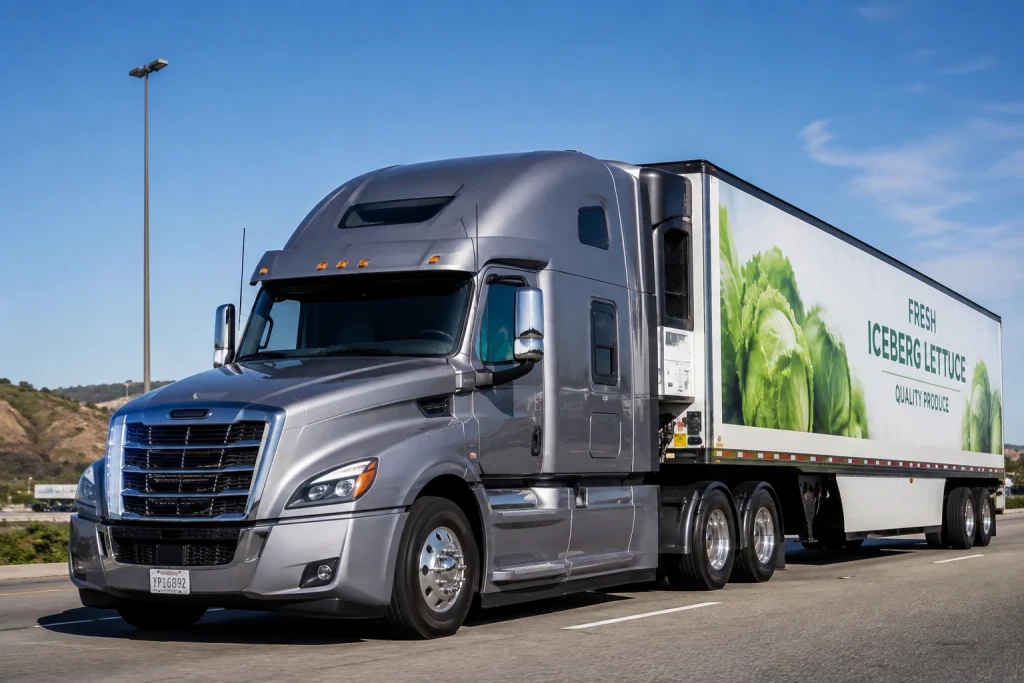
Reefer Truckers: Temperature Doesn’t Eliminate Every Risk
The outbreak also highlights an important distinction.
Maintaining the cold chain is essential for protecting many perishable foods, but a refrigerated trailer does not automatically make a product safe if contamination occurred before or elsewhere in the supply chain.
Cyclospora is a microscopic parasite that infects the intestines and can cause cyclosporiasis. According to the CDC, one of the most common symptoms is watery diarrhea, and cases are typically more common during late spring and summer.
That means a driver should not assume that recalled food remains safe simply because the reefer maintained the required temperature throughout the trip.
The driver’s operational responsibility is to protect the shipment according to the instructions received, maintain accurate records, and immediately report any irregularities.
Texas, Georgia, and Tennessee Join the List
The addition of Texas, Georgia, and Tennessee to the states reporting cases also brings the outbreak closer to some of the country’s most important freight corridors.
Texas is particularly significant for surface trade between Mexico and the United States. Large volumes of agricultural products and fresh foods cross the border before continuing to distribution centers throughout the country.
This does not mean trucks or border crossings are responsible for the outbreak. Authorities have focused their investigation on the product and its origin, not on the trucking industry.
However, the geographic reach of the outbreak demonstrates how quickly a product can move through a national logistics network.
Once fresh produce enters the distribution system, it can travel thousands of miles and reach multiple markets in a relatively short period.
A Recall Can Also Become a Cargo Issue
For carriers and owner-operators, there is also a financial dimension.
A rejected food shipment can represent thousands of dollars in losses and immediately raise questions about responsibility.
Was the product contaminated before it entered the trailer? Did something happen during transportation? Was the required temperature maintained? Did the receiver reject the entire load or only specific lots? Is there an official recall notice?
The answers can significantly change how responsibility is determined.
They can also affect how cargo insurance responds. Contamination, recalls, spoilage, and rejected food shipments are not necessarily covered in the same way, and coverage depends on the specific policy and the circumstances that caused the loss.
That is why carriers should document the shipment carefully and contact their insurance broker or carrier promptly when a potential loss occurs rather than assuming that every rejected shipment will automatically be covered.
Nearly 29,000 Cyclospora Cases in 2026
The outbreak comes during a particularly significant year for Cyclospora infections in the United States.
The CDC reported nearly 29,000 confirmed or suspected Cyclospora cases nationwide in 2026, along with 922 hospitalizations.
That figure is substantially higher than totals reported in previous years. In 2019, for example, approximately 4,700 cases were reported nationwide.
For the trucking industry, the public health side of the outbreak remains the responsibility of health and food safety authorities. But every major recall is also a reminder of how important transportation is within an increasingly complex supply chain.
Truckers connect farms, processing facilities, warehouses, distribution centers, restaurants, and grocery stores.
And when something goes wrong, the records generated during those miles can help authorities and companies reconstruct the path of a shipment.
For fleets hauling fresh produce and reefer freight, the takeaway is clear: keeping accurate documentation, monitoring load conditions, and knowing what to do when a shipment is rejected or recalled can be just as important as getting the load to its destination on time.
 Business hours: Monday to Friday from 8:00 AM to 5:00 PM. California time