 Hable con un agente al (888) 572-7520
  Enviar mensaje a un agente



The trucks that earned Volvo Trucks the International Truck of the Year 2027 title represent a significant step forward from the company’s previous electric generation: longer range, increased payload capacity and shorter charging times. The winning lineup includes the FH Electric, FM Electric, FMX Electric and FH Aero Electric, with configurations designed for everything from distribution and construction to regional and long-haul transportation.
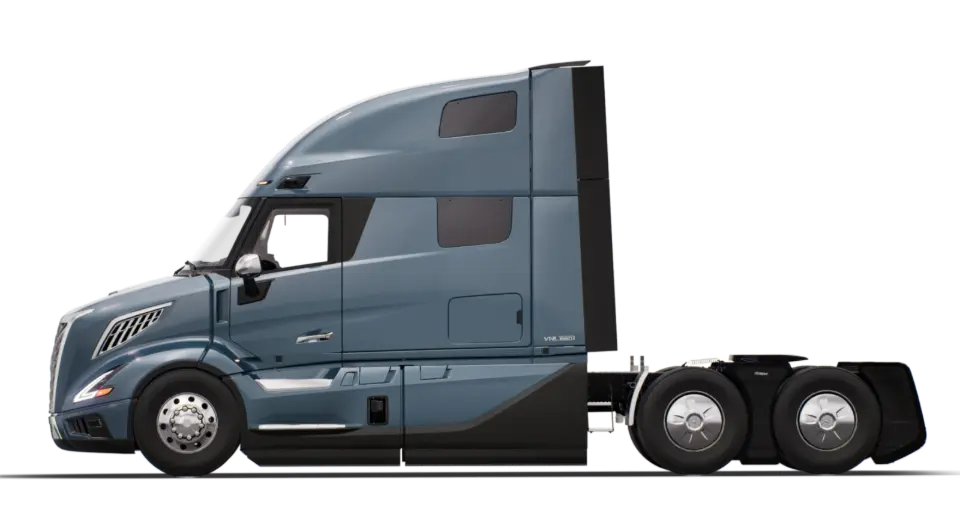
The biggest jump in range comes from the FH Aero Electric. Its extended-range version can travel up to 700 kilometers — about 435 miles — on a single charge, bringing battery-electric heavy-duty trucks closer to routes that, until recently, were largely the territory of diesel-powered equipment.
How far an electric Class 8 truck can travel is one of the factors that determines which jobs it can realistically handle. Early electric-truck deployments were largely concentrated around urban distribution, regional routes and return-to-base operations where vehicles could recharge on a predictable schedule. A range of more than 400 miles opens the door to a much broader set of freight operations.
The International Truck of the Year jury specifically highlighted the fact that Volvo did not develop a one-size-fits-all electric truck. Different combinations of range, cabs and chassis allow the vehicles to be configured for different jobs, pushing electrification into increasingly demanding applications.
435 miles: What does that mean on the road?
The new FH Aero Electric uses an architecture that makes room for greater battery capacity without simply filling the chassis with batteries.
One of the key components is the e-axle, which integrates the electric motors and transmission into the rear axle. That frees up space along the chassis that can instead be used for additional battery capacity.
The result is a maximum range of up to 700 kilometers for the extended-range FH Aero Electric. The new FH, FM and FMX Electric Versatile models, meanwhile, can reach up to 470 kilometers, or roughly 292 miles.
Volvo has also added megawatt charging capability, technology designed to significantly reduce the amount of time heavy-duty electric trucks need to spend charging.
That brings up an important issue for any fleet manager or owner-operator: knowing how many miles an electric truck can travel is only part of the equation. How long that truck has to sit when it needs more energy matters too.
Not all of the award-winning Volvos are the same
Another important part of the story is that Volvo did not build one electric truck for one specific job.
The new family offers different combinations of cabs, chassis, batteries and configurations depending on the operation.
The FH and FH Aero are particularly suited to heavy regional and long-haul transportation. The FM can be configured for a range of distribution and transportation jobs, while the FMX is built for more demanding operations, including construction.
That flexibility was one of the factors highlighted by the International Truck of the Year jury.
Rather than looking only at how far an electric truck could travel, the judges also considered Volvo’s ability to adapt the technology to a broader range of real-world transportation jobs.
Can it really travel 435 miles?
Yes, but there is an important qualification.
The 435-mile figure is the maximum stated range, not a distance Volvo guarantees under every operating condition.
Volvo Trucks notes that actual range can vary depending on factors including the truck’s gross weight, weather conditions, wind resistance and driving behavior.
That distinction matters on U.S. roads. A fully loaded tractor climbing grades, operating in extreme temperatures or pushing through strong headwinds will not necessarily consume energy at the same rate as a lighter truck traveling in favorable conditions.
The 435-mile figure therefore provides a useful picture of what the new generation can achieve, but it should not be interpreted as a guaranteed range for every route, load or weather condition.
What about payload?
Range is not the only improvement.
Volvo says the new generation also offers increased payload capacity compared with its previous electric trucks. That matters in heavy-duty transportation because adding batteries can significantly increase tractor weight, potentially reducing the amount of freight a truck can legally carry.
The engineering challenge is therefore not simply to keep adding batteries to gain more miles. Manufacturers have to balance range, vehicle weight, freight capacity, charging time and operating cost.
That combination of improvements helps explain why the jury recognized the entire Volvo electric lineup rather than a single FH Aero Electric model.
From urban routes to long haul
This may be the most significant change behind the award.
Early electric trucks found a natural fit in operations with predictable routes: urban deliveries, regional runs, daily returns to a terminal and scheduled charging periods.
The new FH Aero Electric is designed to push beyond those boundaries.
With up to 435 miles of range and faster charging capabilities, Volvo Trucks is positioning this generation for a wider range of regional and long-haul operations.
That does not eliminate one of the biggest questions surrounding heavy-duty electric trucking in the United States: charging infrastructure.
A truck capable of traveling hundreds of miles on electricity alone is only one part of the system. Fleets also need high-powered chargers in the right locations, charging times that fit their operations and enough electrical capacity at terminals and along major freight corridors.
The winning Volvo is actually a family
That is what makes the International Truck of the Year 2027 award a little different.
There is no single “winning Volvo” to point to. The award recognizes an entire product strategy: the FH Electric, FH Aero Electric, FM Electric and FMX Electric, each offering different solutions for different transportation needs.
The FH Aero Electric, however, offers a clear picture of where that strategy is heading.
It is a heavy-duty electric truck with a stated range of up to 435 miles, megawatt charging capability and a design intended to bring battery-electric power into operations that only a few years ago seemed almost exclusively suited to diesel.
We already know who won the award. The more interesting question now is how far the Volvos that won it can go.
 Business hours: Monday to Friday from 8:00 AM to 5:00 PM. California time