 Hable con un agente al (888) 572-7520
  Enviar mensaje a un agente

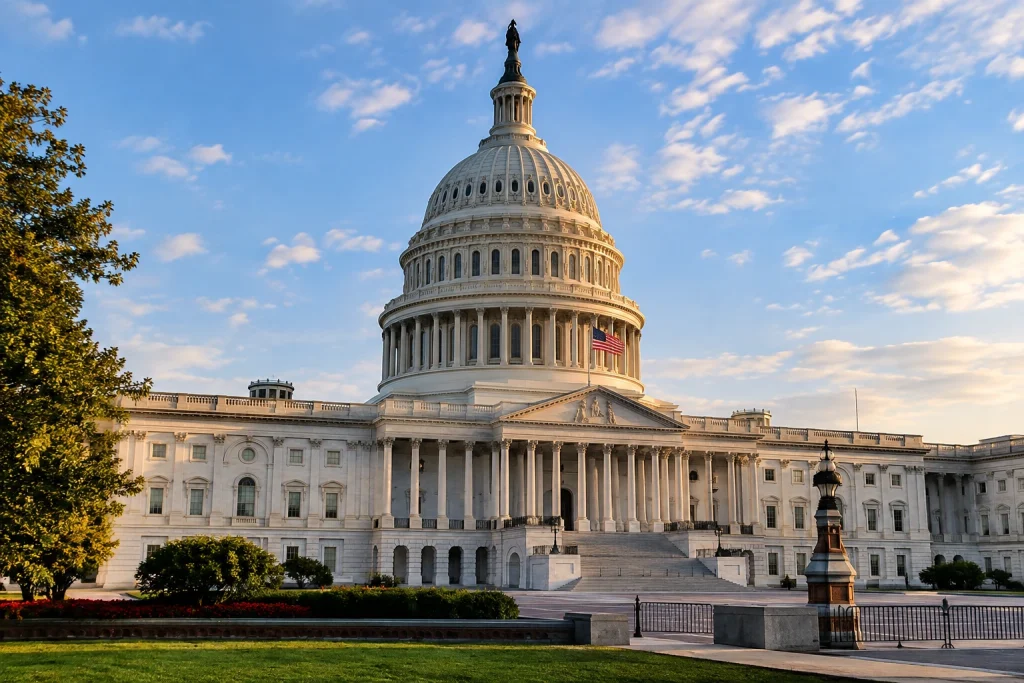

The laws being debated in the U.S. Congress could eventually affect both operating costs and the day-to-day business of trucking companies. And 2026 is an especially important year, as Washington works on the next federal framework for highways and surface transportation.
At the center of the debate is the BUILD America 250 Act (H.R. 8870), a bipartisan bill that would authorize federal transportation programs for the next five years.
This is not exclusively a trucking bill. It covers highways, bridges, public transit and rail, but it also contains numerous provisions involving highway and motor carrier safety that could directly affect commercial transportation.
The House Transportation and Infrastructure Committee approved the bill on May 22 by a 62-2 vote. That does not mean it is law, however. The legislation still has to complete the congressional process.
Check the BUILD America 250 Act and official documents

What could change for truckers and fleets?
One area involves ELDs, the electronic logging devices used to record drivers’ hours of service. The legislation seeks to strengthen oversight of the devices and the companies that certify them.
It also proposes tighter controls on the registration of motor carriers, brokers and freight forwarders, including information about their principal place of business and related companies. The goal is to give federal authorities more tools to combat freight fraud, double brokering and fraudulent operators.
The transportation agenda also includes truck parking, restroom access for drivers during pickups and deliveries, CDL-related changes, lease-purchase programs and other safety provisions.
Another issue could have much longer-term consequences: autonomous trucks. The BUILD America 250 Act proposes the first federal framework specifically addressing autonomous commercial motor vehicles.
Other bills truckers should know about
The BUILD America 250 Act is not the only legislation worth watching.
The Truck Parking Safety Improvement Act (H.R. 1659) seeks to provide federal funding to expand parking capacity for commercial motor vehicles.
The Trucker Bathroom Access Act (H.R. 2514) addresses drivers’ access to restrooms at certain facilities where they pick up or deliver freight.
The DRIVE Act (H.R. 2819) focuses on another familiar issue for truckers: speed limiters. The proposal would prevent FMCSA from issuing a federal requirement mandating speed-limiting devices on certain commercial vehicles.
There are also bills involving drug testing and the FMCSA Clearinghouse. H.R. 4320, for example, proposes allowing certain positive hair drug test results to be reported to the Clearinghouse.
The official Congressional Record index provides access to these and other proposals related to the trucking industry.
See trucking-related legislation in Congress
How do you know if the law actually changed?
This distinction is critical for every truck driver and fleet owner.
A lawmaker introducing a bill does not mean the rules have changed.
A bill can be introduced and sent to a committee, amended, remain there for months or never pass at all. It can also pass the House and then face a different process in the Senate.
So, when a headline says Washington wants to change a trucking rule, one of the first things to look for is the bill number — for example, H.R. 8870, H.R. 1659 or H.R. 2819.
That number allows truckers to check the proposal directly through an official government source.
Where can truckers check these bills?
The main resource is Congress.gov, the official website for federal legislative information.
Congress.gov — Search federal bills and legislation
Enter a bill number directly into the search bar or search terms such as truck driver, motor carrier, CDL, ELD, FMCSA, truck parking, freight broker or speed limiter.
Every bill has its own page showing what it proposes, who introduced it, when it was introduced, which committee is handling it, its latest actions and the actual text of the legislation.
The website also shows where the bill stands in the legislative process. Introduced means exactly that: the legislation has been introduced. Congress.gov tracks subsequent action through the House and Senate and identifies legislation that ultimately Became Law.
Another official source for federal legislation and government documents is:
GovInfo — U.S. Government Publishing Office
Truckers and fleet owners can also follow the congressional committee responsible for many highway and commercial transportation issues:
House Transportation and Infrastructure Committee
Congress and FMCSA are not the same thing
There is one more important distinction.
Congress passes federal laws. FMCSA, on the other hand, is the federal agency that administers and enforces many of the regulations governing commercial motor vehicles.
To check rules that currently apply to carriers and drivers, go directly to:
FMCSA — Federal Motor Carrier Safety Administration
And when a federal agency is considering a new regulation, another government website lets drivers and fleet owners follow the rulemaking process and check whether a public comment period is open:
Regulations.gov — Track proposed federal regulations
For truck drivers and fleet owners, the practical rule is simple: before assuming a headline means the rules have changed, check whether it refers to a bill in Congress, a proposed regulation or a rule that has actually taken effect.
Congress.gov, FMCSA and Regulations.gov make that information available to the public for free — without relying on what someone says in a social media post.
If you need help keeping your insurance paperwork in order as regulations change, Saint George Insurance Brokerage is here to help.
 Business hours: Monday to Friday from 8:00 AM to 5:00 PM. California time