 Hable con un agente al (888) 572-7520
  Enviar mensaje a un agente

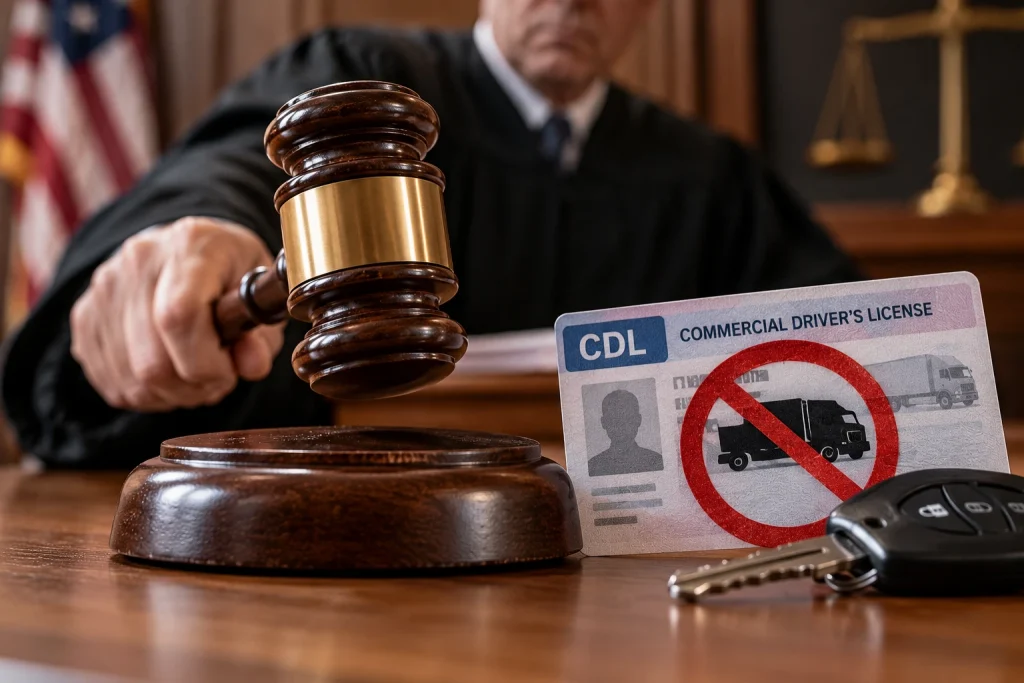

A new package of laws approved in California increases penalties for repeat offenses involving driving under the influence of alcohol or drugs (DUI). For truck drivers, however, the consequences can go further: even if you are off duty and driving your personal vehicle, a DUI conviction can affect your CDL under federal rules.
Gov. Gavin Newsom signed SB 907, AB 1546, AB 1685 and AB 1687, four measures that change different aspects of the penalties that can apply to DUI offenders.
For truck drivers, however, there is another layer of consequences that does not come from California’s new laws. Drivers who hold a Commercial Driver’s License (CDL) are also subject to federal rules governing when a driver can be disqualified from operating a commercial motor vehicle (CMV).
And there is one detail drivers can easily overlook: a DUI committed while driving a personal vehicle can affect your ability to keep working as a commercial driver.
Your CDL Can Be at Risk Even When You’re Off Duty
The Federal Motor Carrier Safety Administration (FMCSA) lists driving under the influence of alcohol as defined by state law, driving under the influence of a controlled substance, and operating a CMV with a blood alcohol concentration of 0.04% or higher among its major offenses.
What matters for CDL holders is that the consequences of some of these offenses are not limited to incidents that happen while they are working.
The FMCSA guidance on driver disqualification makes clear that major offenses can require the disqualification of a CDL holder even when the offense occurs while driving a non-commercial vehicle.
For a first major offense, federal rules generally require a minimum one-year disqualification from operating commercial motor vehicles. If the offense occurs while transporting hazardous materials that require placarding, the disqualification can last three years.
A second major offense can result in lifetime disqualification, although federal regulations allow the possibility of reinstatement after 10 years under certain conditions.
That means a DUI is not only a career issue when a truck driver is behind the wheel of a tractor-trailer.
A driver could be off duty, carrying no freight and driving a personal car. If that driver is convicted of an offense that triggers federal disqualification rules, the ability to return to commercial driving can still be affected.
Your Employer Must Be Notified, Too
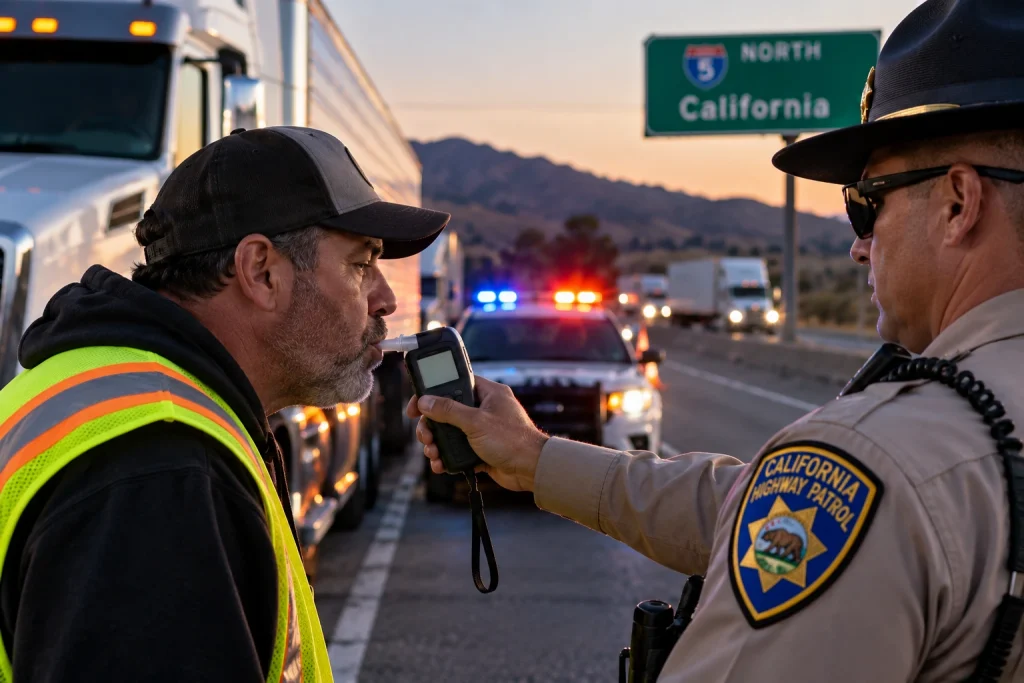
There is another important consequence for people who make their living behind the wheel: certain convictions must be reported to their employer.
The FMCSA requires commercial drivers to notify their employer within 30 days of a conviction for violating any state or local traffic law other than a parking violation.
That requirement does not depend on whether the driver was working when the violation occurred.
The federal agency makes clear that the notification requirement applies to convictions involving any type of vehicle. Even if the driver appeals the conviction, the employer must still be notified within the required timeframe.
For a trucking company, the issue matters as well. Federal disqualification rules prohibit an employer that knows — or reasonably should know — that a driver is disqualified from allowing that person to operate a CMV.
In practical terms, an offense that happened on a Saturday night in a driver’s personal car can ultimately have direct consequences for that driver’s job.
What Just Changed in California?
The new laws signed by Newsom add consequences under California law, but they did not create the federal CDL rules.
The package includes SB 907, known as Braun’s Law, named in memory of Braun Levi, an 18-year-old who died in 2025 after being struck by a driver suspected of being a repeat DUI offender.
The law is intended to ensure that drivers whose DUI charges are reduced to a lesser offense receive a warning about the consequences of driving under the influence again, including the possibility of facing more serious charges, including murder, if they later cause someone’s death.
The same package includes AB 1546, which increases criminal consequences for certain repeat DUI offenders; AB 1685, which increases from two to three the points assessed for convictions involving vehicular manslaughter and gross vehicular manslaughter while intoxicated; and AB 1687, which addresses longer license-revocation periods for certain repeat offenders.
According to the State of California, the package strengthens criminal penalties for repeat offenders, extends certain license-revocation periods and ignition interlock device requirements, and increases the points assessed for certain offenses on DMV driving records.
What If Your CDL Was Issued by Another State?
This also matters for truck drivers who are simply passing through California.
Having a CDL issued in Texas, Florida, Georgia or any other state does not mean a conviction in another state stays isolated from your commercial driving record.
The FMCSA explains that, for disqualification purposes, out-of-state convictions are treated the same as convictions that occur in the driver’s home state.
Certain convictions and disqualifications received outside the home state are also transmitted to the driver’s State of Record so they can be added to the driver’s record.
In other words, a Texas CDL holder who commits an offense covered by these rules while in California should not assume the problem ends once the truck crosses back over the state line.
For Truck Drivers, 0.04% and 0.08% Are Not the Same Thing
Commercial drivers are already subject to stricter rules in other areas.
FMCSA lists having an alcohol concentration of 0.04% or higher while operating a CMV as a major offense. That is different from the 0.08% threshold commonly associated with DUI laws for drivers of personal vehicles.
But that does not mean a CDL holder simply has a 0.04% limit 24 hours a day.
The important distinction is that the specific 0.04% standard applies when operating a commercial motor vehicle. When CDL holders drive their personal vehicles, the laws applicable to that vehicle and jurisdiction apply. A DUI conviction, however, can still qualify as a major offense and carry consequences for the driver’s commercial driving privileges.
What Happens Off the Clock Can Still Affect Your Job
California’s four new laws and the federal rules governing commercial driver’s licenses are two separate things.
California is increasing state-level consequences for certain DUI offenses and repeat offenders. FMCSA rules, meanwhile, already determine when an offense can disqualify someone from operating a commercial motor vehicle.
For truck drivers, the two can intersect. A conviction that results from driving a personal vehicle can bring consequences under the laws of the state where the offense occurred while also triggering federal rules that determine whether the driver can continue operating a CMV.
For someone who makes a living behind the wheel, getting out of the truck does not necessarily mean leaving the CDL behind.
 Business hours: Monday to Friday from 8:00 AM to 5:00 PM. California time