 Hable con un agente al (888) 572-7520
 Enviar mensaje a un agente



Since 6:00 a.m. on Monday, October 26, groups of freight transport operators from across Mexico began an indefinite nationwide strike to demand greater highway security, an end to cargo theft and extortion, and changes to tax measures that increase operating costs, according to official sources.
The mobilizations were organized by the National Chamber of Freight Transportation (Canacar), the Mexican-American Federation of Transport Operators (Fematrac), the Honorable Mexican Alliance of Transport Organizations (Hamotac), and the Integrating Organization for Conventional Rights (Indeco), with calls for participation issued by trucker associations in various parts of the country.
The leaders stated that they would not completely block highways or toll booths. However, the presence of trucks caused slow traffic and disruptions along logistics corridors and urban access routes. According to information from Enfoque, strikes were announced in the following states and locations:
- Mexico City.
- State of Mexico.
- Hidalgo.
- Guanajuato.
- Queretaro.
- Zacatecas.
- Jalisco.
- Michoacan.
- Sinaloa.
- Tamaulipas, including Nuevo Laredo.
What Are Mexican Transport Operators Demanding?
The nationwide strike was organized to demand improved security for drivers and cargo during transit. Transport operators have reported an increase in truck and cargo theft, as well as extortion, demands for protection payments, and acts of violence along various transportation corridors throughout the country. They maintain that these problems persist despite meetings with government authorities, prompting them to stage the mobilization as a last resort to make their concerns heard.
In a statement addressed to the Ministry of the Interior, the four participating organizations said they wanted to put an end to meetings that, in their view, had failed to produce adequate solutions. They also requested direct dialogue with President Claudia Sheinbaum.
“We require engagement and decisions at the highest level of the Federal Government,” the organizations stated in a press release, according to El Sol de México.
Furthermore, according to reports by El Financiero, one of the main points of contention behind the transport operators’ protest is a proposed amendment to the 2027 Revenue Law. The amendment would lower the eligibility threshold for companies to access a tax incentive from 300 million to 250 million pesos. This incentive allows companies to claim a tax credit against their Income Tax (ISR) liability for up to 50% of their toll expenses.
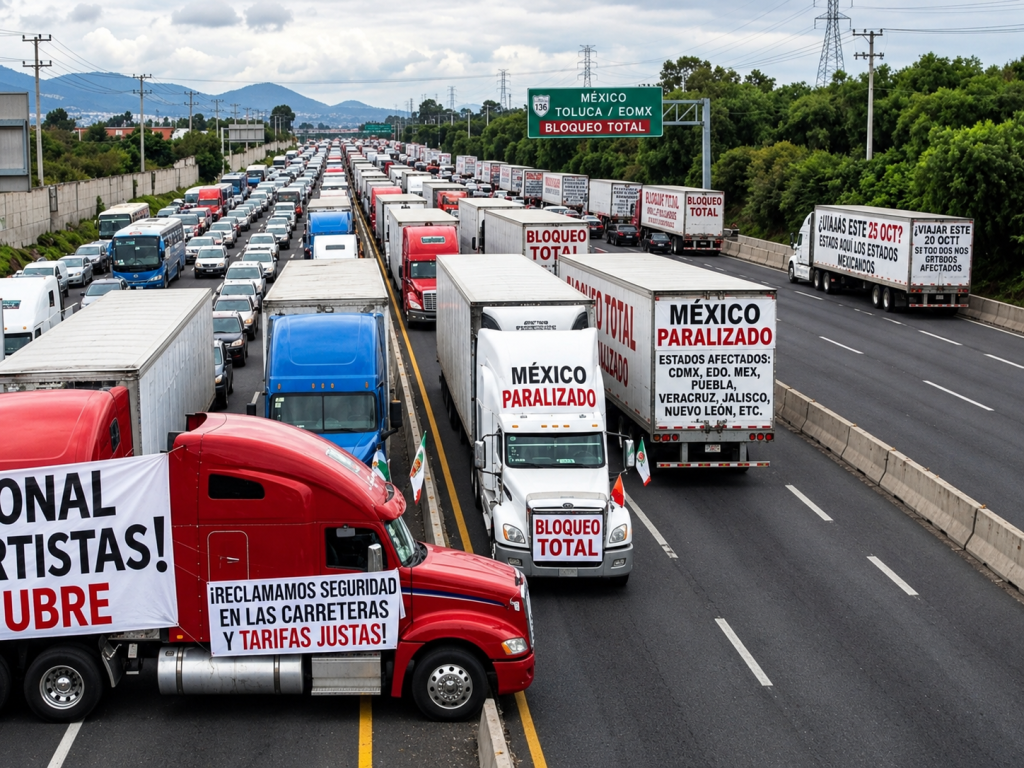
How Does the Transport Strike Affect Cross-Border Transportation Between Mexico and the United States?
The nationwide transport strike in Mexico caused delays in cross-border freight transportation to the United States, affecting perishable goods, food, medicines, and automotive components. Disruptions on highways and at logistics hubs on October 26 could delay deliveries, disrupt production schedules, and generate additional costs for companies in both countries.
Given that the strike was declared indefinite, its impact is particularly significant for trade between Mexico and the United States, where many industries rely on timely deliveries under the just-in-time production model. A prolonged shutdown could disrupt supply chains, halt assembly lines, and lead to price increases or shortages of certain products. It could also harm small businesses that depend on Mexican goods to supply their operations and local communities.
Although no widespread shortages were reported on the first day of the strike, industry representatives warned that the disruptions could worsen if the roadblocks continued for several days. Disruptions to ground transportation and port operations, including those at the Port of Veracruz, highlight the importance of maintaining the flow of goods to prevent further costs and delays in cross-border trade.
 Business hours: Monday to Friday from 8:00 AM to 5:00 PM. California time