 Hable con un agente al (888) 572-7520
 Enviar mensaje a un agente




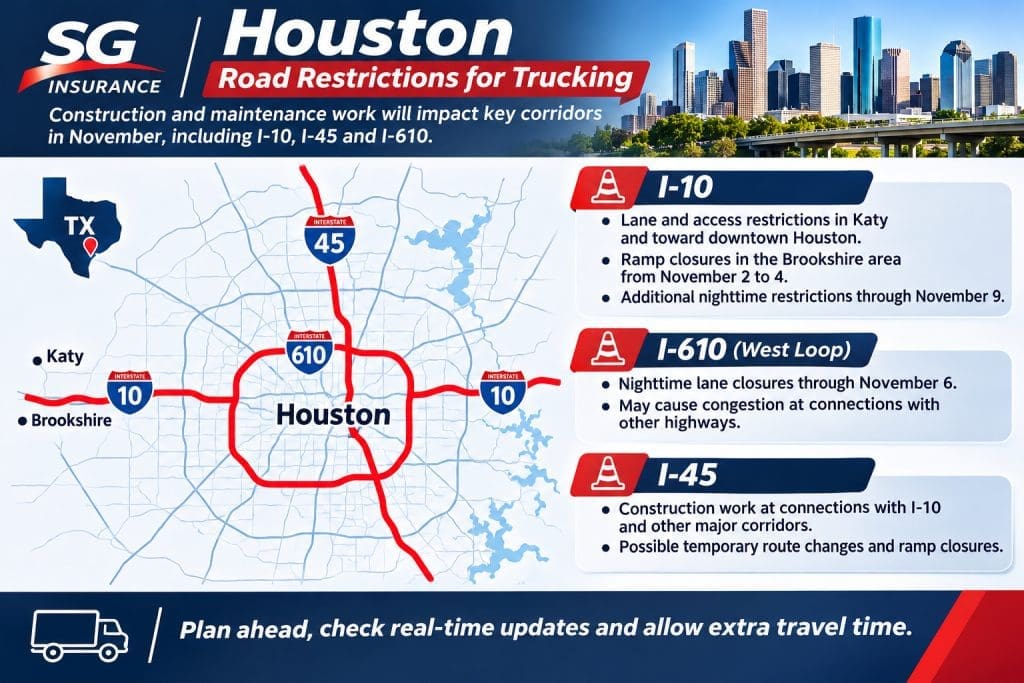
Freight transportation in Houston will face new traffic restrictions throughout November as scheduled road construction and maintenance projects affect Houston and surrounding communities. The work will impact sections of Interstates I-10, I-45, and I-610, three critical corridors for commercial trucking, freight distribution, and connections to major logistics hubs across the region.
According to regional traffic management information, the projects involve lane closures, overnight restrictions, and temporary changes to highway entrances, exits, and connecting ramps.
The construction activity is part of several infrastructure maintenance and improvement projects, meaning restrictions will vary in duration and location.
For long-haul truck drivers and carriers operating throughout the Houston metropolitan area, these projects could lead to longer travel times, particularly during peak traffic hours or when construction affects major highway interchanges.
The situation is especially important given Houston’s extensive industrial, port, and commercial operations. Its interstate highways connect freight carriers with distribution centers, energy facilities, and other major markets throughout Texas.
I-10 to Face Lane and Ramp Restrictions
Interstate 10, one of Texas’ most important east-west freight corridors, is among the highways affected by construction scheduled for November.
Lane and access restrictions are expected around Katy and along connections leading toward downtown Houston, potentially changing normal traffic patterns.
Additional work is scheduled near Brookshire, west of Houston, with ramp closures planned between November 2 and November 4. Other sections of I-10 are expected to experience overnight restrictions under construction schedules extending through November 9.
I-10 plays a particularly important role in trucking because it connects Texas with other Southern states and supports freight movement between industrial, commercial, and logistics centers.
Within Houston, the interstate also serves as a major access route to urban destinations and connections with other high-capacity highways.
Ramp closures can create additional challenges for truck drivers who need to enter or exit the interstate to complete deliveries.
Carriers should therefore confirm which entrances and exits remain accessible before dispatching trucks through affected areas.
I-610 West Loop to Experience Overnight Closures
Another affected corridor is I-610 West Loop, a major highway connection used to bypass parts of Houston and reach commercial and industrial districts.
The construction schedule includes overnight lane restrictions through November 6.
I-610 is an essential component of Houston’s metropolitan highway network, allowing traffic to move between major interstates while avoiding downtown on certain routes.
For commercial vehicles, reduced highway capacity can create congestion at connecting interchanges, particularly when construction affects entrance ramps, exit ramps, or merging lanes.
Although overnight work is generally scheduled to minimize disruption during daytime traffic, it can still affect truck drivers making nighttime deliveries or traveling long distances outside peak hours.
Truckers using West Loop should watch for temporary traffic signs and verify current road conditions before entering construction zones.
I-45 and Connections to Other Major Highways
Interstate 45 is another important freight transportation corridor in Houston.
The highway connects Houston with Galveston to the south and Dallas to the north, while providing access to industrial and commercial areas throughout the metropolitan region.
Construction affecting connections between I-10, I-45, and other major corridors could temporarily change established trucking routes.
For logistics companies, highway interchanges are particularly sensitive locations because they handle large volumes of vehicles entering, exiting, or transferring between routes.
When an interchange ramp closes, truck drivers may need to travel additional miles to reach an alternative entrance or exit.
These detours can increase travel times and contribute to congestion on roads that typically carry lower volumes of heavy commercial traffic.
It is important to distinguish between lane closures, which allow traffic to continue moving at reduced capacity, and complete ramp closures, which require drivers to use alternative access points.
How Construction Could Affect Truck Drivers and Logistics Companies
Houston’s highway restrictions could have significant operational consequences for companies transporting freight within Texas and across state lines.
Even when a highway remains open, lane reductions can cause delays, particularly along heavily traveled freight corridors.
Truck drivers making scheduled deliveries must often meet specific receiving appointments at warehouses, distribution centers, manufacturing facilities, and retail locations.
When construction causes unexpected delays, carriers may need to reorganize routes, adjust estimated arrival times, and coordinate new delivery arrangements with customers.
Compliance with federal Hours of Service regulations is another important consideration.
Drivers subject to these rules must manage their available driving and rest periods. Extended traffic delays can reduce the time remaining to complete a scheduled trip.
Fuel consumption is also a concern. Stop-and-go traffic, prolonged idling, and additional mileage from detours can increase operating expenses.
For trucks carrying heavy or oversized loads, alternative routes require additional planning because some roads may have weight, height, or dimensional restrictions.
Safety Precautions in Highway Construction Zones
Road construction also presents important safety challenges for commercial drivers.
Work zones may include narrower lanes, temporary traffic pattern changes, reduced speed limits, and construction workers or heavy machinery operating close to moving vehicles.
These conditions require additional caution from truck drivers because of their vehicles’ size, weight, and longer stopping distances.
Sudden lane changes, abrupt braking, and insufficient following distance can increase the risk of crashes, particularly when traffic is compressed into fewer lanes.
Drivers should comply with posted work-zone speed limits and pay close attention to electronic message boards, traffic cones, barricades, and temporary signs.
Avoiding last-minute maneuvers near closed ramps or merging lanes is especially important for maintaining safe operations.
Where to Check Real-Time Highway Closures and Detours
Because construction schedules can change due to weather, operational requirements, or adjustments to planned work, truck drivers should check updated traffic information before beginning their trips.
Houston TranStar provides information on traffic incidents, lane closures, road construction, and driving conditions throughout the Houston metropolitan area.
The Texas Department of Transportation (TxDOT) also publishes information about infrastructure projects and highway restrictions across the state.
Drivers can additionally consult DriveTexas, the state’s official road conditions platform, for information about highway incidents and traffic disruptions.
For trucking companies, these resources can help identify congested corridors, verify ramp availability, and anticipate necessary route adjustments.
What Trucking Companies Should Expect Throughout November
The announced highway restrictions will affect sections of I-10, I-45, and I-610 during the first part of November.
Construction activities include overnight lane closures, reduced highway capacity, and temporary ramp restrictions, although specific schedules and traffic conditions may vary by project.
For truck drivers traveling through Houston, Katy, Brookshire, and nearby communities, the most important recommendation is to verify road conditions before entering affected corridors.
Logistics companies should also account for potential delivery delays and maintain clear communication with their drivers regarding route changes and estimated arrival times.
The construction projects are intended to improve transportation infrastructure in one of Texas’ most important logistics regions. However, during the work, temporary disruptions may affect commercial freight movement.
Monitoring scheduled closures, identifying available highway access points, and planning routes in advance will be essential to minimizing delays, avoiding unsafe maneuvers, and maintaining the safety of trucking operations.
 Business hours: Monday to Friday from 8:00 AM to 5:00 PM. California time