 Hable con un agente al (888) 572-7520
  Enviar mensaje a un agente

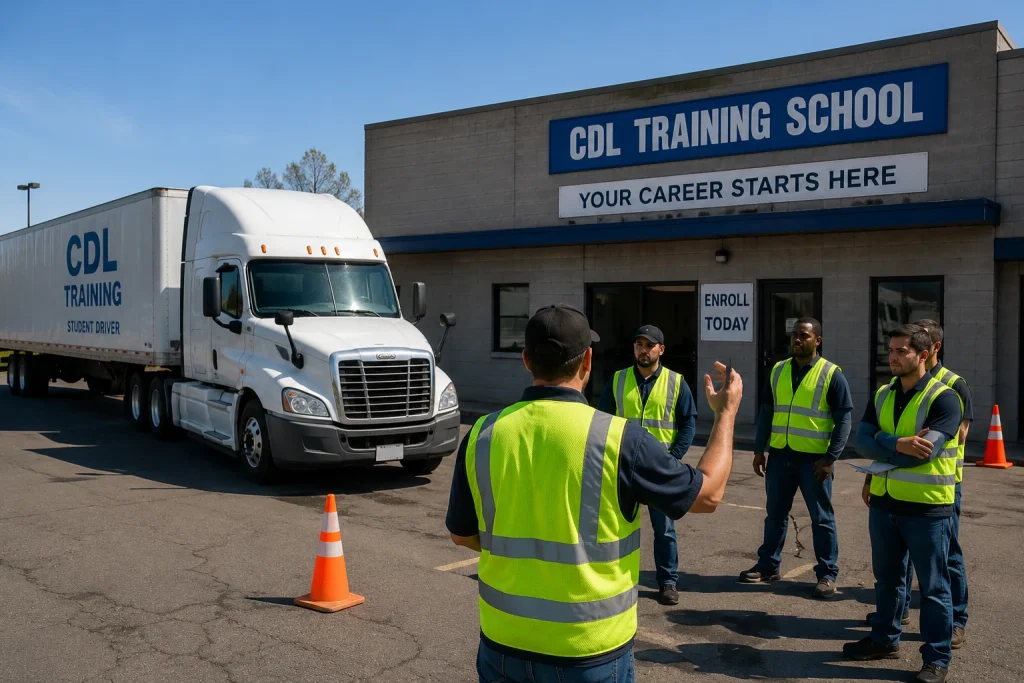

Florida is once again putting the spotlight on CDL fraud after three Miami-Dade employees were arrested in connection with an alleged scheme that authorities say allowed commercial driver’s licenses to be obtained without passing required tests.
What began as an investigation into alleged misconduct inside a government office raises a much broader question for the trucking industry: What happens when someone is authorized to operate a commercial vehicle without proving they are qualified to do so?
The case involves two employees of the Miami-Dade Water and Sewer Department, Matthew Howard Jr., 35, and Keith Jones, 36, as well as Vanessa Roberts, 34, who worked for the Miami-Dade County Office of the Tax Collector.
According to information released by Miami-Dade County Tax Collector Dariel Fernandez, an investigation by the Florida Attorney General’s Office determined that Howard and Jones allegedly failed a test required to obtain their Commercial Driver’s Licenses (CDLs).
Investigators allege that the two men later paid Roberts to bypass that requirement and obtain their licenses.
The allegations are particularly significant for an industry in which professional drivers must meet strict requirements before getting behind the wheel of a large commercial vehicle.
Protecting the integrity of the driver licensing process is essential to keeping U.S. roads safe.
How Were the CDLs Allegedly Obtained?
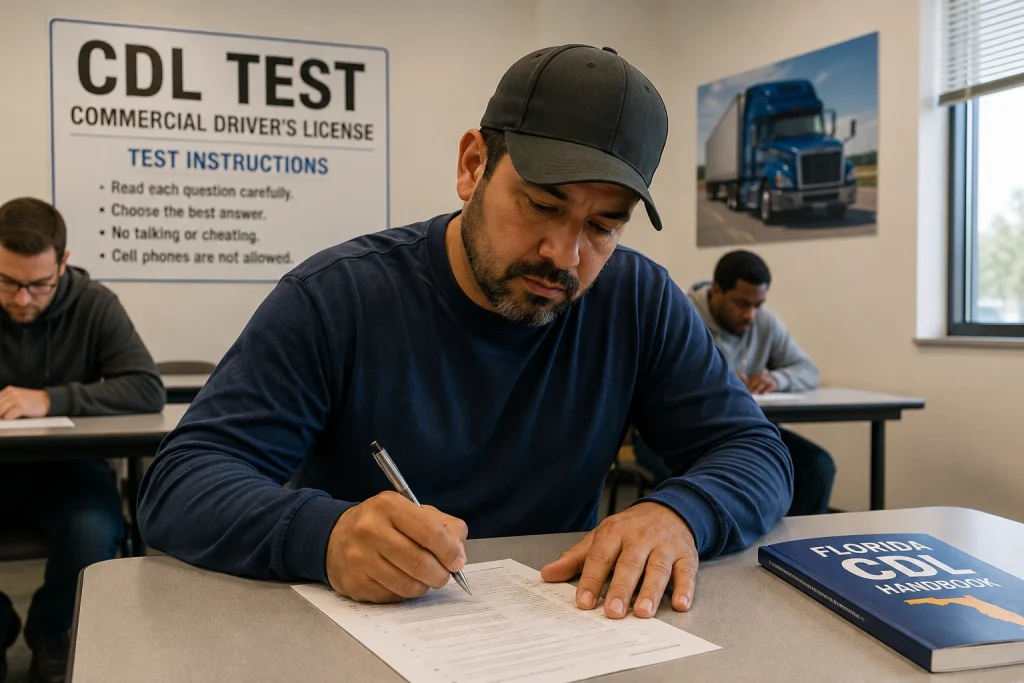
The alleged scheme reportedly exploited a legitimate procedure designed to recognize certain commercial licenses issued in other states.
According to investigators, Roberts allegedly processed the applications through the Florida Department of Highway Safety and Motor Vehicles (FLHSMV) system and falsely presented them as valid transfers of out-of-state commercial driver’s licenses.
A driver who holds valid credentials issued by another jurisdiction may, under certain circumstances, transfer a commercial license to Florida without repeating specific tests.
Investigators, however, allege that Howard and Jones did not qualify for that process.
If the allegations are proven, a system designed to make it easier for properly credentialed commercial drivers to relocate between states was instead used to bypass mandatory licensing requirements.
All three defendants were charged with official misconduct and unlawful compensation or reward for official behavior, involving the alleged giving or receiving of improper compensation connected to an official act.
Roberts no longer works for the Office of the Tax Collector.
A CDL Is More Than Just a Driver’s License
The case takes on greater significance when viewed from the perspective of the trucking industry.
A passenger vehicle and a tractor-trailer are not comparable. Under standard federal weight limits, a fully loaded combination vehicle can legally reach a gross weight of 80,000 pounds.
That is one reason CDL requirements exist: to verify that drivers have the knowledge and skills necessary to safely operate a commercial motor vehicle.
The licensing process can include testing on safety regulations, vehicle inspections, and specialized knowledge related to commercial vehicle operations, along with applicable skills tests and other requirements depending on the license class and type of vehicle.
Bypassing those controls is not simply a matter of skipping paperwork.
It could mean allowing someone to operate a vehicle weighing tens of thousands of pounds without first demonstrating to authorities that they possess the required skills.
Dariel Fernandez addressed that concern directly when announcing the arrests.
“When someone behind the wheel bypasses safety requirements, they put everyone traveling on our roads at risk,” he said.
From CDL Fraud to Fleet Risk
For carriers and small trucking companies, the case also carries an important warning.
Seeing an apparently valid CDL should not necessarily be the end of a carrier’s driver screening and verification process.
Companies need appropriate procedures for reviewing the credentials, experience, qualifications, and driving history of the people they put behind the wheel of their trucks.
That becomes even more important after a serious crash.
Following an accident, scrutiny may extend beyond the driver’s actions. Investigators, attorneys, insurers, and regulators may also examine the procedures a company used to hire the driver, verify their background, and determine whether they were qualified to perform the job.
An alleged fraud scheme creates an additional complication: a credential may initially appear valid in a government system and later come under scrutiny as part of an investigation.
For a trucking company, that could lead to compliance reviews, additional verification procedures, and problems extending far beyond the individual driver involved.
Could CDL Fraud Affect Commercial Insurance?
The potential impact does not end on the highway.
Commercial insurers consider multiple factors when evaluating the risk of a trucking operation, including accident history, fleet characteristics, driver experience, safety records, and hiring practices.
A single fraud case does not automatically mean insurance premiums will increase for every trucker in Florida.
However, schemes that potentially allow unqualified individuals to obtain commercial driving credentials represent another risk factor for the broader transportation industry.
For trucking companies, the case reinforces the importance of properly documenting hiring procedures and verifying that every driver meets applicable requirements.
An improperly obtained license can become a much larger problem if that driver is later involved in a serious accident.
Truckers Who Follow the Rules Pay a Price, Too
There is another side of the case that directly affects drivers who enter the profession legally.
Obtaining a CDL requires preparation, time, and money.
Many aspiring truck drivers pay for training programs, spend hours practicing, study for their exams, and complete the required licensing process before they can begin working professionally.
Carriers also invest money in recruiting, training, background checks, qualification procedures, and safety programs.
When someone allegedly pays to bypass part of that process, it does more than undermine licensing rules. It can also create unfair competition for drivers and companies that absorb the full cost of operating legally.
For owner-operators and small fleets already working with tight margins while covering fuel, maintenance, insurance, equipment, and regulatory compliance costs, that difference matters.
Florida Is Reviewing Records for Additional Irregularities
The case may not be over.
The Miami-Dade County Office of the Tax Collector said it is reviewing records and transactions connected to the investigation and will take additional action if further irregularities are discovered.
“When I took office, I made it clear that protecting the integrity of this office and restoring public trust would be a priority,” Fernandez said. “When wrongdoing is uncovered, we act. Anyone who abuses public authority for personal gain must be held accountable.”
Howard, Jones, and Roberts remained in custody Tuesday on $12,500 bond each at the Turner Guilford Knight Correctional Center, according to jail records cited in the original report.
The investigation remains active, and the allegations against all three defendants must still be proven in court.
For the trucking industry, however, the case already carries an important warning.
A CDL is much more than a card that allows someone to earn a living behind the wheel. It is one of the first safeguards designed to ensure that a person operating a commercial vehicle has demonstrated the knowledge and skills required to do so safely.
When that safeguard is allegedly bypassed through fraud, the consequences can create a domino effect: it starts with a license, moves to the driver and the fleet, reaches insurers and compliance systems, and ultimately affects everyone sharing Florida’s roads.
 Business hours: Monday to Friday from 8:00 AM to 5:00 PM. California time