 Hable con un agente al (888) 572-7520
  Enviar mensaje a un agente

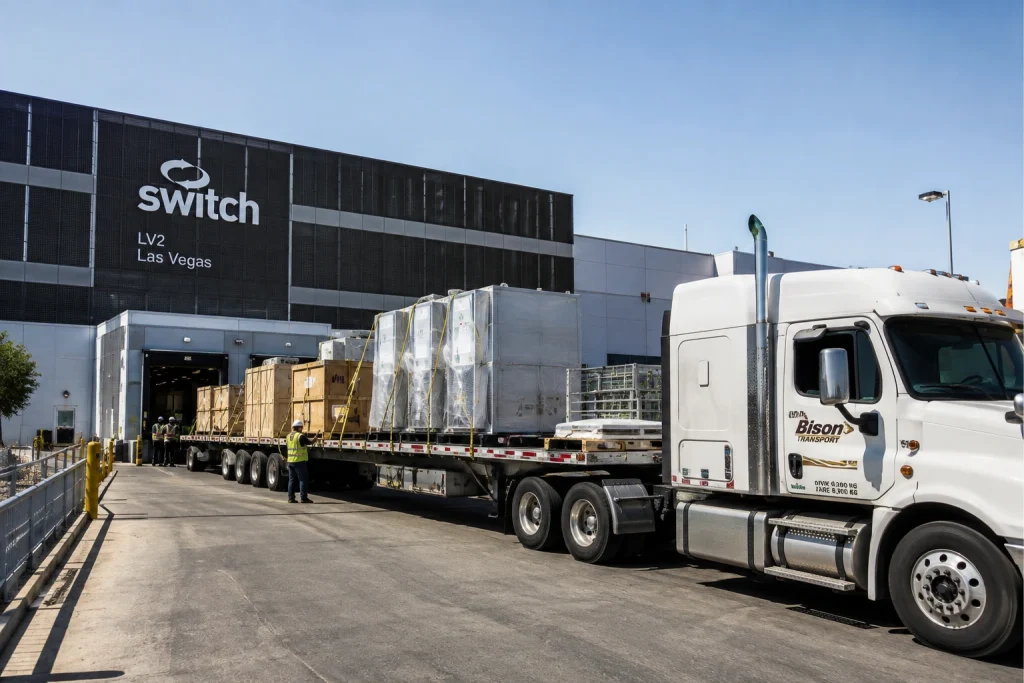

Data centers, the massive facilities organizations use to host applications, computer systems and critical data, have become one of the fastest-growing industries in Nevada. Behind their enormous computing capacity is a physical infrastructure that must be built, equipped, cooled, connected to the power grid and supplied with components that, in many cases, arrive by truck.
That growth is having an impact far beyond the technology industry. Before the servers ever go online, these massive facilities require concrete, steel, structural components, transformers, generators, batteries, cooling systems, racks, wiring and specialized equipment. For trucking, that supply chain represents a new source of freight tied to investments that can continue for months or even years.
However, the boom is beginning to face scrutiny. Storey County, one of Nevada’s major technology hubs and home to the Tahoe-Reno Industrial Center (TRIC), has submitted a proposal to the Nevada Legislature seeking to reduce tax incentives available to data centers.
The proposal would shorten the duration of the incentives, raise investment and employment requirements, require greater public disclosure of water and electricity consumption, and give some local governments more authority to reject tax breaks.
The debate comes amid rapid expansion. According to The Nevada Independent, 76 data centers have been built or proposed in Nevada, while the state has approved approximately $461 million in expected tax incentives for the industry. Roughly three-quarters of that amount is tied to developments in Storey County.
What Do Data Centers Have to Do With Trucks?
A data center is essentially a large industrial facility designed to house servers, networks and computer systems. Although its final product is digital, building one depends on an extensive physical supply chain.
During the early stages of a project, trucks may transport concrete, steel, prefabricated components, heavy machinery and electrical materials. As construction progresses, transformers, backup generators, cooling systems, racks, batteries, wiring, servers and other technology equipment must also be delivered.
Depending on their size and weight, some of these loads may require flatbeds, step decks and other specialized equipment. Large electrical components can also involve heavy-haul operations, special permits and carefully planned routes.
For carriers and owner-operators, the impact of a data center therefore begins long before the facility becomes operational. Construction and equipment installation are precisely the stages that can create direct transportation opportunities.
Storey County Sits at a Strategic Freight Location
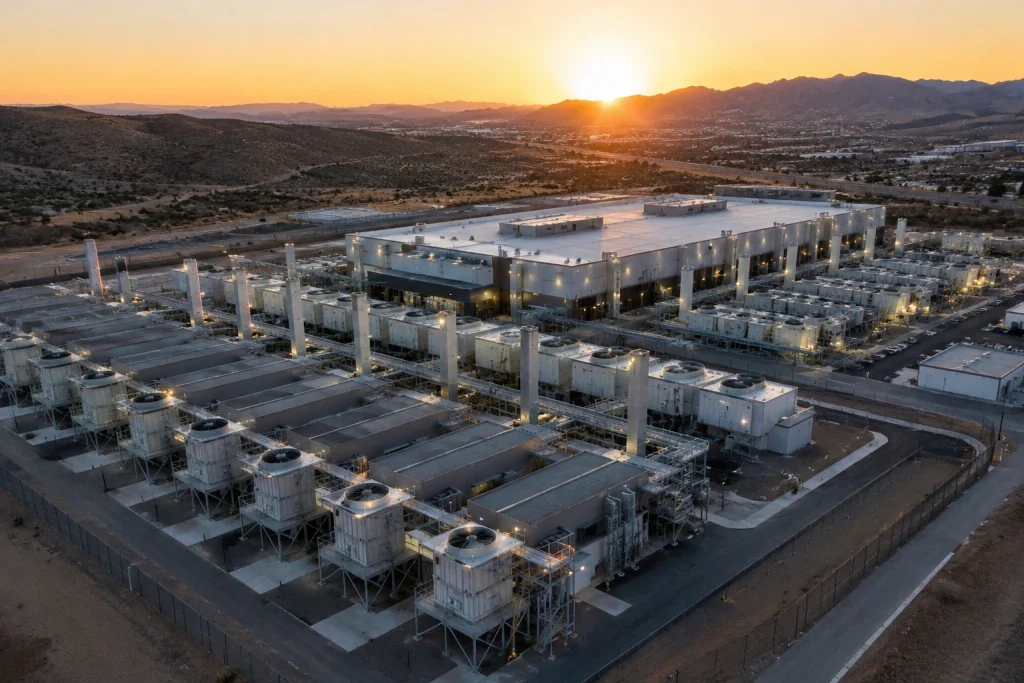
Location helps explain why the data center boom is particularly relevant to trucking. The Tahoe-Reno Industrial Center is located in Storey County, east of Reno-Sparks, with access to I-80, one of Northern Nevada’s major freight corridors.
The Nevada Department of Transportation (NDOT) identifies Reno-Sparks-Carson City as one of the state’s major freight hubs and I-80 as a key corridor connecting Nevada with outside markets.
NDOT also highlights Nevada’s unique position within the national supply chain because of its proximity to major international ports in California and the volume of transcontinental freight moving along I-80 in the north and I-15 in the south. Nevada also serves as a staging and supply point for freight moving into and out of California.
Storey County’s new technology developments are therefore emerging within an established logistics network that already handles significant freight volumes and connects Nevada with some of the West’s largest markets.
Investments Show the Scale of the Industry
Nevada’s own incentive structure helps illustrate the size of these projects. Currently, to qualify for a 10-year tax abatement, a data center must commit at least $25 million in capital investment over five years. To receive incentives for 20 years, that requirement increases to $100 million.
The incentives can reduce the sales and use tax on certain capital equipment to as little as 2% and cut personal property taxes by as much as 75% for 10 or 20 years. In addition, at least half of the workers involved in construction must be Nevada residents.
There are also specific projects showing that expansion is continuing. An application submitted to the Governor’s Office of Economic Development for a new data center at 9500 USA Parkway in Storey County describes a colocation facility expected to begin operations in the third quarter of 2027. The project will include networking infrastructure, security, monitoring, power and cooling systems.
An investment of this scale requires a lengthy construction, installation and equipment phase before operations begin. For carriers and owner-operators, this is exactly when transportation demand can increase.
Artificial Intelligence Is Accelerating Demand
The expansion of data centers is not happening in isolation. For years, these facilities were primarily associated with data storage, cloud computing and corporate operations. The rapid growth of artificial intelligence has significantly increased demand for computing capacity and placed the physical infrastructure behind the internet at the center of a new investment cycle.
AI requires enormous amounts of computing power, but chips and servers are only part of the equation. The facilities that house them need buildings, high-capacity electrical connections, backup power, cooling systems and a supply chain capable of transporting all those components to their final destination.
So even though the expansion is being driven by digital technology, much of the infrastructure behind it still depends on trucks and highways.
What Could Change in Nevada?
Storey County is not proposing to eliminate incentives entirely, but rather to reduce their scope. Current incentives can last 10 or 20 years. The county’s proposal would shorten those periods to five and 10 years, while doubling investment requirements and slightly increasing employment requirements.
The proposal also seeks greater involvement from local governments in Clark and Washoe counties and more public disclosure regarding water use, electricity consumption, tax revenue generated by the projects and revenue local governments forgo because of the abatements.
The debate comes as other Nevada officials consider stricter measures surrounding the industry’s growth and some local governments explore new regulations for data centers.
For logistics companies, this debate introduces another factor worth watching. If incentives continue attracting major investments, construction of new facilities could sustain demand for carriers, material suppliers, heavy-haul operators and specialized transportation companies. If regulations become significantly more restrictive, however, the pace or location of future projects could change.
A New Source of Freight for Nevada Trucking
Nevada already has a logistics economy shaped by mining, distribution, warehousing and its strategic location between California and other Western states. NDOT considers freight essential to the state economy and is also working to expand and improve truck parking infrastructure to support a safer and more efficient supply chain.
Data centers are now adding another potential source of freight. For truckers, much of the opportunity comes before these buildings ever begin processing data—when the materials needed to build them and the equipment required to operate them must be transported.
Storey County and the Tahoe-Reno Industrial Center are now at the center of that transformation. The debate over how much Nevada should subsidize data centers could help shape the future of the industry. And while much of the discussion focuses on taxes, energy, water and artificial intelligence, the consequences could also reach trucking and logistics.
Every new project needs a supply chain before it can become a reality, and a significant part of that supply chain will continue moving across Nevada highways.
The Other Side of the Data Center Boom
The global expansion of data centers is accelerating, driven largely by growing demand for artificial intelligence. However, the trend is also generating economic, environmental and social debates in communities where these massive facilities are being developed.
Energy consumption: Rapid growth in computing capacity is pushing data center electricity demand higher, requiring additional generation, grid upgrades and energy infrastructure. That is also raising questions about who should bear the cost of those investments.
Water stress: Some cooling systems consume large amounts of water, an especially sensitive issue in regions where water supplies are limited. As a result, water consumption has become one of the central concerns surrounding new data center projects.
Economic and local impact: States, regions and countries with available land and energy are considering incentives to attract these investments. At the same time, debate is growing over how to balance economic benefits, tax breaks, resource consumption and the number of permanent jobs these facilities create once construction is completed.
Nevada’s challenge will be finding that balance: capturing the investment, construction activity and freight opportunities associated with data centers without losing sight of the fiscal costs and the impact an industry of this scale can have on energy, water and local communities.
 Business hours: Monday to Friday from 8:00 AM to 5:00 PM. California time