 Hable con un agente al (888) 572-7520
 Enviar mensaje a un agente



U.S. airspace has reopened following one of the most significant disruptions to the nation’s air traffic system in recent years. On Friday, November 13, a failure involving telecommunications and radar systems used by air traffic controllers forced the Federal Aviation Administration (FAA) to suspend departures nationwide for more than four hours.
The shutdown affected major airports, including Atlanta, Miami, Los Angeles, and New York, while also causing cancellations and delays on international flights bound for the United States. The disruption also created challenges for freight transportation, particularly operations that depend on air connections and time-sensitive deliveries.
U.S. Transportation Secretary Sean P. Duffy provided new details about the investigation, explaining that technicians are working to determine how routine maintenance on aging infrastructure triggered a nationwide interruption.
According to the U.S. Department of Transportation (DOT), flights have resumed, and delays and cancellations are expected to continue declining as airlines restore their normal schedules.

Failure During Replacement of Aging Cables
The preliminary investigation points to maintenance work conducted Friday in El Dorado, Arkansas, where contractors were replacing an outdated copper connection with newer technology.
Duffy explained that when a router was activated during the work, another system in Amarillo, Texas, which had been replaced approximately three weeks earlier by technology company L3Harris, began behaving abnormally.
That second device started transmitting excessive amounts of data to other components of the FAA communications network.
The resulting overload caused inconsistencies in the information used by air traffic control systems, including telecommunications and radar services.
Unable to guarantee normal system performance, the FAA ordered a precautionary nationwide ground stop.
According to the DOT, air traffic controllers and commercial pilots followed established safety protocols to safely ground more than 3,500 flights during the emergency.
The disruption began after problems were detected at approximately 3:36 p.m. Eastern Time. The ground stop was lifted at approximately 8:15 p.m., once the issue had been isolated and the safety of flight operations verified.
DOT Investigation: Outdated Equipment, Data Overloads, and Possible Installation Errors
U.S. authorities are examining two primary possibilities: a malfunction involving the router used during the Arkansas maintenance work or an installation-related issue affecting its interaction with other network equipment.
Duffy confirmed Sunday that the device involved had been transferred to L3Harris laboratories in Florida, where company engineers and FAA personnel are conducting technical examinations.
One of the DOT’s biggest concerns is the age of the affected infrastructure.
According to the Transportation Secretary, some FAA routers were purchased in 2001 and had already become obsolete by 2006, yet remained operational in 2026.
The incident highlighted the challenges of integrating modern technology into infrastructure that has been in service for decades.
Was It a Cyberattack?
The U.S. government also examined the possibility of external cyber interference.
However, Duffy said investigators had found no indication that the disruption resulted from an attack by a foreign nation or another malicious operation.
The FBI offered assistance with the investigation, and authorities are keeping their options open until the root cause is definitively established.
Officials also preliminarily ruled out a connection to SMART, an artificial intelligence tool used to analyze weather information and flight routes, as well as a recent Microsoft service outage.
The leading official explanation remains a technical failure involving equipment or its installation.
Cargo Transportation and Delivery Delays
Although the shutdown directly affected air transportation, its consequences can extend across multiple sectors of the U.S. logistics industry.
Airports do more than move passengers. They are also essential hubs for domestic and international freight transportation.
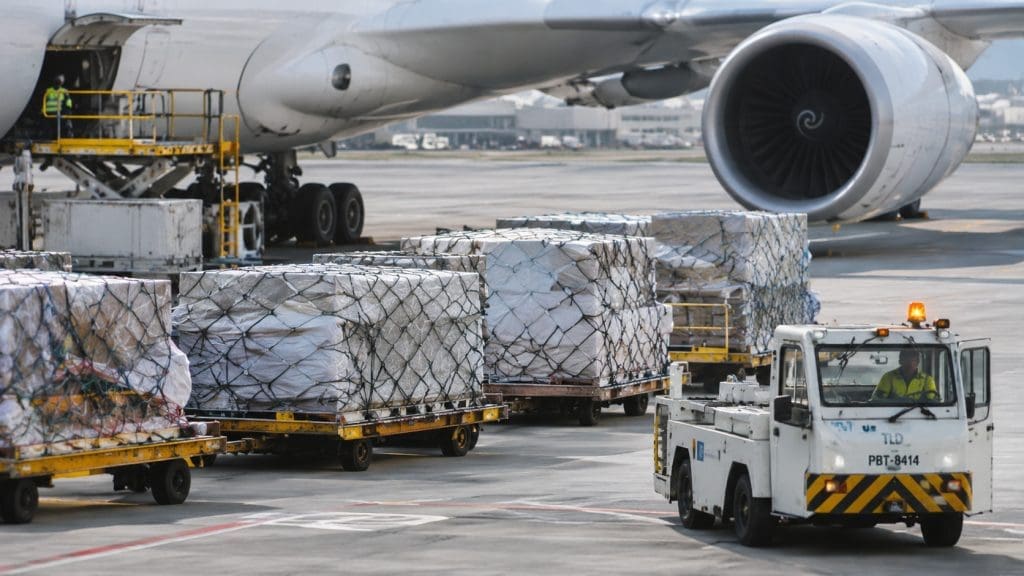
A significant share of air cargo travels in the cargo holds of commercial passenger aircraft, meaning flight cancellations can temporarily reduce available shipping capacity.
Industries particularly vulnerable to these disruptions include e-commerce, pharmaceuticals, electronics, industrial replacement parts, and perishable goods.
The main potential logistics consequences of a nationwide ground stop include:
- Delayed urgent deliveries: Shipments relying on air connections may miss scheduled arrival times.
- Cargo backlogs: Suspended flights can create congestion at air cargo terminals and airport warehouses.
- Rescheduled trucking operations: Trucks assigned to collect airport freight may face changes in pickup schedules and waiting times.
- Disrupted international connections: Imported goods may experience delays before entering U.S. distribution networks.
- Higher operating costs: Companies may need to reorganize routes, storage arrangements, and last-mile delivery schedules.
The DOT has not yet released a specific estimate of the volume of freight affected or the economic losses sustained by cargo transportation companies.
These consequences therefore represent operational risks associated with the disruption rather than a confirmed assessment of logistics-related losses.
Trucking Plays a Critical Role in Restoring Deliveries
In the United States, trucking is essential to distributing freight arriving by air.
Airports in Miami, Los Angeles, Atlanta, and New York serve as major connections between international flights, warehousing facilities, and ground transportation networks.
When flights are delayed, the consequences can extend to cargo pickup schedules, loading dock appointments, and driver assignments.
For trucking companies, late-arriving freight may require dispatchers to reorganize shifts, coordinate new delivery windows, and reassess vehicle availability.
Intermodal operations may also be affected, particularly when shipments depend on multiple connections between airports, warehouses, and distribution centers.
The reopening of U.S. airspace is a positive development, but logistics providers should verify shipment status and updated arrival estimates before confirming ground transportation arrangements.
DOT Warns That Aging Infrastructure Requires Urgent Investment
The nationwide shutdown has renewed concerns about the modernization of America’s air traffic control system.
During his Sunday interviews, Duffy emphasized that the FAA continues to rely on equipment and technology developed decades ago.
Some radar systems date back to the 1960s and 1970s, while parts of the telecommunications network architecture originated in the 1980s.
The Transportation Secretary explained that Congress has already allocated $12.5 billion to modernize radar systems, radios, and other critical components.
However, those funds are designated for specific improvements and are insufficient to completely replace the telecommunications network or develop all the software required to modernize air traffic control.
Duffy called for additional funding and indicated that, if the necessary resources are approved, a new telecommunications infrastructure could be completed between late 2028 and early 2029.
The problem had previously been identified by the U.S. Government Accountability Office (GAO).
In a 2024 report, the agency noted that the FAA had classified 51 of its 138 systems as unsustainable, citing outdated technology, difficulties obtaining replacement parts, and operational limitations.
What to Expect Ahead of Thanksgiving
U.S. airspace has remained open since Friday evening, November 13, and the FAA has authorized the resumption of flight operations.
The DOT’s latest official update, released Sunday, November 15, indicated that delays and cancellations should continue to decrease.
However, restoring normal airline schedules may take additional time as carriers reposition aircraft, reorganize crews, and recover disrupted connections.
The federal government expects the system to return to full capacity before the Thanksgiving travel surge on Thursday, November 26.
The holiday is particularly important for U.S. transportation and logistics because it coincides with one of the busiest periods for commercial activity, product distribution, and passenger travel.
Black Friday follows on November 27, while Cyber Monday falls on November 30, creating additional demand across distribution and delivery networks.
For transportation companies, the priority will be maintaining coordination among airlines, airport operators, logistics centers, and ground carriers.
Carriers, freight forwarders, and distribution operators should monitor FAA updates, confirm actual cargo arrival times, and review pickup and delivery windows before dispatching trucks.
The November 13 incident delivered an important warning to the entire transportation industry: a technological failure in critical infrastructure can have consequences far beyond airports, disrupting the coordination of entire supply chains.
 Business hours: Monday to Friday from 8:00 AM to 5:00 PM. California time