 Llame al (888) 572-7520 para hablar con un agente
 Enviar mensaje a un agente
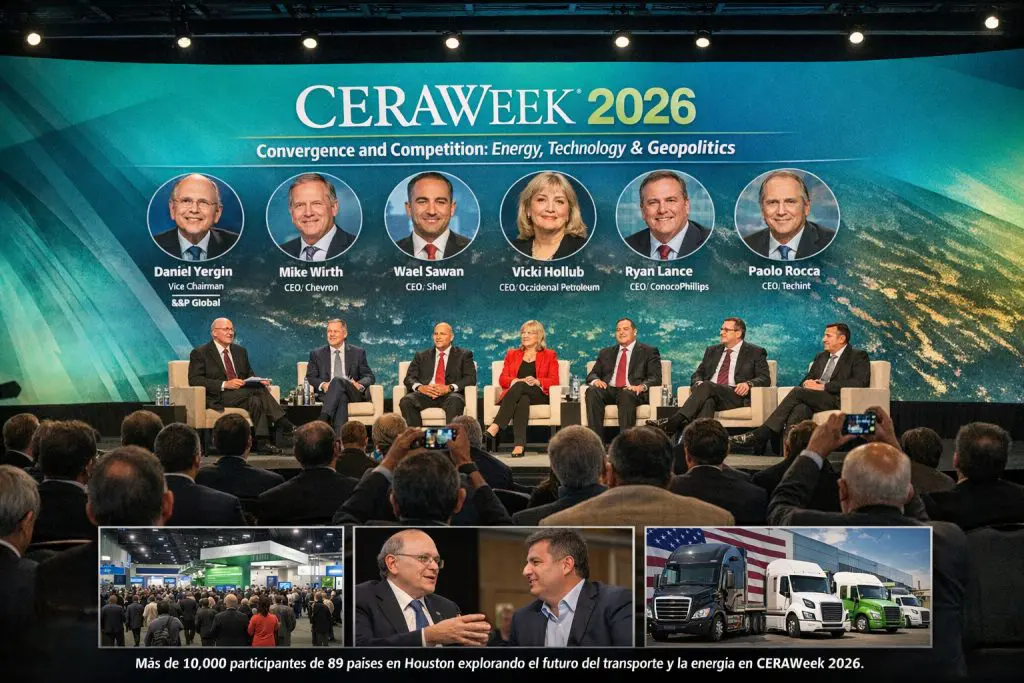

Once again, CERAWeek solidifies its position in Houston as the world’s most influential gathering for energy discussions, and what is debated there has a direct impact on every mile traveled by trucks in the United States. Until Friday, March 27, more than 10,000 participants from 89 countries will be meeting at the Hilton Americas and the George R. Brown Convention Center to discuss how the energy that powers the economy and heavy transportation will be produced, distributed, and consumed. For truckers and business leaders in the sector, understanding what happens at this summit is no longer a technical curiosity, but a strategic tool for anticipating costs, fleet investments, and new business opportunities.
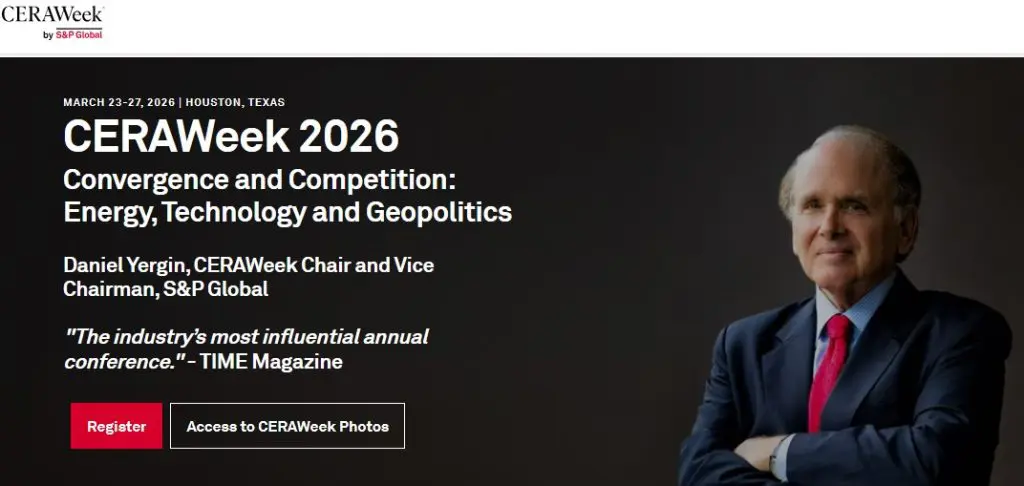
The conference, organized by S&P Global and chaired by analyst Daniel Yergin, revolves around a central theme: how energy intersects with technology and geopolitics in a context of strained supply chains and fragmented markets. This means that every panel discussion on oil, natural gas, hydrogen, electricity, or low-emission fuels will have a subsequent effect on diesel prices, liquefied natural gas availability, and the speed of deployment of truck refueling infrastructure. Energy is no longer a given input but rather a competitive advantage that can make or break a fleet’s profit margins.
Among the most discussed topics is energy security, conditioned by conflicts in the Middle East and the partial closure of strategic oil routes. For U.S. transportation, this translates into price volatility, potential upward pressure on diesel, and the need to diversify sources, from domestic shale oil to liquefied natural gas arriving by ship in the Gulf of Mexico.
At the same time, renewable energy and low-carbon fuels are moving up the agenda, but with clear messages: the transition will be gradual, and heavy-duty transportation will continue to rely on hydrocarbons for years, albeit with increasing demands for efficiency and emissions reductions.
Alternative Energy, More Options
Natural gas and LNG are emerging as key players for heavy transport, with forecasts of sustained demand growth and announcements of new liquefaction and export projects. For trucking companies, this opens the door to LNG-powered fleets that combine lower emissions with more predictable operating costs, in addition to benefiting from tax incentives in several states. Energy in the form of LNG is not only intended to fuel ships and power plants, but also to become a solid option for long-haul routes where energy density and range are critical.
The electrification of transportation is also taking center stage, driven by the expansion of data centers, light vehicles, and, increasingly, medium and heavy-duty trucks. Major technology providers such as Microsoft, Google, Amazon Web Services, Nvidia and others are participating in CERAWeek to explain how the explosion of computing-intensive processes is increasing the demand for electricity, which in turn is putting pressure on the grid infrastructure and substations near major logistics hubs.
This convergence forces us to think about the future of transportation not only in terms of electric trucks, but as part of an ecosystem where energy simultaneously powers servers, factories, and fleets, competing for generation and transmission capacity.
In this context, five speakers are standing out for their relevance to trucking in the United States. Chris Wright, U.S. Secretary of Energy, arrived in Houston with the responsibility of explaining how the government will manage strategic reserves, infrastructure permits, and incentive programs for traditional and alternative fuels. His energy policies will determine whether there will be additional support for oil and gas pipeline projects, hydrogen corridors, or the deployment of fast chargers on highways—all factors that impact the country’s logistics costs.
Amin Nasser, CEO of Saudi Aramco, represents the world’s largest oil company and plays a central role in discussions about the global supply of crude oil and refined products. His announcements regarding investments, production capacity, and supply strategies will impact the international price of a barrel of oil and, ultimately, the cost of diesel fuel for trucks in the U.S. What is negotiated regarding the energy produced in the Persian Gulf region is reflected months later at gas stations in Texas, Illinois, and Florida.
Mike Wirth, CEO of Chevron, attended as one of the most influential voices in the downstream and refining sectors of the U.S. market. Chevron is a key player in the supply of transportation fuels, and its strategy regarding investments in refineries, low-sulfur fuels, and biofuels determines a significant portion of the supply that reaches domestic trucking. For fleet managers, hearing Wirth’s vision for the future of energy and mobility demand offers a clue as to what to expect in terms of pricing and product availability in the coming years.
Jim Farley, CEO of Ford, can provide the commercial and heavy-duty vehicle manufacturer’s perspective on the future of trucking. Ford’s announcements regarding electric and hybrid trucks, hydrogen platforms, and connected services directly influence fleet renewal decisions. His participation in sessions related to “Future of Trucking” demonstrates how energy and software combine to optimize consumption, maintenance, and real-time route planning.
In Latin America, Paolo Rocca, CEO of the Techint Group, arrived to add a key piece to the energy logistics puzzle. Techint is involved in the construction of gas pipelines, industrial plants, and steel-related projects that are essential for moving energy from fields to ports and consumption centers. Although its focus includes regions like the emerging Vaca Muerta shale formation in Argentina, the infrastructure it promotes also feeds gas and oil flows that end up in US refineries and terminals, generating more truckloads and business opportunities throughout the supply chain.
To illustrate the scale of CERAWeek 2026, the organizers have released figures that help explain why the transportation industry should be paying close attention.
CERAWeek 2026 Numbers
More than 10,000 accredited participants.
Representatives from more than 2,350 companies.
Attendees from 89 countries across all continents.
More than 1,620 C-suite executives in attendance.
84 ministers and senior government officials.
365 journalists and media outlets covering the discussions.
Two main program components: the executive conference and the Innovation Agora for technology. For truckers and transportation companies in the United States, the message is clear: the energy decisions made by these leaders in Houston influence fuel costs, the availability of new propulsion technologies, and the pace of environmental regulations.
Participating in or closely following CERAWeek 2026 will allow them to anticipate whether it’s worthwhile to invest in LNG-powered trucks, accelerate the transition to electric units on regional routes, or improve the efficiency of diesel fleets, as the major players finalize the energy landscape for the next decade.
 Business hours: Monday to Friday from 8:00 AM to 5:00 PM. California time