 Hable con un agente al (888) 572-7520
  Enviar mensaje a un agente



Florida will change one of the rules that determines when a traffic crash must be immediately reported to law enforcement starting October 1. The new SB 488 raises the apparent property-damage threshold from $500 to $2,000 when no one is injured or killed.
The change may seem straightforward, but it has particular implications for commercial truck drivers. A crash involving a tractor-trailer may still be subject to other reporting and documentation requirements, while a motor carrier or insurance company may have its own procedures regardless of the estimated cost of the damage.
For a truck driver operating in Florida, the question after a crash should therefore not be limited to whether the damage exceeds $2,000.
What Changes in October
SB 488, approved in Florida this year, amends Section 316.065 of the Florida Statutes. Under the current rule, a crash that causes at least $500 in apparent damage to a vehicle or other property must be immediately reported to law enforcement.
Beginning October 1, that threshold increases to $2,000.
The new limit applies to the reporting requirement triggered by property damage. If a crash results in injury or death, the duty to report remains in place regardless of the value of the vehicles or property involved.
The law also refers specifically to apparent damage. In practice, that means a driver must make an initial assessment based on what can be observed at the scene, even though a later inspection or repair estimate may determine that the actual cost was much higher.
For the trucking industry, that distinction can be particularly important. Repair costs for a tractor, trailer or specific components can rise quickly, meaning an impact that appears minor at the scene may ultimately result in a significantly larger repair bill.
For Trucks, $2,000 Does Not Tell the Whole Story
The higher threshold does not mean that every crash involving a commercial truck and less than $2,000 in apparent damage can simply be treated as a minor incident.
Florida maintains specific provisions for crashes involving commercial motor vehicles (CMVs). Section 316.066 of the Florida Statutes includes CMVs among the circumstances requiring an investigating officer to complete a Florida Traffic Crash Report, Long Form.
That distinction matters because it separates two issues that can easily be confused: the dollar amount that triggers the general requirement to immediately report a crash based on property damage and the requirements that may apply when a commercial vehicle is involved.
Commercial motor vehicle operations in Florida are also subject to additional state rules, along with federal regulations that may apply to interstate carriers.
For motor carriers and owner-operators, relying on $2,000 as the sole benchmark for deciding what to do after a crash could therefore be a mistake.
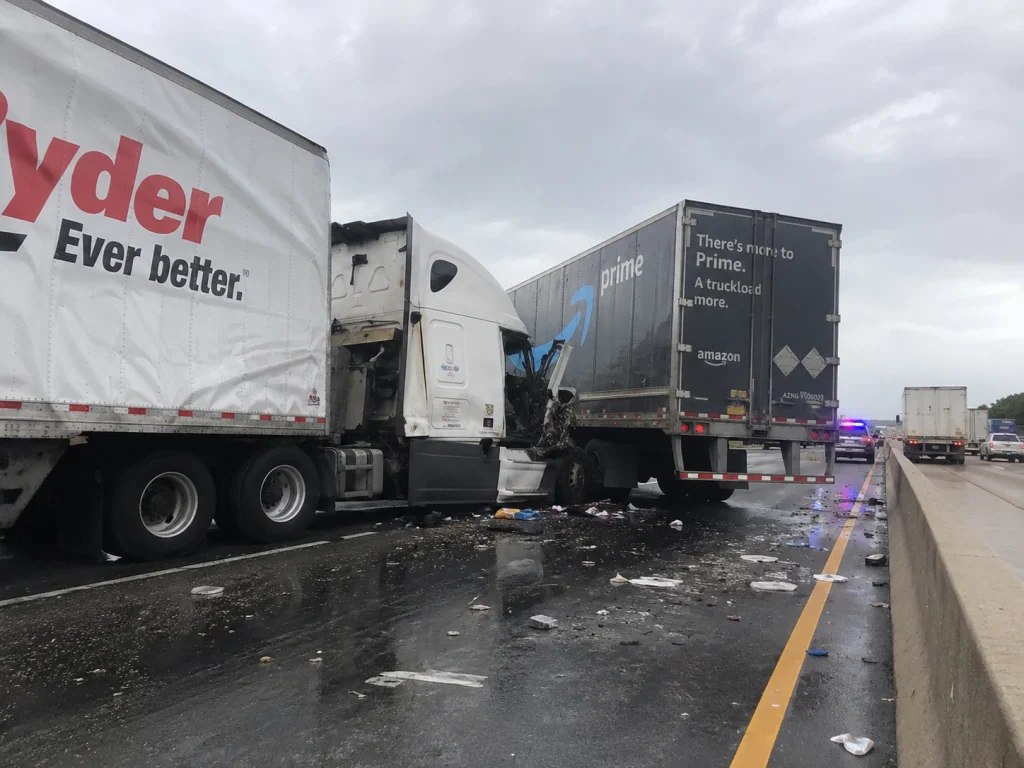
A Minor Crash Can Become a Major Claim
There is also an important difference between reporting a crash to law enforcement and notifying a motor carrier or insurance company about an incident.
Florida’s new threshold changes a requirement under state traffic law. It does not automatically replace the terms of an insurance policy or a trucking company’s internal accident-reporting procedures.
This is especially important in trucking. A minor parking-lot collision, a scrape while maneuvering, contact with another vehicle or seemingly superficial damage can later result in claims involving repairs, injuries that were not immediately apparent or additional damage.
Documentation collected immediately after the crash can become critical in establishing what happened.
Photos of the vehicles and crash scene, information from everyone involved, insurance details, identification of potential witnesses and an accurate description of the circumstances can all become important if a claim is filed later.
There is another key point: a crash involving less than $2,000 in damage does not eliminate a driver’s obligation to stop when another vehicle or property has been damaged. Florida’s rules requiring drivers to remain at the scene and exchange the appropriate information still apply.
In other words, “I don’t have to immediately call law enforcement because of the amount of damage” does not mean “I can simply continue my trip without doing anything.”
What Truck Drivers Should Keep in Mind
Beginning in October, a truck driver involved in a minor crash in Florida will need to distinguish between several different obligations.
The first question is whether anyone has been injured. If there are injuries, the new $2,000 threshold is no longer the central issue. The driver should also consider the apparent extent of the damage and the type of vehicle involved.
But the assessment should not stop there.
Drivers working for a motor carrier should know their company’s accident protocol. Owner-operators should also understand what their insurance policy requires regarding the notification of crashes, incidents and potential claims.
With commercial vehicles in particular, trying to determine at the scene whether damage is worth $1,800, $2,000 or $2,500 can be difficult. Damaged parts, sensors, trailer components, bodywork or problems that are not immediately visible can significantly change the final repair cost.
The new limit should therefore be understood as a specific legal threshold for a particular reporting obligation, not as a number that determines by itself whether a crash is significant.
SB 488 Goes Beyond Crash Reporting
The legislation, most of which takes effect October 1, is broader than the change to the property-damage threshold. SB 488 makes several changes related to vehicles and transportation in Florida, including provisions that directly affect motor carriers.
Among them are changes involving licensing and the motor fuel use tax, as well as an update to the definition of a tank vehicle to align it with federal requirements.
For the trucking industry, SB 488 is therefore worth following beyond the provision affecting crash reporting.
Documentation Remains Key
Raising the threshold from $500 to $2,000 updates a figure that for years helped determine when property damage alone required a crash to be immediately reported in Florida. But for commercial vehicle drivers, the new amount should not become the only reference point after a collision.
An incident that appears minor at the scene can create consequences hours or days later. In an industry involving drivers, motor carriers, equipment owners, insurers and third parties, having accurate information about what happened can make an important difference when a claim is eventually filed.
Starting October 1, there will be a new number to remember on Florida roads: $2,000. For truck drivers, however, the more important rule remains knowing which requirements apply to commercial vehicles, properly documenting every incident and reporting it according to the procedures established by the motor carrier and insurance policy.
In trucking, a crash that looks minor at the scene may not remain minor once the damage is fully assessed and a claim is filed.
 Business hours: Monday to Friday from 8:00 AM to 5:00 PM. California time