 Hable con un agente al (888) 572-7520
  Enviar mensaje a un agente



The U.S. trucking industry moves virtually everything that keeps the economy running. Food, fuel, construction materials, industrial products, and consumer goods make up the daily flow of freight transported by millions of trucks across the country. Yet hidden within this massive network is a lesser-known segment of the industry: highly specialized cargo that demands extraordinary transportation, monitoring, and safety procedures.
Many of these shipments possess unique characteristics. Some are alive. Others are extremely sensitive to temperature fluctuations. Some have irreplaceable scientific or medical value, while others support multi-billion-dollar technological projects. In every case, a delay, mechanical failure, or accident can have consequences that extend far beyond the cargo’s monetary value.
Millions of Bees Supporting American Agriculture
Every year, thousands of trucks participate in one of the world’s largest commercial migrations: transporting beehives to California for almond pollination season.
A single trailer can carry tens of millions of live bees housed in hundreds of hives. Temperature control, ventilation, and transit times are critical. A prolonged delay or unfavorable transportation conditions can result in the loss of massive bee populations that are essential to U.S. agricultural production.
For carriers, this represents live cargo that requires constant monitoring and careful planning of routes, stops, and schedules.
Mosquitoes Traveling for Science
Research laboratories, universities, and public health agencies regularly transport live mosquitoes for studies involving diseases such as dengue, Zika, malaria, and West Nile virus.
These shipments must be maintained under carefully controlled environmental conditions to ensure the insects survive the journey. While the cargo itself may be small, any disruption in temperature or humidity can compromise years of scientific research.
Biological Materials for Medical Treatments
Among the most unusual shipments are biological samples used for fecal microbiota transplantation, a treatment that has become increasingly important in managing certain intestinal diseases.
Transporting these materials requires protocols similar to those used for other biomedical cargo: strict cold-chain management, complete traceability, certified packaging, and highly controlled delivery schedules.
In these operations, even a minor preservation failure can render the shipment unusable.
Transplant Organs: A Race Against Time
Few cargoes are as critical as human organs destined for transplantation.
Hearts, lungs, livers, and kidneys are transported daily between hospitals across different states through a combination of ground and air transportation. In these situations, every minute matters.
Delays caused by traffic congestion, mechanical problems, or severe weather can mean the loss of a life-saving opportunity for a patient waiting for a transplant. As a result, seamless coordination and continuous communication among all parties involved are essential.
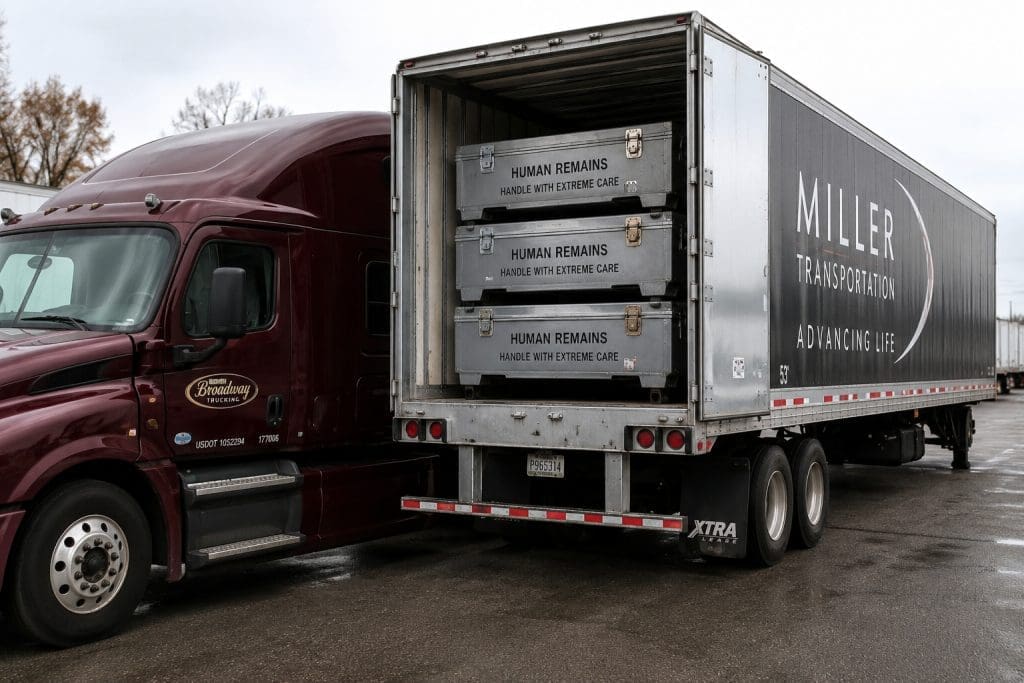
Human Remains for Scientific Research
Universities, medical schools, and forensic laboratories regularly receive skeletal remains, anatomical tissues, and donated bodies for educational and research purposes.
Although heavily regulated, these shipments are a routine part of the American logistics network. Documentation, identification procedures, and chain-of-custody requirements are just as important as the transportation process itself.
Radioactive Materials for Healthcare
Thousands of medical facilities rely on radioisotopes for diagnostic imaging procedures and cancer treatments.
Many of these materials have extremely short useful lives, making rapid delivery essential. Their transportation is governed by strict federal regulations and safety protocols designed to minimize risks throughout transit.
Despite their sensitive nature, these shipments travel America’s highways every day.
Components for the Space Industry
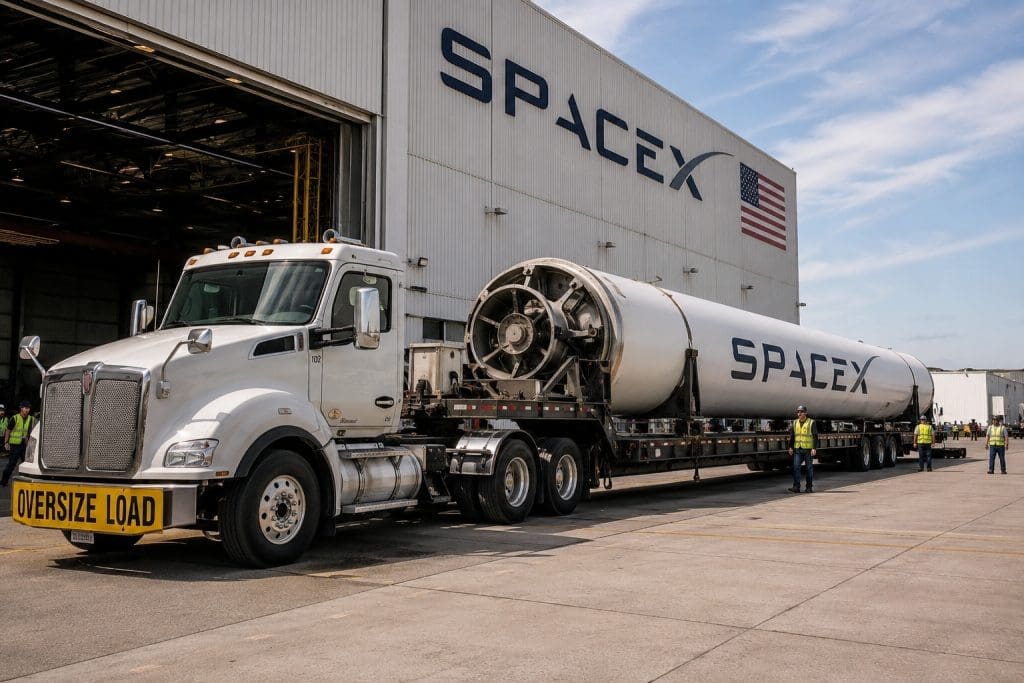
The growth of aerospace companies such as SpaceX, Blue Origin, and other manufacturers has significantly increased the movement of rocket, satellite, and launch-system components across the country.
Cryogenic tanks, oversized metal structures, and high-precision equipment often travel thousands of miles between manufacturing plants, testing facilities, and launch sites.
Because of their size and complexity, many of these moves require special permits, route surveys, escort vehicles, and occasionally temporary road closures.
What Every Truck Driver Should Consider
Specialized freight presents risks that differ substantially from conventional cargo. Before accepting a load, drivers and carriers should fully understand what is being transported, the shipment’s unique requirements, and the consequences of any interruption during transit.
Preventive truck maintenance becomes even more important when hauling time-sensitive or temperature-sensitive freight. A mechanical breakdown can quickly turn into a total cargo loss.
Drivers should also verify all required documentation, develop contingency routes for unexpected disruptions, and maintain continuous communication with dispatchers and customers throughout the trip.
For fleet owners and owner-operators, regularly reviewing insurance coverage is equally important. Not all policies respond the same way when biological materials, high-value cargo, sensitive freight, or regulated materials are involved.
Much More Than Transportation
Behind many of the loads traveling America’s highways are hospitals, laboratories, universities, farmers, and technology companies that depend on safe and timely deliveries.
For truck drivers and transportation companies, these shipments represent some of the industry’s greatest challenges. They also serve as a reminder that trucking does far more than move freight—it supports entire sectors of the economy, drives innovation, and, in some cases, literally helps save lives.
Whether you’re hauling conventional freight or specialized high-value cargo, Saint George Insurance Brokerage (SGIB) offers solutions designed to help protect your operation. Contact one of our agents today to learn more about the coverage options that best fit your business.
 Business hours: Monday to Friday from 8:00 AM to 5:00 PM. California time