 Hable con un agente al (888) 572-7520
  Enviar mensaje a un agente

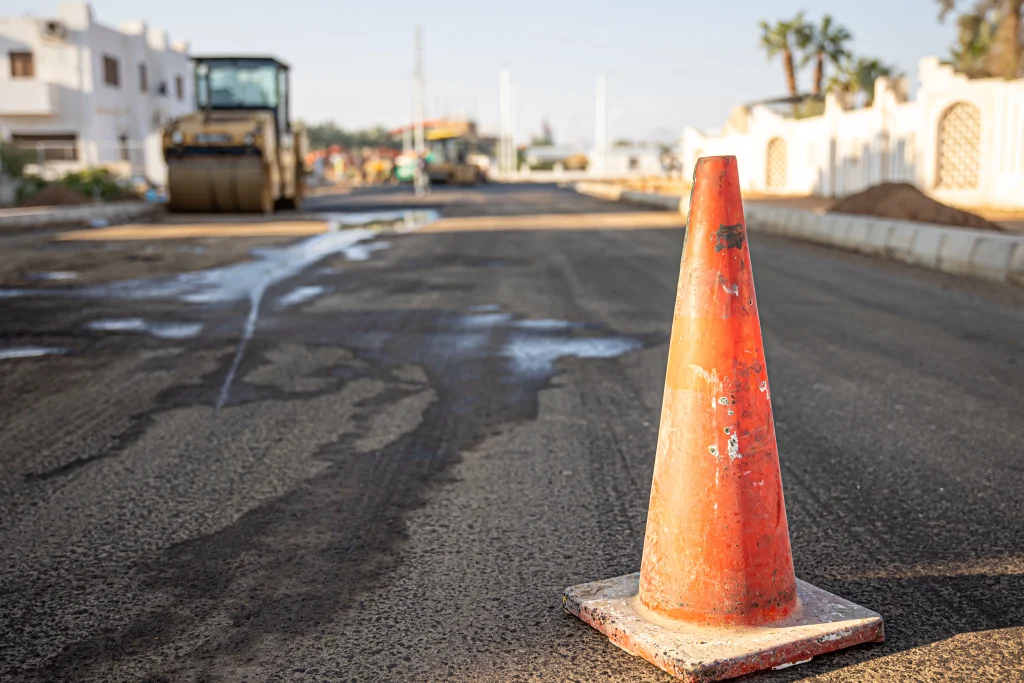

Last Sunday, May 10, at approximately 6:45 p.m., a truck driver was involved in an accident on Interstate 70 in Clay County, Indiana, near mile marker 23. The culprit: a pothole.
The driver stated that the accident was caused by a pothole that led his truck to overturn after losing stability due to the road irregularity. The crash forced authorities to close all westbound lanes of I-70 between North County Road 200 E and Exit 23, with traffic resuming nearly three hours later.
The lesson from this incident is not for drivers, but for transportation and infrastructure regulators. Roads across the United States contain an estimated 55 million potholes nationwide — the equivalent of 13 potholes for every mile of roadway.
The problem is even more severe in cities. It is estimated that 32% of urban roads and highways are in poor condition, while another 24% are rated in fair condition. The report from the American Society of Civil Engineers (ASCE) gave U.S. infrastructure an overall grade of “C,” and a “C-” specifically for inland waterways.

Potholes on U.S. Roads: Statistics and Impact
Potholes primarily form because water that seeps into roads and highways freezes and expands, accounting for 90% of cases, according to the Federal Highway Administration (FHWA). In addition, heavy traffic loads contribute to 25% of pothole formation on highways, according to a study by the American Association of State Highway and Transportation Officials (AASHTO).
Although there are multiple causes behind the formation of potholes, the bottom line is that potholes in the United States generate approximately $3 billion annually in vehicle repair costs and lost productivity for drivers.
Here are some key statistics on the impact potholes have on U.S. infrastructure, safety, and the economy:
- More than two-thirds of drivers are concerned about potholes, representing 64% of U.S. drivers.
- Between 30,000 and 40,000 people die each year on U.S. roads, with more than 30% of those accidents linked to poor road conditions.
- Eleven percent of roadside assistance calls received by the American Automobile Association (AAA) are related to tire damage (2021 data).
- The average pothole repair cost for U.S. municipalities is $125 for small potholes measuring less than 12 inches. In California, repairing potholes on state highways costs taxpayers $100 million annually, according to 2023 data.
- According to a study by the AAA Foundation, potholes cause more than 5,000 traffic accidents every year in the United States.
- The average vehicle repair cost caused by a pothole is $460.
- The number of vehicle repairs related to potholes increased by 57% between 2021 and 2022.
The data above reveals a concerning trend on U.S. roads. However, the relevant authorities have begun implementing solutions that could, in the long term, reduce these statistics. The new Infrastructure Investment and Jobs Act (IIJA) allocates $454 billion toward improving roads, bridges, and public transportation.
In the meantime, safe driving remains the only precaution drivers can take to reduce accidents caused by potholes.
 Business hours: Monday to Friday from 8:00 AM to 5:00 PM. California time