 Hable con un agente al (888) 572-7520
 Enviar mensaje a un agente


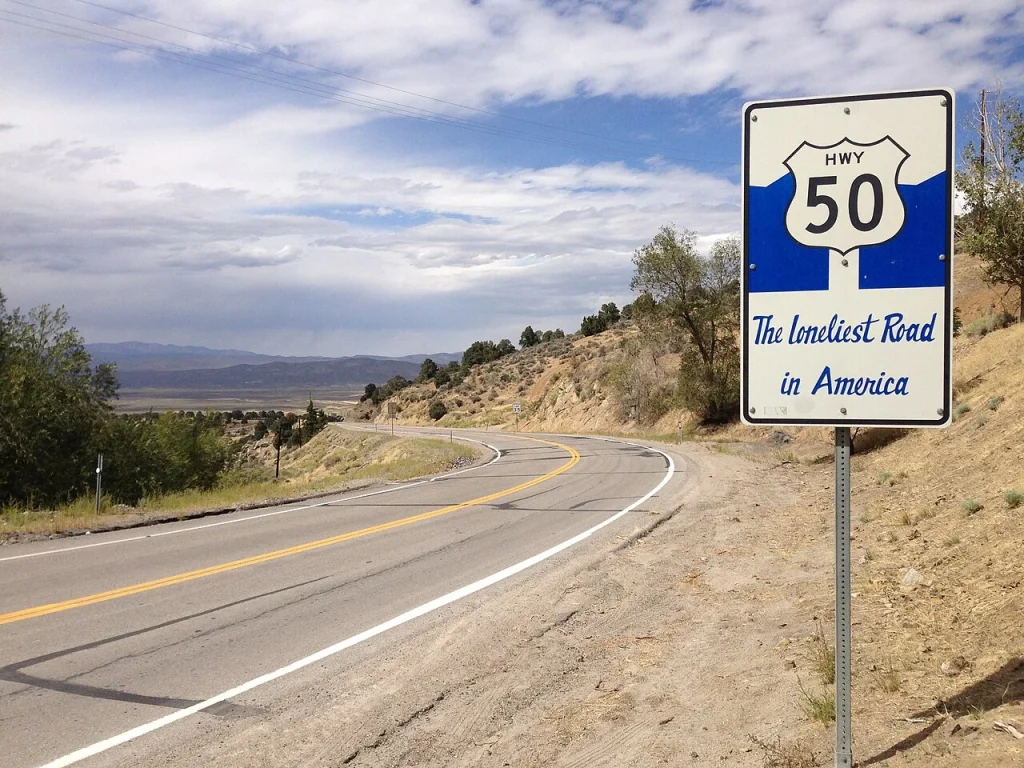

Have you ever heard of the Loneliest Road in America? This title was given to Highway 50 in 1986. The highway is part of U.S. Route 50, which stretches from coast to coast and is one of the longest highways in the country. However, the Nevada portion of Highway 50 covers just 287 miles of the more than 3,000-mile route, running between the towns of Ely and Fernley.
It is known as “the Loneliest Road” because, well, it really is. But the nickname originated with Life magazine, which published a short article in 1986 that accidentally turned the highway into a tourist attraction. An AAA representative pointed out the lack of tourist attractions along the route and warned that no one should attempt the drive without being prepared to handle survival situations.
Rather than taking the comment as an insult, the state of Nevada decided to embrace it as part of its identity and put the phrase on a highway sign. Forty years later, the nickname is still going strong, and the state even offers a survival guide that travelers can get stamped at different stops along the way. In this way, Highway 50 has become a tourist route whose main attraction is precisely its isolation.
Highway 50: Plenty of Room to Travel at Your Own Pace
Although few people choose this route, that doesn’t mean it’s completely deserted. Along the highway, you’ll find small towns and occasional stops that offer at least a glimpse of human life and civilization, even if they’re few and far between. This means you could be driving alone for minutes or even hours at a time. It’s the perfect setting for those looking to spend some time alone with their thoughts, or a challenge for those who can’t stand the silence. Either way, it’s an adventure. Highway 50 also offers breathtaking scenery, crossing more than a dozen mountain ranges and making it a road trip well worth taking.
The US-50 follows a route steeped in history, tracing the old paths of the Pony Express, the Overland Stage Route, and the Lincoln Highway, the first transcontinental highway in the United States. East of Fallon, the loneliest stretch begins, where farmland gives way to the desert and attractions such as the petroglyphs at Grimes Point, the towering Sand Mountain dune, and the old mining town of Austin await. This western half is defined by uninhabited landscapes and long stretches with virtually no signs of human presence.

The eastern half is home to much of the route’s historical and cultural heritage. Highlights include Eureka, with its restored historic buildings, and Ely, a former copper mining hub that still operates a historic steam railroad. Ward Charcoal Ovens are also worth a visit, as is Great Basin National Park, near the Utah border, where visitors can discover ancient bristlecone pines, a glacier, and limestone caves. Together, these natural and historical attractions prove that this highway has far more to offer than its lonely reputation might suggest.
The Loneliest Road is just a catchy slogan for one of the most authentic road trips in America. It’s a peaceful stretch of highway cutting through landscapes unlike anything you’ll find along most other major roads. If you’re planning to drive this route, be ready to slow down (after all, no one is rushing you), take the scenic route, and enjoy the views. You’ll soon discover that Highway 50 has plenty to offer.
Get Ready for Your Highway 50 Adventure
“Everything but lonely on the Loneliest Road” is the promise featured on Travel Nevada’s official website. Its travel guide highlights outdoor activities, hiking, camping, hot springs, off-road trails, wildlife, and much more. However, driving this route requires proper preparation and a realistic understanding of the distances involved.
Basic services, including gas stations, restaurants, and accommodations, are mainly concentrated in Fallon, Austin, Eureka, and Ely. Between these towns, there are stretches of 60 to 70 miles with virtually no services or businesses. That’s why it’s important to fill up your tank at every stop, carry plenty of water, and never count on having cell service. Although the entire highway is paved and relatively easy to drive, you should watch out for driver fatigue, winter weather conditions in the mountain passes, and cattle or deer crossing the road at dawn and dusk.
While many travelers complete the drive in a single day, taking two days allows you to enjoy the journey at a more relaxed pace and spend a night in towns like Ely or Eureka to explore their history and attractions. Visit travelnevada.com to learn more about this iconic stretch of highway, America’s Loneliest Road.
 Business hours: Monday to Friday from 8:00 AM to 5:00 PM. California time