 Llame al (888) 572-7520 para hablar con un agente
 Enviar mensaje a un agente
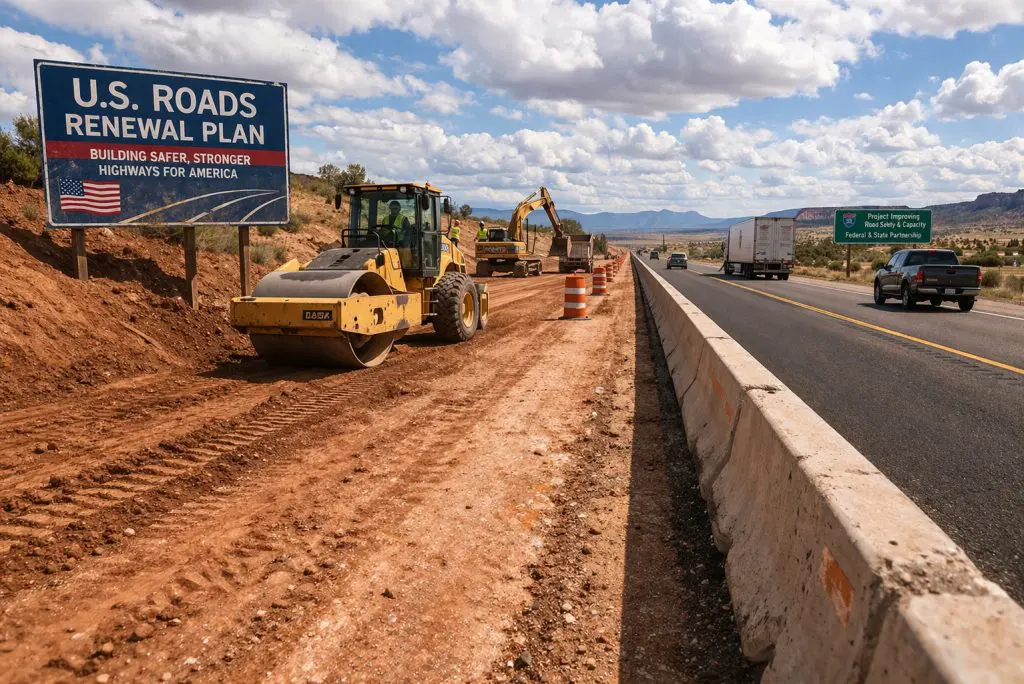

The U.S. transportation system is often viewed through the lens of major highways, freight corridors, and densely populated urban centers. But beyond those hubs, a different reality exists: thousands of rural communities and tribal territories where connectivity remains a structural challenge.
Against this backdrop, the U.S. Department of Transportation has announced a new investment of more than $54 million aimed at addressing that gap from the ground up.
This initiative is part of the Rural and Tribal Assistance (RTA) program and stands out from traditional infrastructure policies in one key way: it does not directly fund construction projects. Instead, it focuses on everything that happens before construction even begins.
That means prioritizing planning, technical studies, permitting, and financial structuring—the foundational stages that determine whether a project can move forward at all.
The bottleneck slowing down infrastructure
In many cases, transportation projects do not fail due to lack of need or vision, but because they cannot overcome early-stage barriers. Designing a bridge, rehabilitating a roadway, or developing a port requires complex processes involving technical expertise, environmental studies, and legal guidance. For many small communities, those resources are simply out of reach.
This is where this type of funding becomes critical. According to Morteza Farajian, Executive Director of the Build America Bureau, the goal is to help communities advance projects that would otherwise remain stalled, reducing both time and costs from the outset.
The level of interest in the program reflects this need. In this round alone, 799 applications were submitted, requesting a total of $790 million. The gap between demand and available funding highlights just how significant the need is.
What kinds of projects will move forward
The scope of the plan is broad, but its objective is clear: improve infrastructure that connects people, goods, and services in areas where that connection is not guaranteed.
Projects supported by this funding include:
- Repair and modernization of aging bridges and roads
- Road safety improvements in high-risk areas
- Development of port infrastructure in isolated communities
- Expansion of multimodal transportation systems
The impact goes beyond mobility. In many rural regions, poor road conditions or weak connectivity translate into higher logistics costs, limited access to markets, and even disruptions in the supply of essential goods.
Real-world examples of impact
One of the most illustrative cases is Chevak, Alaska—a remote community where transportation depends heavily on barges delivering fuel, materials, and food. The program will allocate $2.35 million to support the design and permitting of a new river terminal, improving both safety and reliability of supply chains.
Another example is the Crow Nation in Montana, which will receive $1.96 million to develop a new transportation facility. In a territory spanning more than 2.3 million acres, improving road maintenance is not just an infrastructure issue—it is a matter of safety and accessibility for residents.
According to James A. Crawford, these investments create tangible opportunities for tribal communities to strengthen their economies and improve quality of life.
A small program facing a massive challenge
In total, 49 projects were selected in this round: 31 in rural areas and 18 in tribal territories. Additionally, $20 million was specifically reserved for tribal initiatives, signaling an effort to address long-standing inequalities in infrastructure access.
However, the program remains modest in scale compared to the magnitude of the challenge. The infrastructure gap in the United States—particularly in rural areas—continues to be a recurring issue in public policy discussions. Aging bridges, deteriorating roads, and lack of connectivity remain widespread.
What makes this approach notable is its multiplier effect. By investing in early-stage development, projects become more competitive and better positioned to secure larger funding—whether public or private—in later phases.
More than infrastructure: a development strategy
The Build America Bureau plays a central role in this framework. Beyond funding, it acts as a connector—linking local governments, investors, and technical resources to make projects viable.
This represents a shift in how infrastructure investment is approached. Instead of waiting for fully developed projects, the government steps in earlier, helping build the foundation that is often missing.
In an era where logistics and connectivity are increasingly critical to economic growth, policies like this gain strategic importance. It is not just about building roads or bridges—it is about ensuring that communities can fully participate in the broader economy.
For many of these regions, improved transportation means faster access to healthcare, better educational opportunities, and new pathways for economic activity. In that sense, the impact goes far beyond infrastructure itself.
The challenge ahead will be scaling and sustaining these efforts over time. Because if the numbers make anything clear, it is that the need is far from being met. And in transportation—as in many other areas—the difference between being connected and being isolated can shape the future of an entire community.
 Business hours: Monday to Friday from 8:00 AM to 5:00 PM. California time