 Hable con un agente al (888) 572-7520
 Enviar mensaje a un agente


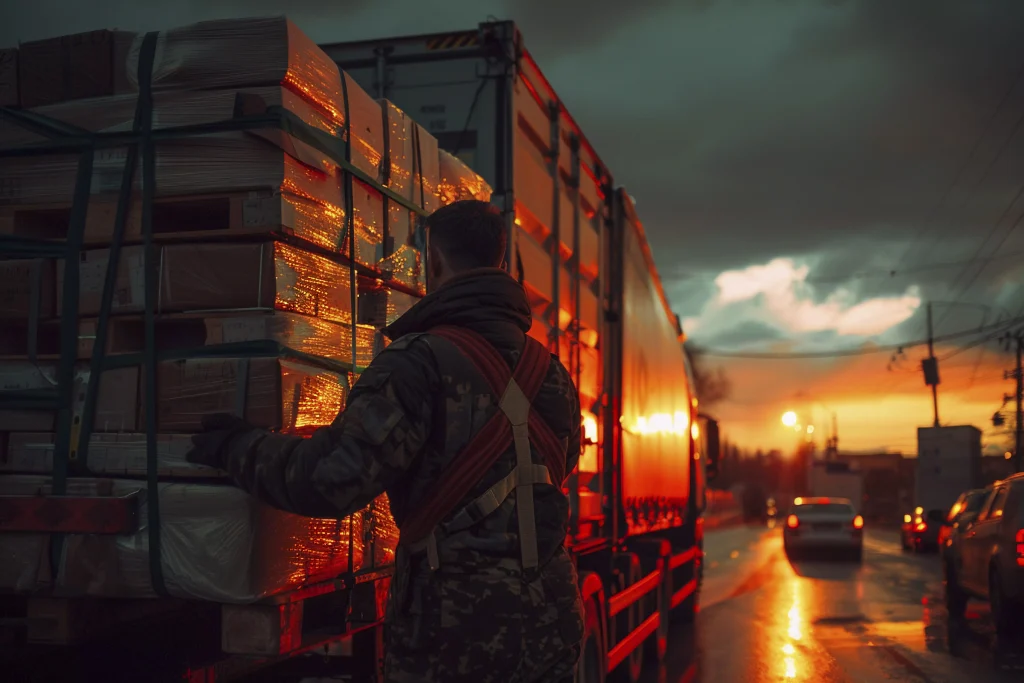

Every November 11, the United States commemorates Veterans Day, a date dedicated to recognizing the men and women who have served in its Armed Forces. Behind that service is also a critical logistical operation: military freight transportation, a specialized system that makes it possible to move equipment, vehicles, food, medical supplies, and other resources to locations around the world.
Military freight transportation involves much more than simply moving goods from one place to another. It is a complex network of transportation and coordination that connects military bases, seaports, airports, and distribution centers to ensure that essential resources reach their intended destinations.
But how does military cargo actually move, and what modes of transportation make these operations possible?
How Does Military Freight Transportation Work?
The term military freight transportation refers to the set of logistical processes used to transport cargo intended for the Armed Forces. These shipments can include everything from basic supplies to military vehicles, specialized machinery, communication equipment, and materials required for defense and humanitarian assistance operations.
Unlike conventional commercial transportation, military logistics must address specific conditions, such as remote destinations, strict delivery schedules, security requirements, and coordination among different agencies and logistics operators. Its primary objective is to maintain the flow of resources and ensure that every shipment reaches the designated location, in the proper condition, and within the established timeframe.
Military freight transportation relies on different modes of transportation, depending on the type of cargo, destination, urgency, and specific requirements of each operation.

1. Maritime Transportation: Moving Large Volumes of Cargo
Maritime transportation is one of the primary methods for moving large quantities of military cargo over long distances. Cargo ships, specialized vessels, and military transport ships make it possible to move vehicles, machinery, containers, supplies, and oversized equipment.
Its main advantage is its capacity to transport large volumes of goods, although transit times are generally longer compared to other modes of transportation.
2. Air Transportation: Speed and Connectivity
When speed is a priority, air transportation plays a critical role. Cargo aircraft allow supplies, specialized equipment, medical products, and other resources that need to reach their destinations quickly to be transported efficiently.
This mode of transportation is also essential for connecting regions with limited infrastructure or providing logistical support during emergency situations.
3. Ground Transportation: Connecting Facilities and Destinations
Trucks, trailers, and specialized vehicles are an essential part of military ground transportation infrastructure. These vehicles connect seaports, airports, logistics centers, and military bases while facilitating the distribution of goods across domestic and international territories.
Ground transportation is particularly important because it makes it possible to complete routes that cannot be handled exclusively by sea or air.
4. Multimodal Transportation: An Integrated Logistics Chain
In many operations, military cargo does not rely on just one mode of transportation. A shipment may begin its journey at a distribution center, continue by road to a seaport, cross the ocean aboard a cargo vessel, and complete its final leg through ground or air transportation.
This integration is known as multimodal transportation. It connects different transportation infrastructures and helps maintain continuity throughout the logistics chain.

What Types of Goods Are Transported Through Military Logistics?
Military freight transportation covers a wide variety of products and equipment. Some of the most common include:
- Military vehicles and transport units.
- Spare parts, tools, and machinery.
- Food, water, and essential supplies.
- Medications and medical equipment.
- Communication equipment and technology.
- Containers carrying operational materials and supplies.
- Infrastructure and maintenance equipment.
Each type of cargo requires specific packaging, documentation, handling, and transportation conditions, depending on its nature and the applicable regulations.
The Importance of Military Logistics on Veterans Day
Behind every shipment are transportation professionals, operators, warehouse personnel, distribution specialists, and coordination teams who help ensure that resources reach the places where they are needed.
Military freight transportation demonstrates that operational capabilities depend not only on equipment or deployed personnel but also on a logistics chain capable of connecting different geographic locations and responding to complex requirements.
As part of Veterans Day, discussing military freight transportation provides an opportunity to recognize another dimension of military service: the logistics infrastructure that makes it possible to move resources and keep the Armed Forces connected.
From large cargo ships to specialized aircraft and trucks, every mode of transportation serves a specific purpose within a transportation chain that requires planning, coordination, and expertise.
This November 11, alongside honoring veterans, it is also worth recognizing the work of everyone involved in the logistics operations that keep these systems moving.
 Business hours: Monday to Friday from 8:00 AM to 5:00 PM. California time