 Hable con un agente al (888) 572-7520
  Enviar mensaje a un agente

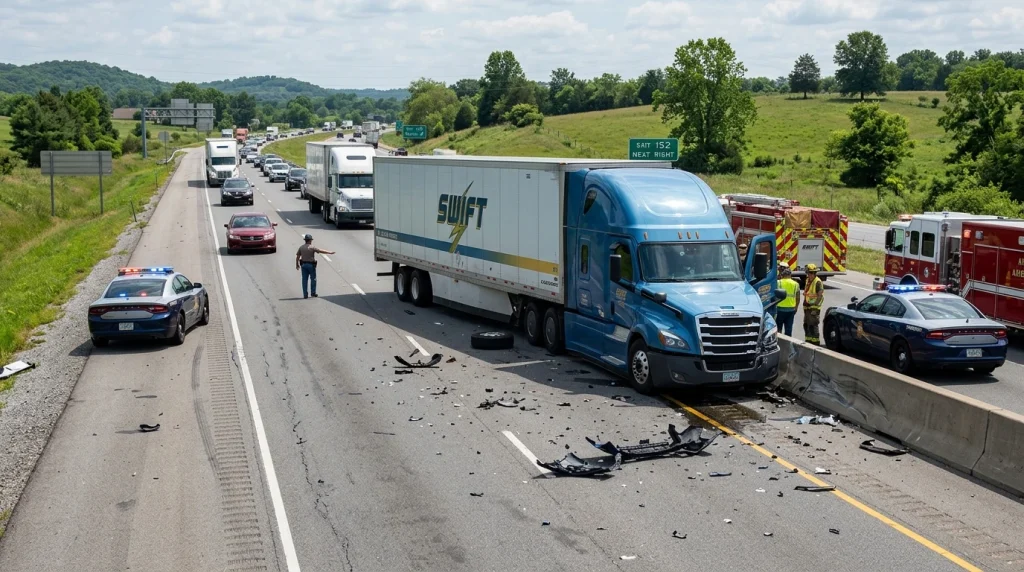

It’s 10:42 a.m. One of your trucks is involved in a highway crash. In less than a minute, what initially seems like a manageable incident can turn into a $1 million loss through lawsuits, property damage, operational disruptions, legal expenses, and insurance claims. The cargo is delayed, emergency responders arrive, law enforcement begins its investigation, and your customer wants answers.
From that moment on, a different race begins—one that is far less visible but just as important: gathering documentation, notifying your insurance carrier, and proving that every aspect of the operation complied with applicable regulations.
In a serious accident, every minute matters. And so does every document.
An Accident Can Cost Much More Than Repairing a Truck
When people think about the cost of a truck accident, they often focus only on the damaged vehicle.
The reality is very different.
Beyond repair costs, companies may face medical expenses, attorney fees, legal settlements, cargo losses, towing and recovery costs, rental equipment, contract penalties, and days—or even weeks—of lost productivity.
In the United States, lawsuits involving commercial truck accidents have increased steadily in recent years. So-called “nuclear verdicts“—jury awards exceeding $10 million—have become increasingly common, fundamentally changing how trucking companies approach risk management.
While not every accident ends up in court, a single serious crash can significantly impact a company’s financial stability.
The Problem May Be a Small Detail
After an accident, insurance companies and regulatory authorities look at far more than the condition of the truck.
They also examine whether the company met all administrative and regulatory requirements.
For example, they may verify whether:
- The insurance policy was active.
- The driver held a valid CDL.
- The truck was properly listed on the insurance policy.
- Maintenance records were complete.
- Required inspections had been performed on time.
- Electronic Logging Device (ELD) records were up to date.
- Cargo documentation was accurate.
In many cases, the issue is not the absence of insurance. Instead, the policy may no longer reflect the company’s actual operations, or critical documentation may be missing to support the claim.
Businesses Change. Risks Change Too.
As fleets grow, companies add new trucks, transport different types of freight, hire additional drivers, or expand into new routes.
However, those operational changes are not always reflected in insurance policies or administrative records.
Over time, gaps can develop without anyone noticing—until an accident, audit, or roadside inspection brings them to light.
By then, correcting those issues may no longer be entirely within the company’s control.
The Best Investment Is the One You Make Before the Accident
Most trucking companies perform preventive maintenance to avoid mechanical failures.
However, reviewing insurance coverage, documentation, and compliance procedures is often postponed until a problem occurs.
Regular policy and compliance reviews help identify expired documents, inadequate coverage, unreported operational changes, and outstanding regulatory requirements before they become expensive liabilities.
At Saint George, We Help Reduce Those Risks
At Saint George, we understand that an insurance policy is more than just paperwork—it is a critical tool for protecting a company’s financial future when it matters most.
That is why we work closely with trucking companies and fleet owners to review their insurance coverage, verify that documentation is current, and evaluate whether each policy truly reflects the way the business operates. Our team identifies potential coverage gaps before they become costly problems and helps clients make informed decisions with greater confidence.
Because losing $1 million does not always begin with a catastrophic crash.
More often, it starts with a small detail that no one reviewed in time.
 Business hours: Monday to Friday from 8:00 AM to 5:00 PM. California time