 Hable con un agente al (888) 572-7520
  Enviar mensaje a un agente

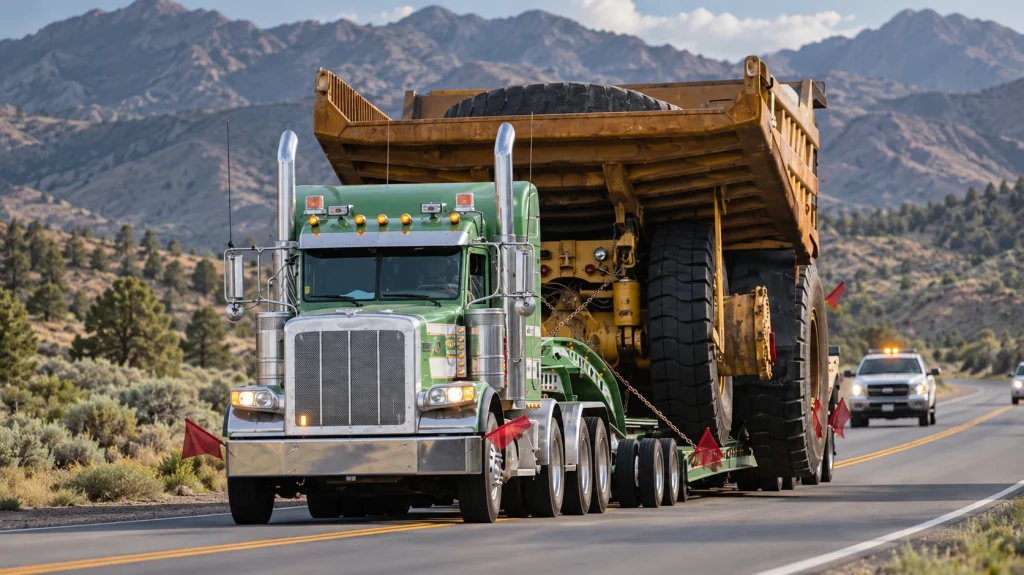

Thousands of trucks travel through Nevada to connect logistics hubs, mining operations, industrial projects and major markets across the western United States. Within that network, I-80 in northern Nevada and I-15 in the south play a major role in freight movement.
But hauling an oversized or overweight load through Nevada involves more than choosing the shortest route. Mountain passes, rural highways, bridges, desert terrain and seasonal conditions mean some movements must be carefully evaluated before a truck hits the road.
The Nevada Department of Transportation (NDOT) operates a specific permitting system for Over Dimensional Vehicles (ODV), with requirements that can vary depending on a vehicle’s dimensions, weight and, importantly, the route it will travel.
For truckers and fleets, that means obtaining a permit is only one part of planning the move.
When Does a Truck Need a Special Permit in Nevada?

Nevada establishes limits beyond which a vehicle or load cannot operate under standard conditions without authorization.
Among the thresholds used by NDOT are 80,000 pounds gross weight, 8 feet 6 inches in width and 14 feet in height, along with specific restrictions involving vehicle length and front or rear overhang.
Exceeding these limits may require an Over Dimensional Vehicle Permit.
However, NDOT makes an important point: submitting an application does not automatically mean the proposed movement will be approved.
The requested route must have sufficient structural capacity and clearance to safely accommodate the load. Additional conditions may also apply depending on the roads being used.
In Nevada, the Route Matters Too
This is particularly important because of Nevada’s geography.
The state has long distances between population centers, major corridors crossing mountainous and desert areas, and an extensive highway network connecting mining and industrial operations with neighboring states.
As a result, a load that can travel along one corridor may face restrictions on another.
NDOT provides specific information on Restricted Routes, Weight Restricted Bridges and Routes and seasonal restrictions. Before moving an overweight or oversized load, carriers need to verify that the planned route can accommodate both the vehicle and its weight.
Bridges are another critical consideration. Structural capacity can restrict particularly heavy vehicles even when they have an ODV permit.
Spring Thaw Can Change the Rules
Nevada also has Spring Thaw restrictions, which are designed to protect certain roads when thawing conditions can reduce pavement and roadway strength.
NDOT identifies routes that are subject to seasonal weight restrictions. On certain roads, these restrictions apply between February 1 and April 30.
For the trucking industry, that means a route used at one time of year may operate under different weight conditions just a few months later.
Checking current restrictions before beginning a trip is therefore especially important for overweight vehicles.
Nevada
What Qualifies as a Super Load in Nevada?
Once a vehicle or load reaches certain dimensions, Nevada classifies the movement as a Super Load.
According to NDOT, this category includes, among other cases, loads exceeding 500,000 pounds, 200 feet in length or 18 feet in height. Specific width thresholds also apply depending on the type of highway.
These loads receive additional scrutiny because they may require a much more detailed evaluation of the proposed route.
When a load exceeds 18 feet in height, for example, NDOT requires a Route Survey to determine whether the vehicle can safely travel the planned route.
Bridges, overhead lines, signs, structures and other obstacles can all become determining factors in whether a route is approved or must be modified.
Super Loads also require significantly more advance planning. Applications must be submitted online at least 10 business days before the planned move date, and each request is evaluated on a case-by-case basis.
The permit is valid for five days and covers one trip only.
These movements also require Nevada Highway Patrol escorts and may involve additional costs related to coordination with NDOT and other agencies.
How Much Do Oversize Permits Cost in Nevada?
For less exceptional movements, Nevada offers several permit options.
An Annual ODV Permit costs $60 and is valid for one year from the date of issue. NDOT recommends planning at least 30 days in advance, particularly for first-time applications or renewals.
A Five-Day ODV Permit costs $25. NDOT aims to provide same-day service for these requests, although carriers are encouraged to apply one business day before the planned movement and before 4:30 p.m.
Super Load permits start at $25, but additional costs may apply depending on the characteristics of the movement and the coordination required.
Applications can be submitted through NDOT’s online ODV permitting system, which accepts credit cards, debit cards and electronic checks.
Before Hauling an Oversize Load Through Nevada
For truckers, knowing the exact dimensions and weight of the load is only the beginning. Carriers also need to verify the authorized route, bridge restrictions, seasonal conditions, pilot car or escort requirements and the exact validity of the permit.
There is also an important documentation requirement: the original signed permit must remain in the vehicle during the move.
In a state where freight connects California with other western markets while also serving mining, industrial and logistics operations, route planning becomes particularly important.
Nevada is a key trucking corridor, but its long distances, mountain passes, bridges and seasonal changes mean the largest loads cannot be treated like an ordinary trip. For carriers hauling heavy or oversized equipment, checking permits, restrictions and the approved route before departure can help prevent detours, delays and problems on the road.
 Business hours: Monday to Friday from 8:00 AM to 5:00 PM. California time