 Hable con un agente al (888) 572-7520
  Enviar mensaje a un agente

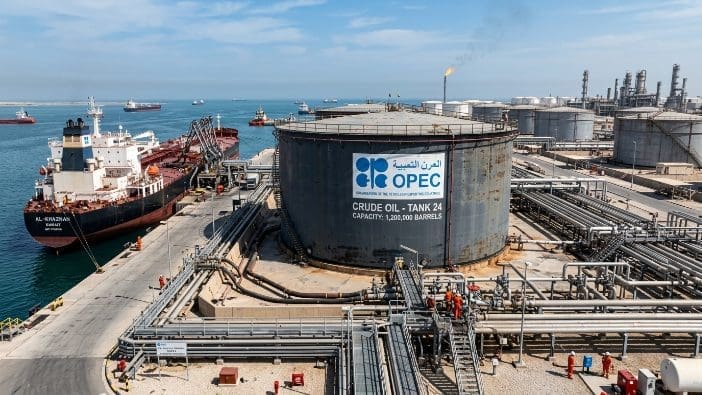

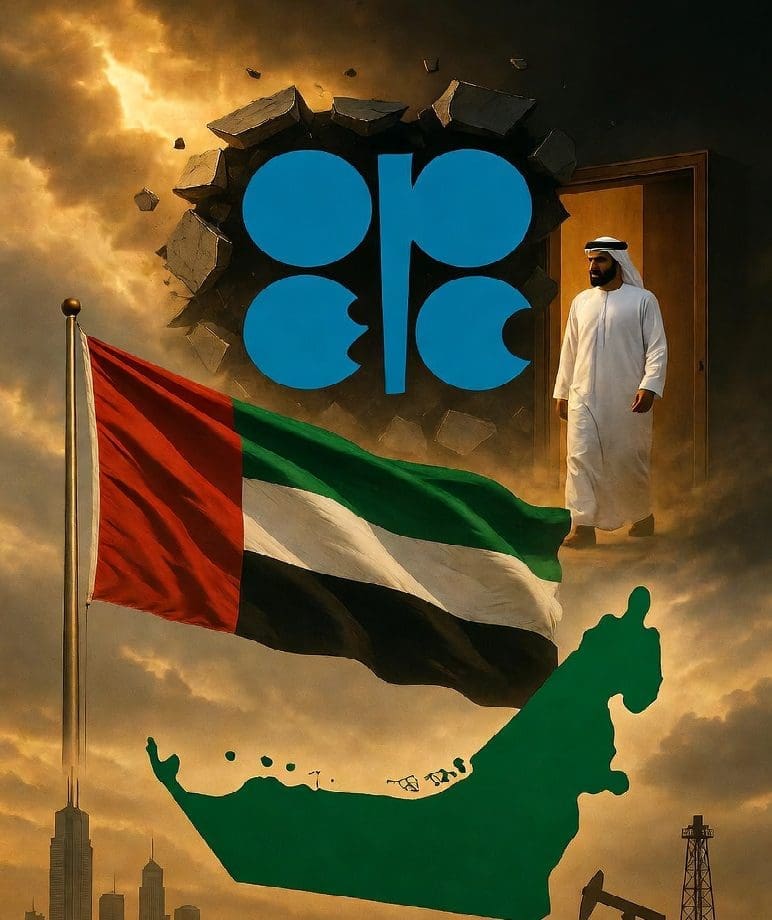
The recent decision by United Arab Emirates to leave the Organization of the Petroleum Exporting Countries (OPEC) marks one of the most significant shifts in the global energy landscape in decades. For nearly 60 years, the UAE was part of a coordinated system that managed oil production to influence global prices. Its exit signals not just a geopolitical shift, but a structural change with direct implications for the U.S. trucking and logistics industry.
Fuel remains one of the largest operational expenses for fleets in the United States. Any disruption in oil supply dynamics quickly translates into cost fluctuations at the pump—especially diesel, which powers the backbone of freight transportation.
More supply, but greater uncertainty
🚨 BREAKING
— Wimar.X (@DefiWimar) April 28, 2026
🇦🇪 UAE IS LEAVING OPEC (THE ORGANIZATION OF THE PETROLEUM EXPORTING COUNTRIES).
NOW, IT WILL HAVE NO LIMITS ON OIL PRODUCTION.
MILLIONS OF BARRELS WILL FLOOD THE MARKET.
LOOKS LIKE SOMETHING EXTREMELY BAD IS COMING… pic.twitter.com/ckHrEyKaTa
One immediate consequence of the UAE’s departure is its ability to increase oil production without adhering to OPEC quotas. The country has already been investing heavily in expanding its output capacity, positioning itself to capture a larger share of global demand.
In theory, increased production could put downward pressure on oil prices. However, the current global context complicates that outlook. Ongoing geopolitical tensions in the Middle East and disruptions in key shipping routes—particularly around the Strait of Hormuz—are constraining supply flows.
As a result, the market is entering a dual-phase scenario: potential price relief in the medium term, but heightened volatility in the short term. For logistics operators in the U.S., this creates a challenging environment where fuel costs become harder to predict and manage.
Diesel prices and fleet economics
Diesel prices in the United States are closely tied to global crude oil movements. When oil markets become unstable, the effects are felt almost immediately by trucking companies.
If the UAE’s exit triggers increased competition among producers—especially if countries like Saudi Arabia respond by adjusting their own output—it could lead to a price war. That scenario would benefit carriers through lower fuel costs over time.
However, the opposite risk is equally significant. A fragmented OPEC may lose its ability to stabilize prices, leading to sharp spikes. For trucking companies, that means tighter margins, higher cost-per-mile, and increased pressure on freight rates.
Fuel surcharges may help offset some of these increases, but they rarely keep pace with rapid market swings. Smaller carriers, in particular, are more vulnerable to sudden price hikes.
A weaker OPEC, a more unpredictable market
Energy analysts are already describing the UAE’s exit as a potential turning point for OPEC. The organization loses a key producer and one of its more disciplined members in adhering to output agreements.
For the United States, this presents a mixed outlook. On one hand, a weaker OPEC could reduce coordinated control over oil prices—something U.S. policymakers have historically criticized. On the other, it introduces greater unpredictability into global energy markets.
For the logistics sector, predictability is critical. Freight contracts, fuel hedging strategies, and route planning all depend on relatively stable cost assumptions. Increased volatility forces companies to adopt more flexible and risk-aware strategies.
Supply chains and global logistics impact
The implications go beyond fuel prices. Changes in oil production and export routes can alter global shipping patterns, affecting transit times and supply chain efficiency.
The Strait of Hormuz, a critical chokepoint for global oil flows, is already experiencing disruptions. Any prolonged instability in this region can ripple across global trade networks, impacting everything from maritime shipping schedules to inland freight distribution in the U.S.
Additionally, if the UAE develops alternative export routes—such as pipelines bypassing traditional maritime paths—it could reshape global energy logistics, influencing delivery timelines and costs.
A strategic shift for the United States?
From a geopolitical perspective, the UAE’s decision could be seen as strategically favorable for the United States. A less cohesive OPEC may reduce the group’s influence over global oil pricing.
At the same time, the U.S. has increased its domestic oil and gas production in recent years, strengthening its position as a global energy player. A more fragmented market could create opportunities for American producers.
However, in the short term, volatility remains the dominant factor. For trucking companies and logistics operators, this uncertainty reinforces the need for adaptability.
A turning point for the trucking industry
The UAE’s exit from OPEC is not an isolated event—it is part of a broader shift toward a more decentralized and competitive global energy market.
For the U.S. trucking and logistics industry, this means operating in an environment where fuel prices can change more rapidly, supply chains may face new disruptions, and efficiency becomes even more critical.
Fleet operators may increasingly look toward fuel diversification strategies, improved route optimization, and emerging technologies such as electric trucks to mitigate risk.
In an industry where every cent per gallon matters, decisions made within OPEC—or outside of it—are no longer distant geopolitical developments. They are immediate, operational realities shaping the daily economics of freight movement across the United States.
 Business hours: Monday to Friday from 8:00 AM to 5:00 PM. California time