 Hable con un agente al (888) 572-7520
  Enviar mensaje a un agente

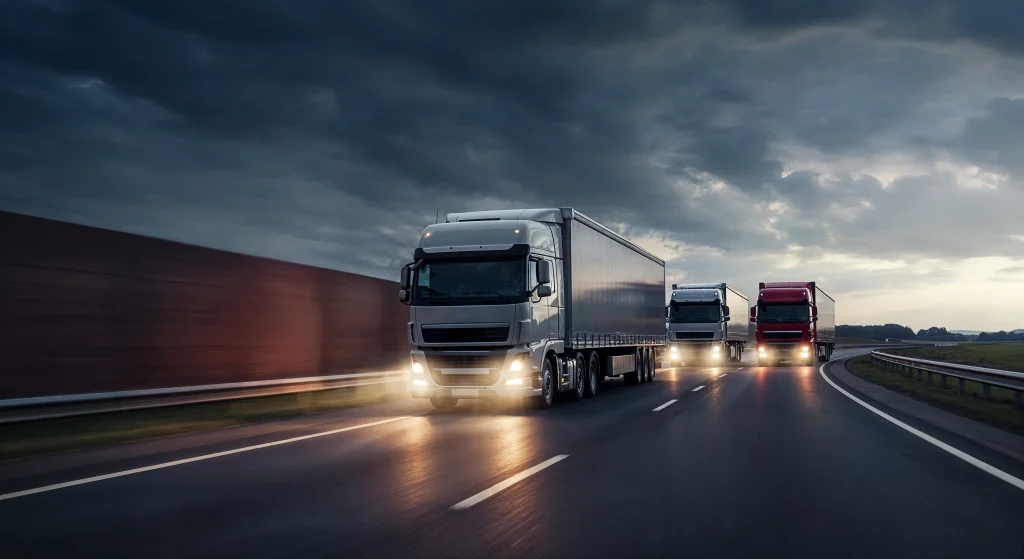

During the review of the BUILD America 250 Act in the U.S. House Transportation and Infrastructure Committee, lawmakers approved an amendment that would open the door to a voluntary pilot program aimed at increasing the maximum gross weight allowed for trucks on federal interstate highways.
The proposal seeks to update a federal regulation that has remained unchanged since 1982. Under the plan, participating states would be allowed to raise the weight limit from 80,000 to 91,000 pounds, provided that trucks add a sixth axle to redistribute the load.
The initiative passed by a narrow margin of 35 votes to 29. However, despite its approval, states would not be required to change their current regulations, since participation in the program would be entirely voluntary.
Higher Truck Weight Limits Spark Debate: Efficiency, Lower Costs, and Technology vs. Increased Highway Risks
Supporters of the measure argue that current restrictions no longer reflect the realities of modern supply chains and limit the competitiveness of sectors such as agriculture, manufacturing, and logistics.
Representative Dusty Johnson, who introduced the measure, stated that supply chain disruptions generate direct costs for American families. He also pointed out that 40 states already allow variations in weight limits on non-federal roads, creating a fragmented system that forces many carriers to leave interstate highways and use local routes instead.
According to data cited during the debate, updating weight limits could eliminate approximately 105,000 truck trips annually in the dairy industry. In livestock transportation, it would allow the same amount of cargo to be moved using four trucks instead of five.
Republican lawmakers defended the proposal, arguing that it could reduce logistics costs and help ease inflationary pressure on consumer goods. Representative Eric Burlison of Missouri said the measure would make freight transportation more efficient.
Mike Collins, a Georgia congressman and transportation business owner, argued that today’s trucks are safer thanks to technological advances such as anti-lock braking systems, automatic rollover prevention systems, and disc brakes.
Johnson also cited a study by the Minnesota Department of Transportation showing that adding a sixth axle reduces road wear by 37%. He further referenced a federal analysis concluding that a 91,000-pound truck with six axles can stop even one foot sooner than a standard 80,000-pound configuration.
However, the proposal also faced strong opposition from Democratic lawmakers and organizations tied to the transportation sector and local governments. Critics warned about the potential severity of accidents and the increased risks for motorists sharing the roads with heavier trucks. They described the initiative as a “risky gamble” for public safety and rejected the idea of using highway users as “guinea pigs” to collect data.
Background and Industry Opposition
This is not the first time the U.S. Congress has considered increasing weight limits for commercial vehicles. Similar initiatives have been introduced in recent years, although many have failed due to resistance from various industry groups, including organizations such as the Owner-Operator Independent Drivers Association (OOIDA), the Truckload Carriers Association (TCA), and the Teamsters union.
 Business hours: Monday to Friday from 8:00 AM to 5:00 PM. California time