 Hable con un agente al (888) 572-7520
  Enviar mensaje a un agente

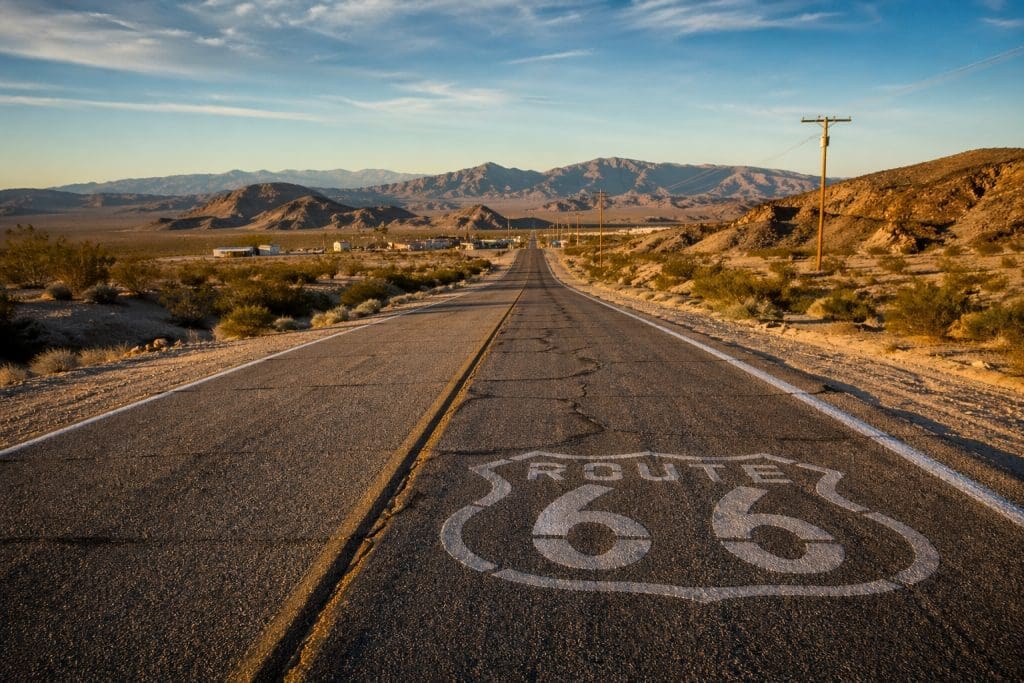

The U.S. Route 66—widely known as The Main Street of America, The Mother Road, and Will Rogers Highway—is marking a full year of centennial celebrations throughout 2026. Although the highway was officially established on November 11, 1926, communities and states along its path are hosting events all year long to honor one of the most influential roads in the history of transportation and American culture.
Stretching nearly 3,940 kilometers (2,448 miles), Route 66 connects Chicago to Los Angeles, with its symbolic endpoint at the Santa Monica Pier. Today, more than just a transportation corridor, it stands as a global cultural icon—kept alive through its stories, landscapes, and enduring legacy.
Centennial events: celebrations along the entire route
Rather than focusing on a single major event, the 2026 centennial unfolds across the entire historic route. Key activities include:
- Local festivals in major cities featuring classic car shows, food fairs, and live music inspired by the 1950s and 1960s.
- Organized caravans and road trips covering iconic stretches of the original highway.
- Commemorative events at both ends of the route, especially in Chicago and Santa Monica.
- Museum exhibitions and cultural showcases dedicated to the history of the road and transportation.
- Restoration of historic signage and revitalization of iconic towns along the route.
These initiatives aim not only to honor the past, but also to boost tourism and support the local economies that grew alongside the highway.
More than a road: a cultural and commercial brand
Route 66 quickly transcended its function as a roadway to become a powerful cultural and commercial symbol. A notable example is the fuel brand Phillips 66, whose name was directly inspired by the highway.
According to the story, in the late 1920s, two chemical engineers were testing a new gasoline formula in Tulsa, Oklahoma. While driving on a straight stretch of Route 66, their car exceeded 66 miles per hour. The combination of speed and highway number gave birth to the brand name that remains in use today.
Literature: the birth of the “Mother Road”
One of the most significant cultural milestones came in 1939 with the publication of The Grapes of Wrath by John Steinbeck. The novel depicts the migration of thousands of families from Oklahoma to California during the Great Depression, with Route 66 serving as the narrative backbone.
It was in this work that Steinbeck coined the term “Mother Road,” a name that endures to this day. The book won the Pulitzer Prize and cemented the highway’s image as a symbol of hope, movement, and social transformation.
Music: the highway’s anthem
In 1946, musician Bobby Troup composed the song Route 66 after traveling the highway to California. Popularized by Nat King Cole and later covered by numerous artists, it became one of the most iconic songs in American car culture.
The track helped solidify the road’s image as a symbol of freedom and adventure—an association that remains deeply rooted in popular imagination.
Television, film, and pop culture
Route 66 also left its mark on television with the series Route 66 (1960–1964), starring Martin Milner and George Maharis. The show followed two young men traveling across the country in a Corvette, reinforcing the idea of the road as a life-changing journey.
In cinema, films like Bagdad Café portrayed life in Route 66 towns after its decline, while modern productions such as Cars paid tribute to its landscapes, characters, and spirit.
Its influence extends even further—sports teams like the Tulsa 66ers and video games such as Overwatch have drawn inspiration from the highway.
A living open-air museum
Although Route 66 was officially removed from the federal highway system in 1985, much of it remains drivable and retains a unique identity. Landmarks like the Wigwam Motel and the Cadillac Ranch showcase its distinctive roadside aesthetic—defined by car culture, long-distance travel, and the spirit of the open road.
Today, traveling Route 66 is a journey through time: retro motels, former gas stations turned museums, and small towns that preserve the essence of a bygone era.
A centennial that looks ahead
The 2026 celebrations not only commemorate 100 years of Route 66 but also reaffirm its relevance as a cultural and tourism landmark. For the transportation industry, it represents a key chapter in the evolution of U.S. road infrastructure.
A century after its creation, Route 66 remains far more than a highway—it is a story in motion, one that continues to captivate the world in 2026.
 Business hours: Monday to Friday from 8:00 AM to 5:00 PM. California time