 Hable con un agente al (888) 572-7520
 Enviar mensaje a un agente


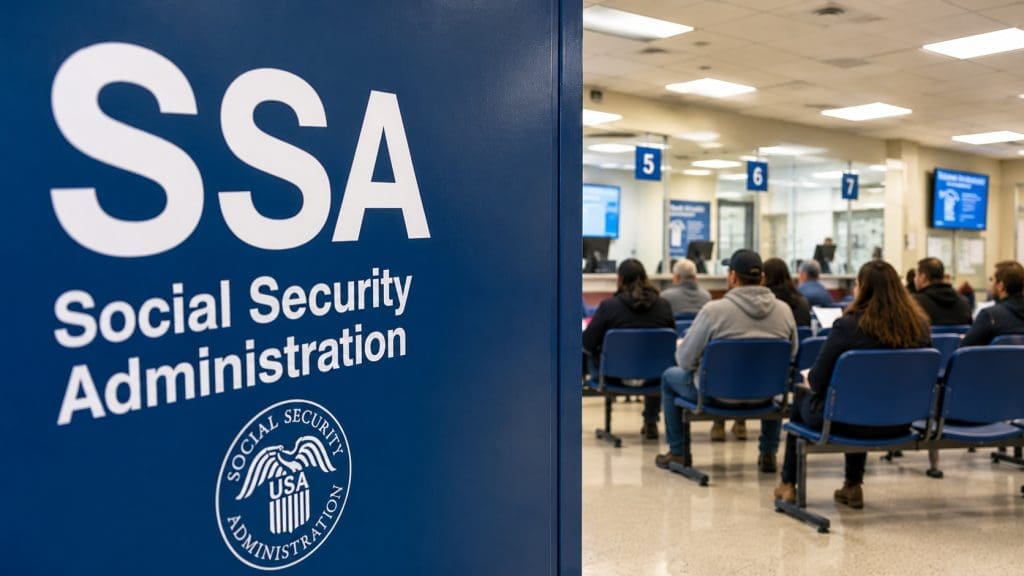

The Social Security Administration (SSA) has announced a historic update to its Social Security number (SSN) database, correcting tens of millions of records. The initiative aims to improve the accuracy of information used by federal and state agencies to verify identities, prevent fraud, and administer government benefits.
For truck drivers, the announcement is particularly relevant because information maintained by the SSA is also used during the verification process for Commercial Driver’s Licenses (CDLs), which are required to operate commercial motor vehicles.
The update comes as the U.S. Department of Transportation (USDOT) and the Federal Motor Carrier Safety Administration (FMCSA) increase oversight of commercial driver’s licenses, particularly those issued to drivers who are not permanently domiciled in the United States.
However, these are two separate initiatives. The SSA has not announced a mass cancellation of CDLs or confirmed that its database cleanup is part of a new joint enforcement operation with the FMCSA. The potential impact on drivers primarily involves identity verification and discrepancies that may arise during licensing procedures.
Social Security Corrects Millions of Records: What Did the Agency Find?
According to the SSA’s official announcement, the agency conducted the most extensive cleanup of its database in its 91-year history.
Since the beginning of President Donald Trump’s administration, the agency has corrected a number of records equivalent to nearly 15% of active Social Security numbers, within a database containing approximately 390 million records.
The major updates include:
- 17 million death dates added to records that previously lacked this information.
- 25 million records updated with missing or incomplete citizenship information.
- An additional 8.5 million records undergoing citizenship status corrections.
- New internal safeguards to reduce errors caused by manual data entry.
Some of these updates were completed using information provided by the Department of Homeland Security (DHS) through the Systematic Alien Verification for Entitlements (SAVE) system.
SSA Commissioner Frank J. Bisignano explained that database accuracy is essential to maintaining the integrity of government services and preventing fraud across federal programs.
The scale of the review does not mean that millions of people have lost their Social Security numbers or that every corrected record was associated with fraudulent activity. Many of the changes involve missing, incomplete, or outdated information.
CDL: What Happens When Your Information Doesn’t Match Social Security Records?
To obtain a commercial driver’s license in the United States, applicants must meet identification requirements established by federal and state authorities.
Under federal regulation 49 CFR § 383.73, state agencies responsible for issuing CDLs must verify certain applicant information against records maintained by the Social Security Administration.
This information includes the applicant’s legal name, date of birth, and Social Security number.
When the information provided by a driver does not match official records, a CDL application, renewal, transfer, or update may be delayed until the discrepancy is resolved.
For example, a truck driver whose last name appears differently in Social Security records and state identification documents could encounter difficulties when renewing a CDL.
Similar problems may arise when a driver’s date of birth or Social Security number contains an error.
These discrepancies do not necessarily indicate fraud. They may result from administrative mistakes, legal name changes, or information that has not yet been updated across government systems.
Importantly, this verification process was already in place before the SSA’s announcement. The recent database cleanup does not, by itself, establish a new requirement for all CDL holders.
It also does not mean that an existing commercial driver’s license will automatically be suspended when a Social Security record is updated.
How Are Social Security Records Connected to CDLIS?
The Commercial Driver’s License Information System (CDLIS) allows states to exchange information about commercial driver’s license holders.
Its functions include checking driving records, restrictions, disqualifications, and licenses issued in different jurisdictions.
The system helps prevent drivers from holding multiple CDLs and enables state authorities to review relevant information before issuing certain credentials.
The Social Security database serves a different purpose: it maintains identity information that state agencies use for verification.
Although both systems play a role in commercial driver’s license administration, they are not the same platform. The SSA has not reported that its recent database cleanup triggered an automatic review of every existing CDL.
The main practical implication is that accurate personal information remains essential for completing commercial licensing procedures.
FMCSA Tightens Oversight of Commercial Driver’s Licenses
Alongside the Social Security database update, the FMCSA has tightened eligibility requirements for certain commercial driver’s licenses known as non-domiciled CDLs.
Federal regulations effective March 16, 2026, restrict eligibility for these credentials to drivers who can demonstrate qualifying employment-based immigration classifications: H-2A, H-2B, or E-2.
States must verify the required documentation through established federal procedures before issuing, renewing, transferring, or updating these licenses.
When authorities receive information showing that a driver no longer meets the applicable eligibility requirements, they must initiate the appropriate process to remove that driver’s commercial driving privileges. In certain circumstances, the required action must be completed within 30 days.
These provisions primarily affect drivers applying for or holding non-domiciled CDLs. They should not be confused with the requirements applicable to U.S. citizens or lawful permanent residents who qualify for standard CDLs.
Federal enforcement efforts have also extended to commercial driver training providers.
During 2026, federal authorities intensified oversight of training providers and announced the removal of more than 9,500 facilities from the federal training registry.
A school’s removal from the Training Provider Registry may prevent training completed after its removal from being accepted toward applicable federal requirements.
However, this does not automatically invalidate every CDL previously obtained by the school’s former students.
What Could This Mean for Truck Drivers and Trucking Companies?
For commercial drivers, inconsistencies in personal records can become an administrative problem when they surface during a CDL renewal, transfer, or update.
Potential consequences include delays in completing licensing procedures, requests for additional documentation, or the need to correct information with Social Security before proceeding with the state licensing agency.
For fleet owners, these situations may affect driver availability when a license needs to be renewed or when hiring depends on successful credential verification.
Trucking companies should also pay close attention to official notifications concerning license suspensions, disqualifications, or changes to commercial driving privileges.
However, there is currently no official data establishing that the SSA’s recent database cleanup has caused a specific reduction in the number of qualified truck drivers.
Nor has there been confirmation that the correction of millions of records has resulted in widespread CDL suspensions.
The actual impact will depend on each driver’s circumstances, state licensing procedures, and the implementation of federal enforcement measures.
What Should CDL Holders Check?
Truck drivers can take several steps to help avoid complications during licensing procedures.
First, they should confirm that their legal name, date of birth, and Social Security number match the documents submitted to their state licensing agency.
If discrepancies are identified, drivers should request the appropriate corrections before beginning a renewal or transfer whenever possible.
They should also review notices from the Department of Motor Vehicles (DMV) or the relevant state licensing authority, particularly when additional documentation is requested.
Drivers holding non-domiciled CDLs should pay special attention to federal eligibility requirements and the validity of their immigration documents.
Trucking companies, meanwhile, should keep driver qualification files up to date and verify that commercial driver’s licenses remain valid before assigning drivers to operations.
If a driver receives a notice concerning a possible suspension or disqualification, the situation should be verified directly with the appropriate state agency.
Social Security and CDL: Why This Update Matters
The Social Security Administration’s database cleanup represents one of the largest identity record reviews conducted by the U.S. government.
Although it does not automatically change the licensing status of CDL holders, it highlights the importance of maintaining accurate personal information across government systems.
For truck drivers, the practical concern is not that the Social Security update will automatically invalidate their licenses. Rather, discrepancies in personal records could interfere with future CDL applications, renewals, or transfers.
In an industry that depends on qualified drivers and compliance with federal and state regulations, verifying personal information can help prevent administrative delays and operational disruptions.
Drivers and fleet owners should review their records, respond promptly to official notices, and correct discrepancies before they interfere with commercial transportation activities.
If you need assistance reviewing your documents or your fleet’s records, don’t hesitate to contact us.
 Business hours: Monday to Friday from 8:00 AM to 5:00 PM. California time