 Llame al (888) 572-7520 para hablar con un agente
 Enviar mensaje a un agente
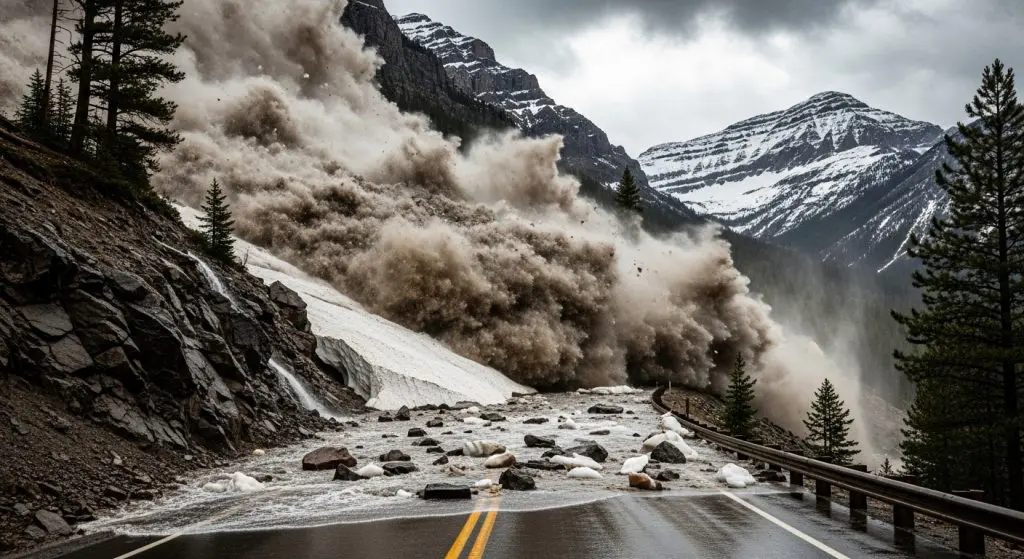

A new silent threat is reshaping risk conditions on mountain roads across the United States. Although several regions experienced lower snowfall during the 2025–2026 winter, avalanche danger has not decreased—in many cases, it has actually intensified. A key factor behind this shift is the arrival of spring, which increases terrain instability and raises risks for freight transportation.
The core change lies in the structure of the snowpack. Warmer temperatures are causing precipitation patterns to shift in high-altitude areas where it once only snowed. Now, rain is increasingly falling on top of existing snow. When this happens near freezing temperatures, it creates a hard ice crust. New layers of snow then accumulate over this slick surface, forming a highly unstable combination.
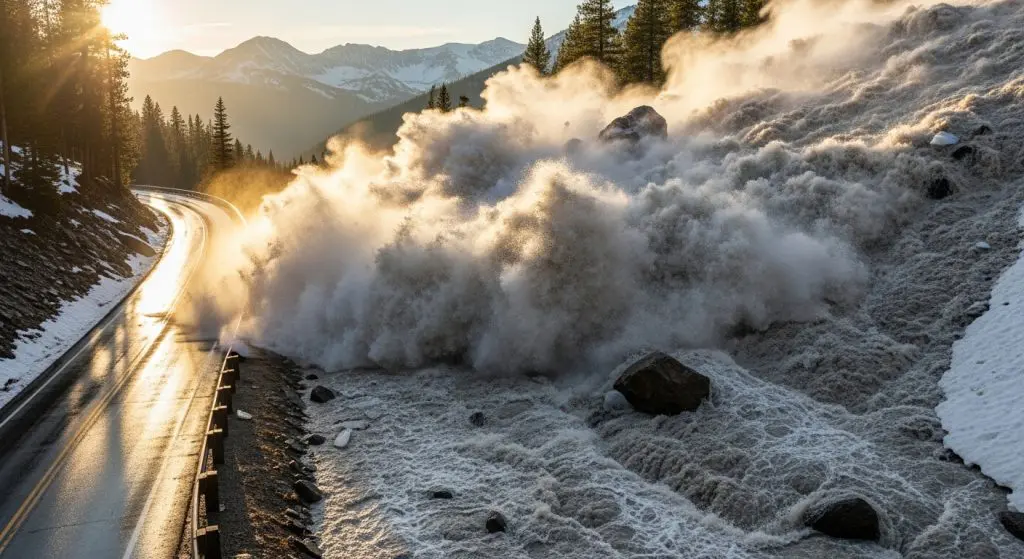
This so-called “invisible ice” creates a fragile base that makes sudden slides more likely. Unlike traditional avalanches, which are often linked to large snow accumulations, these new conditions allow avalanches to occur even with moderate snow volumes. The result is a less visible but far more unpredictable risk.
The spring factor: more heat, more danger
Rather than reducing the threat, spring can actually intensify it. Rising temperatures create daily cycles of melting during daylight hours and refreezing overnight. This process weakens the internal layers of the snowpack and promotes the formation of unstable slabs.
Additionally, the presence of water within the snow increases its weight while reducing cohesion. This leads to wet snow avalanches, which tend to move more slowly but are significantly denser and more destructive. In many cases, they carry not only snow but also rocks, soil, and vegetation, amplifying their impact on roads and infrastructure.
Another critical factor is rain falling on snow, which becomes more frequent in spring. Water accelerates instability and is currently one of the primary triggers of avalanches.
For drivers, this represents a major shift: avalanches no longer occur only during intense storms. They can also happen on clear, sunny days—especially around midday or in the afternoon, when temperatures peak.
Direct impact on trucks and road networks
Avalanches can directly affect trucks and highways, particularly along key freight corridors that cross mountainous regions such as Washington, Idaho, Montana, Colorado, and California.
One of the main impacts is full road closures. Large volumes of snow, ice, and debris can completely cover roadways within minutes, leading to prolonged disruptions that affect logistics and delivery schedules.
There is also a risk of structural damage. Avalanches can destroy protective barriers, signage, and sections of the roadway, creating unsafe conditions even after routes are cleared.
Even when roads remain open, conditions can become extremely hazardous. Ice on the pavement, reduced visibility, and uneven snow accumulation significantly increase accident risk—especially for heavy-duty vehicles.
Preventive management also plays a role. In many mountain routes, authorities carry out controlled detonations to trigger avalanches in a controlled manner. While necessary, these operations often result in temporary closures that directly impact freight transport.
A growing challenge for forecasting
Experts are facing an increasing challenge: traditional forecasting models are no longer fully effective in capturing these evolving patterns. For years, avalanche risk assessment focused on total snow accumulation. Today, the key factor is the internal structure of the snowpack.
Ice layers, invisible to the naked eye, introduce a level of uncertainty that makes it difficult to predict when and where avalanches may occur.
Projections suggest that this phenomenon could intensify. With temperature increases between 2 and 4 degrees, rain-on-snow events are expected to become more frequent, raising risk levels in the coming decades.
What truck drivers need to consider
In this context, driving through mountain regions requires greater preparation and awareness.
Trip planning is essential. Checking road conditions, weather alerts, and avalanche reports should be part of every pre-trip routine.
It is also critical to understand that good weather does not guarantee safety. In spring, sunny days can be more dangerous due to snowmelt.
Maintaining safe following distances is key, as ice reduces braking capacity and increases collision risk.
Drivers must be prepared for unexpected delays. Closures due to avalanches or preventive operations are frequent and can significantly disrupt schedules.
Proper equipment is indispensable. Snow chains, emergency kits, and reliable communication systems can make a critical difference in emergency situations.
An evolving risk for transportation and insurance
The growing avalanche risk presents new challenges for both the transportation industry and the insurance sector. The combination of higher frequency, lower predictability, and direct impact on key routes requires a rethinking of operational strategies and risk models.
For logistics companies, this means increased planning and flexibility. For insurers, it involves adapting coverage and risk analysis to a more complex environment.
On U.S. mountain roads, danger is no longer always visible. And in spring—when conditions may appear more stable—is often when risk reaches its peak.
Check real-time avalanche risk at: avalanche.org
 Business hours: Monday to Friday from 8:00 AM to 5:00 PM. California time