 Hable con un agente al (888) 572-7520
  Enviar mensaje a un agente

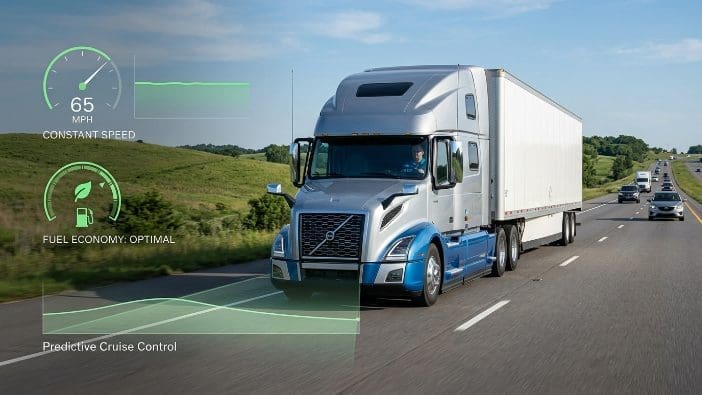

Fuel remains one of the biggest operating expenses for truck drivers, owner-operators and transportation companies. With diesel prices constantly fluctuating and routes becoming more demanding, improving fuel efficiency is no longer just a recommendation — it has become essential for maintaining profitability in the trucking industry.
Small changes in driving habits, maintenance routines and route planning can generate major savings throughout the year. In some cases, even a slight improvement in fuel consumption can translate into thousands of dollars saved annually for fleets and independent drivers.
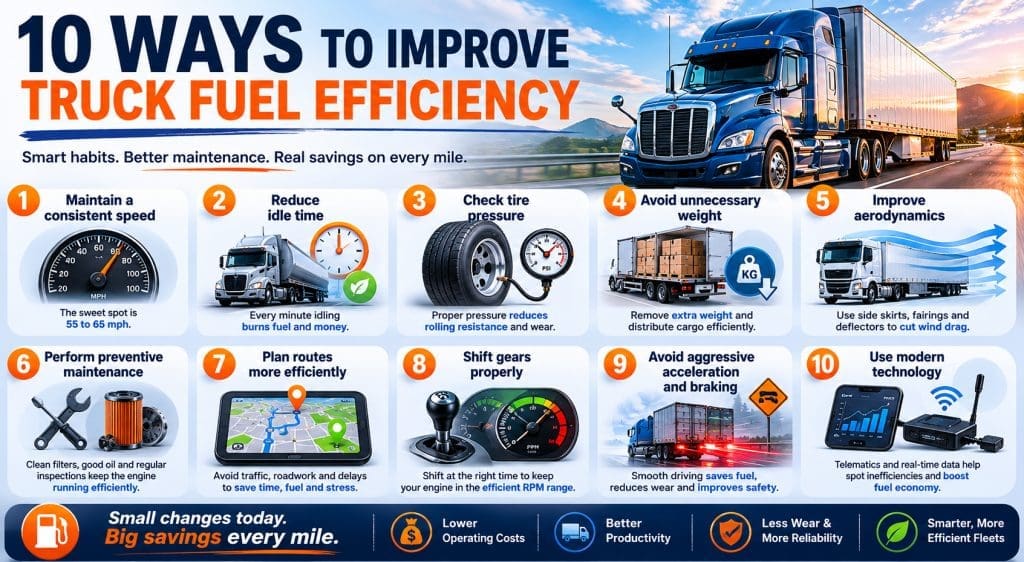
Here are ten practical ways to improve truck fuel efficiency and maximize performance on the road.
1. Maintain a consistent speed
One of the biggest enemies of fuel efficiency is constant acceleration and braking. Trucks consume far more fuel when operating at high speeds or with aggressive driving patterns.
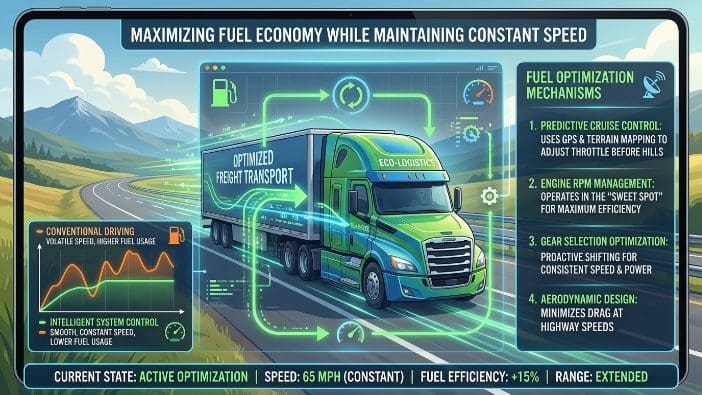
Most trucking experts agree that the optimal fuel-efficiency range is typically between 55 and 65 mph. Driving above that range significantly increases diesel consumption.
Using cruise control on long highway routes can help maintain a steady pace and reduce unnecessary fuel usage.
2. Reduce idle time
Leaving a truck running for extended periods while parked burns fuel without generating productivity or movement.
Many drivers rely on idling for heating, air conditioning or rest periods, but excessive idle time can cost hundreds or even thousands of dollars every year.
Today, many fleets use APUs (Auxiliary Power Units), independent climate systems and energy-saving technologies specifically designed to reduce unnecessary engine idling.
3. Check tire pressure regularly
Underinflated tires create additional rolling resistance, forcing the engine to work harder.
Even a minor tire-pressure issue can significantly increase fuel consumption while also accelerating tire wear.
Regular inspections and constant tire-pressure monitoring remain critical for improving efficiency on the road.
4. Avoid unnecessary weight
The heavier the load, the more fuel a truck requires to move.
While freight weight is naturally part of the business, many trucks carry unnecessary tools, poorly distributed cargo or excess equipment that negatively impacts fuel economy.
Optimizing cargo distribution and eliminating unnecessary weight can make a noticeable difference during long-haul operations.
5. Improve aerodynamics
Wind resistance directly affects fuel consumption, especially on highways and long-distance routes.
That is why many fleets have invested in side skirts, air deflectors, aerodynamic fairings and more efficient trailer designs.
Even small aerodynamic improvements can reduce operating costs considerably over time.
6. Perform preventive maintenance
Dirty filters, injector problems, poor oil quality and mechanical failures reduce engine performance and increase fuel usage.
Preventive maintenance not only helps avoid major breakdowns — it also improves fuel economy and extends the truck’s lifespan.
Transportation companies that maintain regular inspections often achieve better efficiency levels and lower operating costs.
7. Plan routes more efficiently
Heavy traffic, road construction, highway closures and urban congestion create massive fuel waste.
As a result, more drivers are using professional navigation systems and logistics software to avoid delays and choose more efficient routes.
Smarter route planning saves time, fuel and stress behind the wheel.
8. Shift gears properly
Excessive engine RPMs increase fuel consumption. Shifting at the right time helps keep the engine operating within its most efficient range.
Modern driver-training programs increasingly focus on fuel-saving driving techniques and efficient gear management.
Driving habits remain one of the most important factors affecting overall truck efficiency.
9. Avoid aggressive braking and acceleration
Hard acceleration and sudden braking not only waste fuel — they also increase mechanical wear and raise accident risks.
Smooth and anticipatory driving helps maintain vehicle momentum and improves overall performance.
In long-haul trucking operations, this type of driving can generate substantial annual savings.
10. Take advantage of modern technology
Newer trucks continue incorporating advanced fuel-saving tools, including automated engine-management systems, telematics, real-time monitoring and performance analytics.
Many fleets now use software capable of identifying inefficient driving behaviors and helping drivers improve fuel economy.
Technology has become a key ally in reducing fuel expenses and increasing competitiveness in the transportation industry.
Fuel will continue to be one of the trucking industry’s biggest economic challenges. However, the combination of preventive maintenance, efficient driving habits and modern technology can make a major difference in daily profitability.
In an industry where every mile matters, saving fuel is not only about reducing expenses. It is also about improving productivity, extending vehicle lifespan and increasing operational efficiency in an increasingly competitive market.
 Business hours: Monday to Friday from 8:00 AM to 5:00 PM. California time