Llame al (888) 572-7520 para hablar con un agente

The United States is going through a complex geopolitical environment along with internal tensions between President Donald Trump and the Federal Reserve.

In the latest episode of “Noticias Sobre Ruedas,” journalist and market specialist Julián Yosovitch offers an overview of the U.S. labor market, highlighting the current state of international financial markets, which are experiencing a period of increasing volatility driven by a complex geopolitical landscape and internal tensions between President Donald Trump and the Federal Reserve (Fed).

Meanwhile, on the international front, the focus of uncertainty for investors has shifted from the conflicts in Gaza and Ukraine to new regions. Venezuela remains a point of attention due to the lack of progress toward a democratic transition, while Iran has become a new epicenter of tension. The Iranian government’s repression, combined with Trump’s statements, increased market concerns—especially given Iran’s key role in global oil production—leading to higher volatility in crude oil prices.

This scenario was further complicated by the conflict over Greenland. Trump insisted that the United States must take control of the island—an autonomous territory of Denmark—for national security reasons and its strategic value in the Arctic. He even threatened to impose tariffs of up to 25% on countries that do not support the initiative, which generated diplomatic backlash in Europe and negatively impacted major stock indices. Although the president ruled out direct military intervention during his speech in Davos, the issue kept markets on edge.

The dispute between Trump and the Federal Reserve continues: who will succeed Powell?

On the domestic front, Trump intensified pressure on the financial system. He announced his intention to cap credit card interest rates at 10% annually for one year and to push for legislation to reduce the fees charged by giants such as Visa and Mastercard. Although these measures currently lack a concrete legal framework, they were interpreted as signals of political pressure, Yosovitch explains.

However, the most sensitive conflict remains the confrontation with the Federal Reserve. The dispute between Trump and Fed Chair Jerome Powell escalated following the opening of a judicial investigation into a costly renovation of the Fed’s headquarters, which Powell denounced as a form of political intimidation. Economic figures such as Ben Bernanke, Alan Greenspan, Janet Yellen, and current Fed officials warned that any attempt to interfere with the central bank’s independence could reignite inflation.

Markets are closely watching Powell’s succession. His term as Fed chair expires in May, although he will remain a governor until 2028. Potential successors include Kevin Walsh, Christopher Waller, and Kevin Hassett, although Trump’s latest statements have reduced the likelihood of the latter. Currently, investors assign a higher probability to Walsh becoming the next head of the institution.

Tensiones geopolíticas y la disputa entre Trump y la Reserva Federal
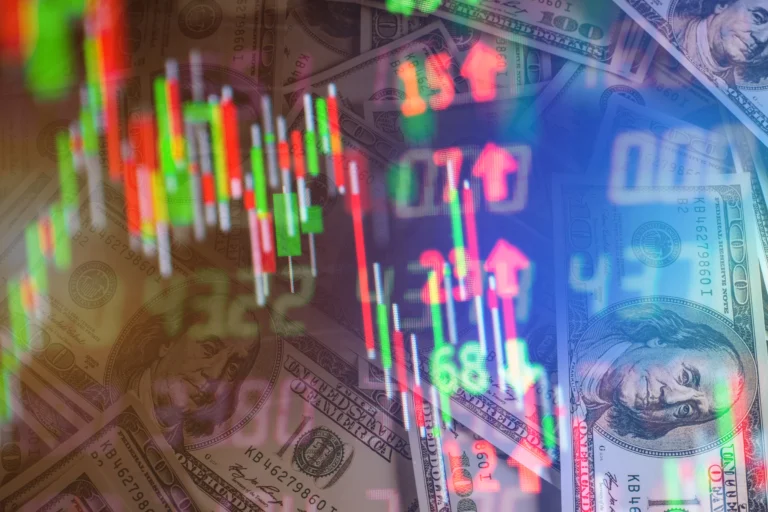
Image: Jcomp, via freepik.com

Monetary policy: uncertainty and market volatility

Regarding monetary policy, markets are pricing in a 95% probability that interest rates will remain unchanged in January, with a possible first rate cut in June. Inflation has shown signs of moderation: in December, the Consumer Price Index rose 0.3% month over month, and year-over-year inflation stood at 2.7%, while core inflation fell to 2.6%, the lowest level since 2021.

Nevertheless, fiscal accounts are raising concerns. December’s deficit was the highest ever recorded for that month, driven by a sharp increase in spending, which pushed long-term Treasury bond yields higher.

Despite this context, economic activity remains solid. Retail sales rose 0.6% in November, and industrial production increased by 0.4% in December. The Atlanta Federal Reserve’s Nowcast model projects robust growth for 2025, with no signs of recession.

Amid internal political tensions, global conflicts, and fiscal fragility, Wall Street closed the past week with losses: the Dow Jones fell 1%, the S&P 500 declined 1.1%, and the Nasdaq dropped 1.3%, reflecting a climate of heightened uncertainty and market volatility.

Facebook
Twitter
LinkedIn
WhatsApp

Ground and Air Transportation Brace for a Weekend of Cancellations and Delays

A historic cold wave is set to disrupt ground and air transportation across the United States, bringing cancellations, delays, and operational restrictions to highways, airports, and essential services throughout the weekend. Federal authorities have activated emergency plans in response to a major winter storm expected to deliver snow, ice, and extreme temperatures to large portions of the country.
Read More »
Polar vortex

Polar Vortex Puts U.S. Roads on Alert

A powerful polar vortex outbreak is triggering a widespread winter storm across the United States, bringing snow, ice, and extreme cold to major freight corridors. The event poses a serious risk to trucking operations, road safety, delivery schedules, and commercial vehicle insurance exposure.

Read More »

Leave a Reply

Your email address will not be published. Required fields are marked *

Business hours: Monday to Friday from 8:00 AM to 5:00 PM. California time
Leave your number and a member of our company will contact you
Horario de atención: Lunes a viernes de 8.00 AM a 5.00 PM. Hora california

Deje su número y un miembro de nuestra empresa se pondrá en contacto con usted

Privacy summary

This website uses cookies so that we can offer you the best possible user experience. Cookie information is stored in your browser and performs functions such as recognizing you when you return to our website or helping our team understand which sections of the website you find most interesting and useful.

More information about the privacy policy: Privacy Policy

More information about the terms of use: Terms of use 

More information about the disclaimer: Disclaimer 

More information on acceptable use policies: Acceptable Use Policies