 Hable con un agente al (888) 572-7520
  Enviar mensaje a un agente

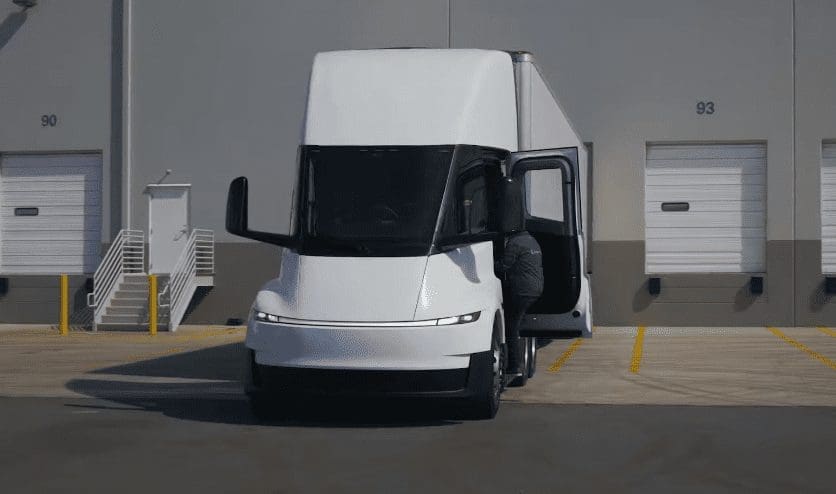

The Tesla Semi is no longer a future concept. It has been operating in real-world freight fleets since 2022. But today, the focus for Tesla is not on launching the vehicle—it’s on solving a far more complex challenge: scaling production to industrial levels and making it viable for mass adoption in heavy-duty trucking.
The launch of a dedicated Semi factory near Gigafactory Nevada marks a major shift in that strategy. Production at this facility began in March 2026, with a long-term target of up to 50,000 trucks annually. This move signals Tesla’s transition from limited deployments to a true manufacturing ramp-up.
From pilot fleets to industrial production
The Tesla Semi’s first deliveries began in December 2022, with companies like PepsiCo leading early operations. Since then, operators including Walmart, DHL, and Costco have joined pilot programs, helping validate the truck’s performance in real logistics environments.
This means the vehicle has already passed critical stages:
- Lab testing
- Technical validation
- Real-world fleet operations
Now, the challenge is different. It’s no longer about proving the truck works—it’s about producing it at scale, efficiently and consistently.
Battery integration: unlocking production
One of the main constraints in the Semi’s development has been battery availability. For years, Tesla prioritized battery allocation for passenger vehicles, limiting truck production.
The new factory introduces a key shift: 4680 battery cells are produced on-site. This integration reduces logistical bottlenecks, improves cost efficiency, and accelerates production scaling by consolidating key manufacturing processes in one location.
In heavy-duty transport, where batteries represent a major share of both cost and performance, this change is critical.
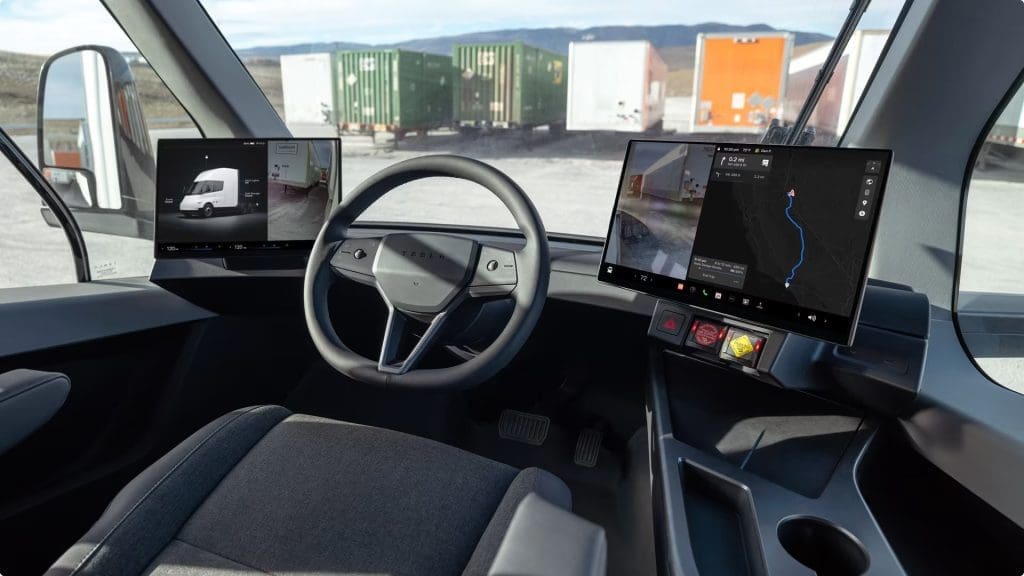
Real-world performance and efficiency
Operational data shows the Tesla Semi achieving an energy consumption of approximately 1.72 kWh per mile under full load, a competitive figure for the segment.
The truck also offers a range of up to 500 miles per charge, enabling regional freight operations without intermediate charging in many cases.
From a logistics standpoint, this translates into more predictable operations, lower variable costs, and greater efficiency on mid-range routes, improving both planning and competitiveness.
That said, performance depends on variables such as terrain, payload, and weather conditions, meaning deployment still requires careful route planning.
Megacharging: infrastructure becomes decisive
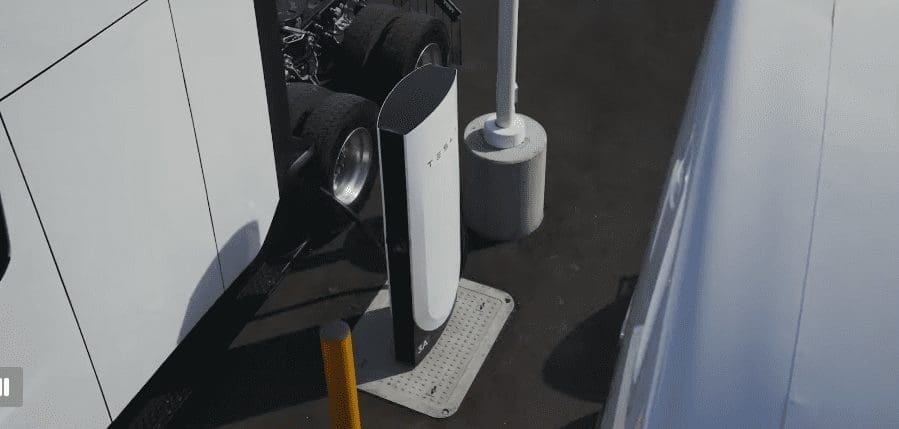
Charging capability is one of the Semi’s most significant advancements. The latest version supports up to 1.2 MW charging power, allowing approximately 60% recharge in around 30 minutes.
To support this, Tesla is expanding its Megacharger network, with plans that include:
- 37 stations by the end of 2026
- 66 stations across 15 U.S. states by 2027
This infrastructure rollout is essential. Without high-capacity charging networks, large-scale electrification of freight simply isn’t feasible.
Cost efficiency: the key adoption driver
In trucking, total cost of ownership is the ultimate metric. The Tesla Semi aims to compete not just on sustainability, but on economics.
Potential advantages include:
- Lower energy cost per mile
- Reduced maintenance requirements
- Less mechanical wear
Together, these factors can significantly improve operational efficiency and reduce long-term costs.
However, upfront vehicle costs and infrastructure investments remain major barriers to widespread adoption in the near term.
The driver factor: changing the experience behind the wheel
Driver feedback is becoming increasingly important in evaluating new technologies. Early experiences with the Tesla Semi highlight several benefits:
- Reduced noise and vibration
- Instant torque response
- Improved driving stability
These features enhance both comfort and safety. At the same time, drivers must adapt to new variables such as range management and charging planning—factors that don’t exist in diesel operations.
A transition already underway
The Tesla Semi is neither a new launch nor a fully mature product. It sits in a critical middle phase: proven in real-world use, but not yet scaled.
For the logistics industry, this represents a turning point. Heavy-duty transport is entering a phase where energy efficiency, infrastructure, and technology will be just as important as payload and distance.
In that context, the Tesla Semi is not just a new truck—it’s the beginning of a structural shift. The real challenge is no longer electrification itself, but making it work at scale.
 Business hours: Monday to Friday from 8:00 AM to 5:00 PM. California time