 Hable con un agente al (888) 572-7520
 Enviar mensaje a un agente


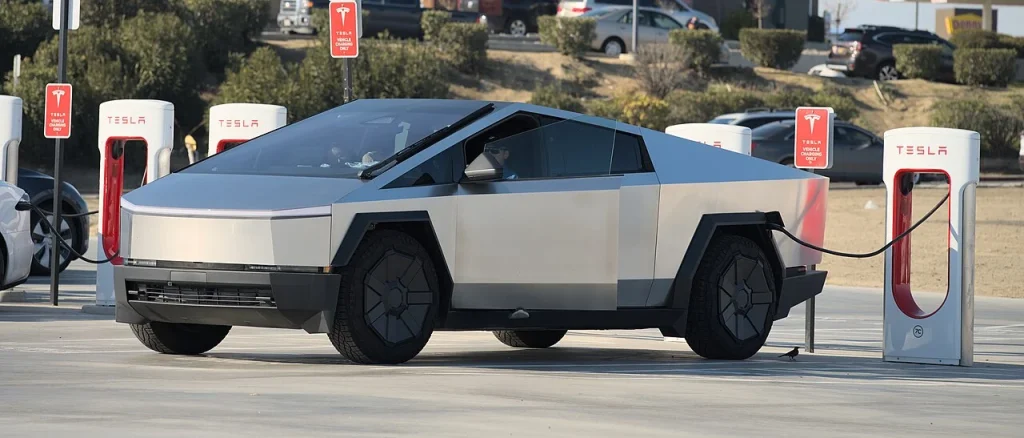

Tesla announced that it will gradually reduce Cybertruck production at its Gigafactory in Texas by mid-2027, aiming to free up capacity to manufacture more units of the Cybercab, its new autonomous vehicle designed to drive the company’s robotaxi business forward. The announcement was made by CEO Elon Musk on November 5.
The decision comes after several years of lower-than-expected sales for the Cybertruck, the electric pickup truck Tesla introduced as a futuristic alternative to traditional models in the U.S. market. The Cybertruck was first unveiled in 2019, but it did not go on sale until 2023. It was designed as a versatile vehicle capable of hauling cargo and offering near-bulletproof protection, with a controversial design that made it stand out on the streets.
When it was first unveiled, the pickup truck had a starting price of $40,000. However, by the time it went on sale, the price had jumped to $60,000, with some versions exceeding $100,000. According to Kelley Blue Book, Tesla sold 20,237 Cybertrucks in the United States in 2025, representing a 48% decline from the 38,965 units sold in 2024. The figure stands in stark contrast to Musk’s initial projection, which estimated annual sales of 250,000 vehicles by 2025.
Although it has not yet been confirmed whether Cybertruck production will move to another facility or end altogether, the Austin factory remains Tesla’s only known facility equipped to manufacture the model’s specialized components.
Cybercab: Tesla’s New Bet on Robotaxis
The reduction in Cybertruck production is part of Tesla’s strategy to accelerate the development of autonomous vehicles and robotics. The Cybercab, a two-seat car featuring butterfly doors and no steering wheel or pedals, is one of Musk’s key bets on transforming the company into a leader in artificial intelligence and autonomous mobility.
The company has previously highlighted Cybercab development as a potential catalyst for Tesla’s stock, demonstrating investors’ growing interest in autonomous technology over conventional vehicle sales.
Tesla began offering paid rides with a small fleet of these vehicles in Austin in September. However, the project still faces regulatory challenges: the U.S. National Highway Traffic Safety Administration (NHTSA) has launched an audit to review the Cybercab’s safety certification.
In addition, production remains limited, making it unlikely that the vehicle will offset the volume Cybertruck production would leave behind in the short term. According to data from the Texas Department of Motor Vehicles, approximately 570 of the more than 1,200 Tesla robotaxis operating in the state are Cybercabs. The remainder consists primarily of Model Y vehicles.
With this shift, Tesla aims to concentrate resources on its autonomous driving strategy, although the Cybertruck’s commercial performance highlights the company’s difficulties in meeting the initial expectations surrounding one of its most ambitious launches.

Tesla Takes a Different Direction
On September 24, Tesla officially inaugurated its new factory dedicated to the Tesla Semi in Sparks, Nevada, next to the Nevada Gigafactory. The expansion comes at a critical time for the company, with the Semi opening the door to the massive commercial trucking industry. The high diesel prices recently seen in the United States could strengthen the economic case for fleet operators considering electric alternatives.
The large-scale arrival of the Tesla Semi, along with the company’s bet on the Cybercab, will mark a major shift for Tesla after years of maintaining relatively limited production volumes.
 Business hours: Monday to Friday from 8:00 AM to 5:00 PM. California time