 Hable con un agente al (888) 572-7520
  Enviar mensaje a un agente

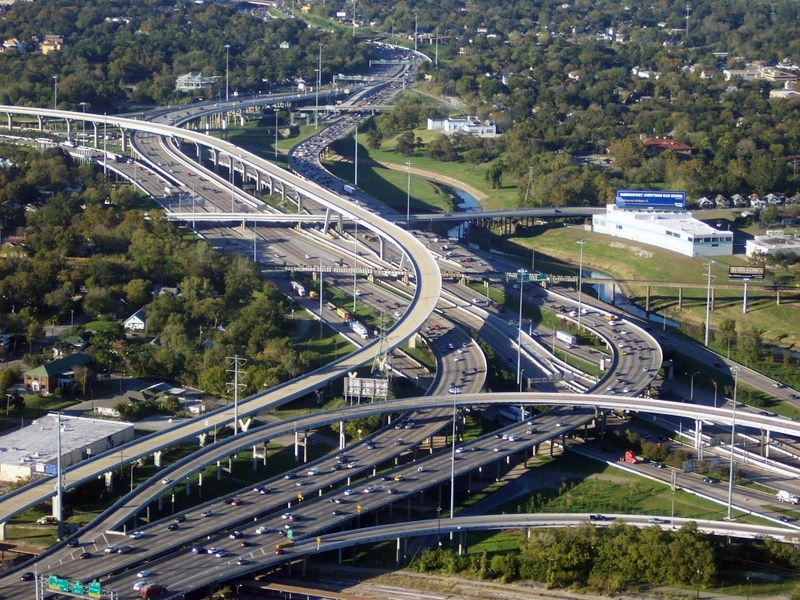

Texas is one of the main hubs for freight transportation in the United States. Its location allows goods to move between Mexico, Gulf Coast ports, major distribution centers across the state, and markets in the central, southern, and eastern parts of the country.
According to the Texas Department of Transportation (TxDOT), the state’s freight network includes more than 23,000 miles of infrastructure prioritized for freight movement, as well as connections to ports, airports, railroads, and border crossings. This demonstrates Texas’s leadership within the freight transportation industry.
Although each of the corridors connecting Texas’s interstate and intrastate routes has its own importance within the supply chain, some stand out because of their high connectivity and the volume of freight transported along them. These are the busiest freight corridors in Texas.
Busiest Freight Corridors in Texas
I-35: The Major Route Between Mexico and the Central United States
Interstate 35 (I-35) is probably the most strategic corridor for truck drivers operating between Mexico and the United States. The highway runs north to south through Texas and connects cities such as Laredo, San Antonio, Austin, and Dallas-Fort Worth before continuing into Oklahoma and other markets in the central and northern parts of the country. TxDOT considers I-35 one of the most important corridors in Texas and is currently studying its development through 2050.
For carriers, one of the most relevant sections is the Laredo–San Antonio segment, due to the enormous volume of freight coming from Mexico. The San Antonio–Dallas-Fort Worth connection is also important, as it allows freight to be distributed to major logistics hubs.
I-10: From California and El Paso to Houston and East Texas
I-10 crosses Texas from west to east and is essential for connecting El Paso with San Antonio, Houston, and the Louisiana border. In addition to serving as a long-distance interstate route, it connects major markets, industrial facilities, and ports. According to TxDOT, I-10 is an important freight corridor linking El Paso, San Antonio, Houston, and other strategic locations.

I-20: The East-West Connection Across Texas
I-20 is another major corridor for freight transportation. It crosses Texas from the Midland and Odessa area to Dallas-Fort Worth and continues into Louisiana. It is especially important for freight related to energy and resources from West Texas, as well as goods traveling to the Dallas-Fort Worth distribution centers and markets in the Southeast.
The route is considered one of the state’s primary east-west connections and plays an important role in trade and freight movement.
I-45: The Houston–Dallas Corridor
I-45 connects two of Texas’s most important metropolitan and economic areas: Houston and Dallas-Fort Worth. For freight transportation, this route is strategic because of the large number of distribution centers, warehouses, industries, and connections with other interstate highways.
I-45 is also part of the so-called Texas Triangle, along with I-35 and I-10. TxDOT notes that its connected freight corridors project covers these routes specifically to improve mobility, reduce wait times, and decrease the amount of time trucks spend stopped or idling.
I-30: Dallas-Fort Worth to Arkansas
I-30 is important for carriers connecting the Dallas-Fort Worth area with Texarkana and continuing into Arkansas and Memphis. Although it is less extensive within Texas than I-10 or I-20, it serves as a key connection to markets in the Southeast and south-central United States.
It is also a route that can serve as a strategic link for freight entering or leaving the Dallas-Fort Worth metropolitan area.
I-37: San Antonio and Corpus Christi
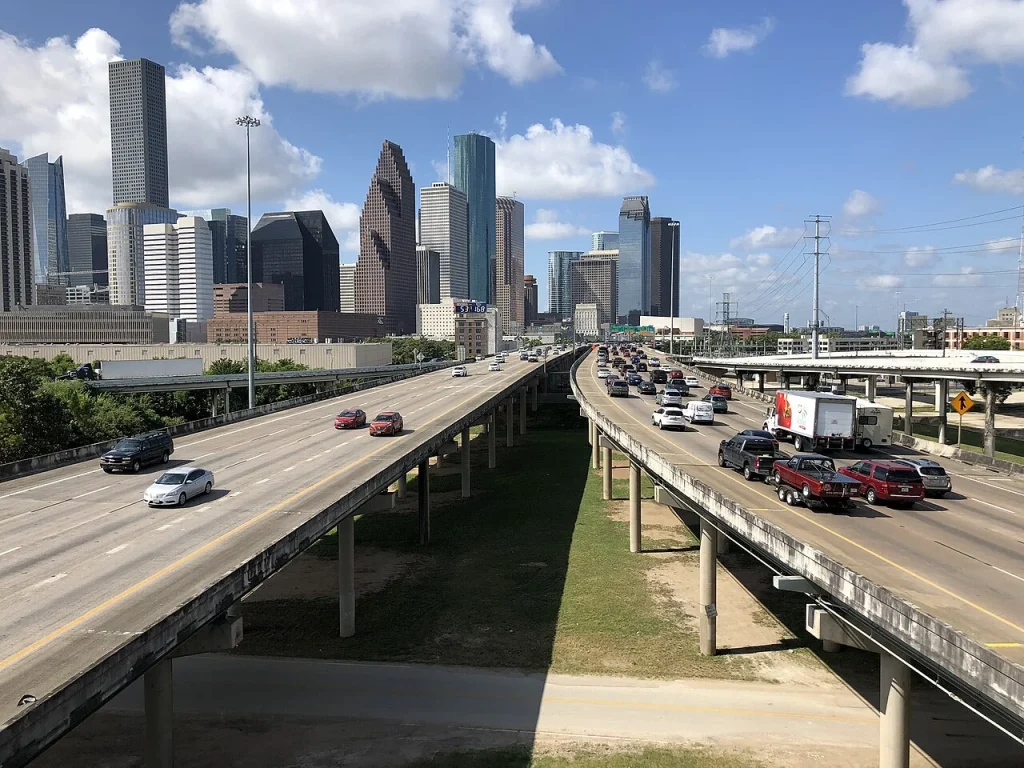
I-37 connects San Antonio with Corpus Christi and is particularly relevant to operations involving the Gulf Coast and ports.
For truck drivers, this route can be important when freight originates from or is destined for the Corpus Christi port area or when it is necessary to connect with other major Texas routes.
Ports-to-Plains: A Strategic Route for Trade with Mexico
The Ports-to-Plains Corridor deserves special mention. Its goal is to connect Mexico with West Texas, Oklahoma, New Mexico, Colorado, and ultimately Canada and the Pacific Northwest.
The corridor includes segments of I-20, I-27, I-35, US 83, US 87, US 277, US 287, and other highways. It is particularly relevant for carriers handling agricultural, industrial, and commercial freight between Mexico and markets in the central and western United States.

The I-35, I-10, I-20, I-45, I-30, and I-37 corridors are among the fundamental routes for moving freight throughout Texas. Among them, I-35 stands out for its direct connection between Mexico and major markets in the central United States, while I-10 and I-20 are essential for east-west freight movements.
Texas is one of North America’s major distribution and logistics hubs. For those working in freight transportation, understanding these routes allows truck drivers to anticipate traffic, distances, rest areas, connections, and potential delays, making every trip safer and more efficient.
 Business hours: Monday to Friday from 8:00 AM to 5:00 PM. California time