 Hable con un agente al (888) 572-7520
  Enviar mensaje a un agente

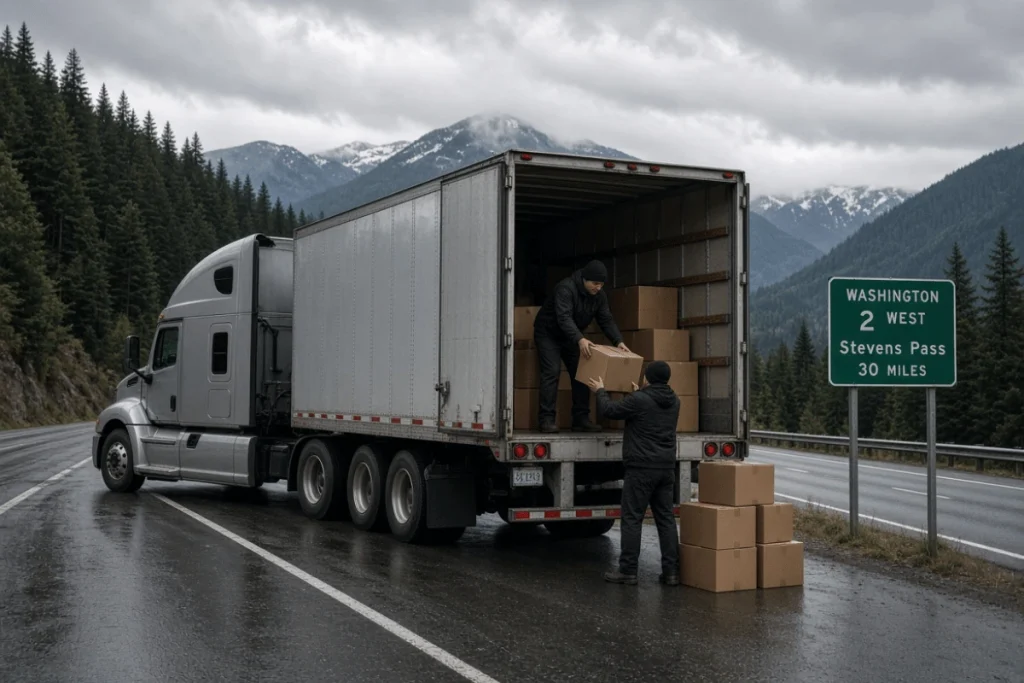

Washington is the fifth-worst state for cargo theft in the United States, according to the National Insurance Crime Bureau (NICB), behind California, Texas, Illinois, and Florida. Within the state, risk is heavily concentrated in the Seattle-Tacoma metropolitan area and the Interstate 5 corridor, with particular focus on the Kent Valley, the fourth-largest warehouse district in the United States, and the city of Fife, flagged by security firms as the riskiest spot in the state.
Nationally, cargo theft losses hit a record $725 million in 2025, a 60% jump from the previous year, driven by increasingly organized crews prioritizing high-value loads over sheer volume.
Washington, Among the Five Hardest-Hit States in the Country
The National Insurance Crime Bureau (NICB), a nonprofit organization dedicated to fighting insurance-related fraud and crime, identifies California, Texas, Illinois, Florida, and Washington as the five states most impacted by cargo theft in the United States. According to the NICB itself, the multimodal hubs in California, Texas, and the Chicago area remain the top targets for thieves, but Washington rounds out that top five because of the weight of its port and logistics activity along the Pacific Northwest corridor.
Nationally, the picture worsened sharply in 2025. According to Verisk CargoNet’s annual analysis, published in January 2026, cargo theft losses across the United States and Canada reached an estimated $725 million, up 60% from 2024. That jump isn’t explained by more thefts, but by more selective ones: the average value of a single cargo theft rose to $273,990 in 2025, up 36% from the year before. CargoNet recorded 3,594 supply-chain crime events in 2025, a number similar to 2024, but confirmed cargo theft cases rose 18%, from 2,243 to 2,646.
Why the I-5 Corridor and the Kent Valley Concentrate the Risk
According to a specialized analysis of cargo theft statistics, incidents in Washington concentrate mainly in the Seattle metropolitan area and along the Interstate 5 corridor — the north-south axis running the length of the state and connecting the Seattle-Tacoma port complex with the rest of the West Coast.
Within that region, the Kent Valley — located south of Seattle, spanning Kent, Auburn, and Sumner — is a particular point of concern: it’s the fourth-largest warehouse district in the United States, according to security firms specializing in the region. The combination of an enormous concentration of distribution centers with relatively open access to parking yards and staging areas makes this zone an attractive target for trailer and cargo theft. Within that same region, the city of Fife — located between Tacoma and the port, along I-5 — is flagged as the riskiest spot in the state by video surveillance companies operating in the area.
How Cargo Thieves’ Tactics Have Changed
Cargo theft is no longer, primarily, an opportunistic crime built around physically breaking into a parked truck. According to the American Trucking Associations (ATA), the dominant trend today is “strategic theft,” which uses fraud and deception to trick shippers, brokers, and carriers into handing loads directly to criminals instead of the legitimate receiver.
Among the most common tactics documented by CargoNet:
- Fictitious pickups: criminals show up at the point of origin posing as the contracted carrier, using forged or stolen credentials.
- Carrier identity theft: using a real carrier’s identity and clean track record to secure loads directly from shippers.
- Double brokering: schemes where criminals insert themselves as an unauthorized intermediary between the shipper and the real carrier, redirecting the load before it reaches its destination.
- Email and load board fraud: identity spoofing carried out digitally to divert entire truckloads or rail containers from their intended destination.
Port drayage — moving containers between the port and nearby distribution centers — is particularly vulnerable to these tactics, according to industry analysis: frequent driver changes, unattended trailer drops, and open-access staging areas create ideal conditions for this kind of fraud.
What Kind of Cargo Thieves Target Most
Nationally, electronics remain the most stolen commodity, accounting for 22% of all cases, followed by food and beverages (15%) and home and garden products (11%). The NICB adds pharmaceuticals, apparel and footwear, and alcohol and tobacco to the list of most-targeted goods. A more recent trend is metal theft: according to CargoNet, nearly 7 out of 10 metal thefts specifically target copper, amid rising prices tied to demand for electrical infrastructure and clean energy. In these schemes, criminals typically pose as legitimate carriers, redirect delivery to another location, and then disable the container’s GPS trackers.
When the Risk Peaks
According to industry reports, long weekends and holidays — especially the fourth-quarter shipping season — see the most criminal activity, coinciding with extended facility closures and reduced staffing at warehouses and distribution centers.
What the Industry Recommends to Reduce Risk
Faced with the rise of strategic theft, industry specialists stress the importance of tightening controls right at the moment a load is tendered, rigorously verifying a carrier’s identity before handing over a shipment — and of not relying exclusively on those controls: as anti-fraud tools improve at that initial stage, criminal networks are expanding their focus to other vulnerabilities across the full shipment lifecycle, including consolidation centers where multiple carriers and warehouse staff have simultaneous access to freight.
Frequently Asked Questions
Where does Washington rank among states with the most cargo theft? Washington ranks fifth nationally, according to the National Insurance Crime Bureau, behind California, Texas, Illinois, and Florida.
What are the highest-risk areas within Washington? The Seattle-Tacoma metropolitan area and the Interstate 5 corridor, with particular focus on the Kent Valley — one of the largest warehouse districts in the country — and the city of Fife.
How much was lost to cargo theft in the United States in 2025? According to Verisk CargoNet, losses reached an estimated $725 million across the United States and Canada, up 60% from 2024, with an average value of $273,990 per confirmed theft.
What goods do thieves steal most often? Electronics lead with 22% of cases nationally, followed by food and beverages, and home and garden products. Copper theft also grew notably in 2025.
 Business hours: Monday to Friday from 8:00 AM to 5:00 PM. California time