 Hable con un agente al (888) 572-7520
  Enviar mensaje a un agente

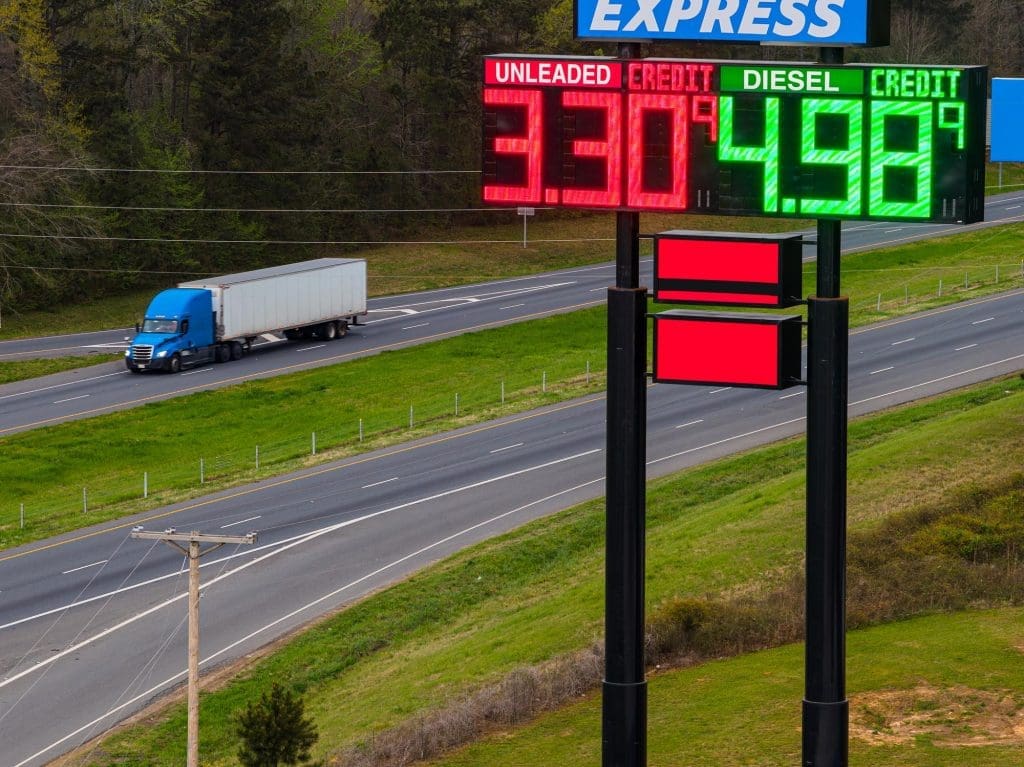

President Donald Trump’s administration is evaluating a temporary suspension of the federal fuel tax amid the sharp rise in prices caused by the war with Iran and growing tension in international energy markets.
The possibility was confirmed by U.S. Energy Secretary Chris Wright, who said the administration is open to any measure that could reduce the costs faced by consumers, drivers, and businesses at gas stations.
“All measures that can be taken to lower the price at the pump and reduce costs for Americans have the support of this administration,” Wright said during an interview on NBC.
Currently, the federal tax represents approximately 18 cents per gallon for gasoline and about 24 cents per gallon for diesel fuel, an especially important figure for the freight transportation industry and CDL operators, who depend directly on fuel costs to maintain operational profitability.
👀 #IRAN_WAR #OIL #TAXES
— DomPachino101 (@DomPachino101) May 10, 2026
U.S. Energy secretary says Trump administration is open to suspending gas tax amid soaring prices
Chris Wright said the administration was “open to all ideas” as gas prices have shot up more than 50% since start of the Iran warhttps://t.co/3b6CWp75eK
According to AAA data, the national average gasoline price reached USD 4.55 per gallon, a level not seen since 2022, when the national average surpassed USD 5 per gallon during the global energy crisis following Russia’s invasion of Ukraine.
Although public discussion is mainly focused on gasoline, the possible tax relief could also extend to diesel fuel. However, the White House has not yet officially confirmed whether a potential suspension would include both fuels or gasoline only.
That detail is critical for the U.S. logistics sector.
Diesel Returns to the Center of Logistics Concerns
For millions of truck drivers and freight companies, the problem is not only the price of gasoline but also the cost of diesel, which directly impacts:
- Transportation rates
- Distribution costs
- Fleet operations
- Logistics margins
- Route planning
- Final product prices
Ground transportation in the United States depends almost entirely on diesel fuel, and any sustained increase quickly spreads across the entire supply chain.
In recent weeks, several logistics companies have begun warning about rising operational costs linked to fuel prices, especially on long-distance routes and interstate freight corridors with high cargo demand.
In addition, the energy increase comes at a difficult moment for the U.S. freight industry, which is still facing:
- High interest rates
- Lower industrial consumption in some sectors
- High maintenance costs
- Wage pressure on drivers
- Greater volatility in insurance and operations
The possibility of temporarily reducing the federal fuel tax therefore appears as an immediate relief tool, especially for small transportation companies and owner-operators.
The War With Iran Shakes Energy Markets Again
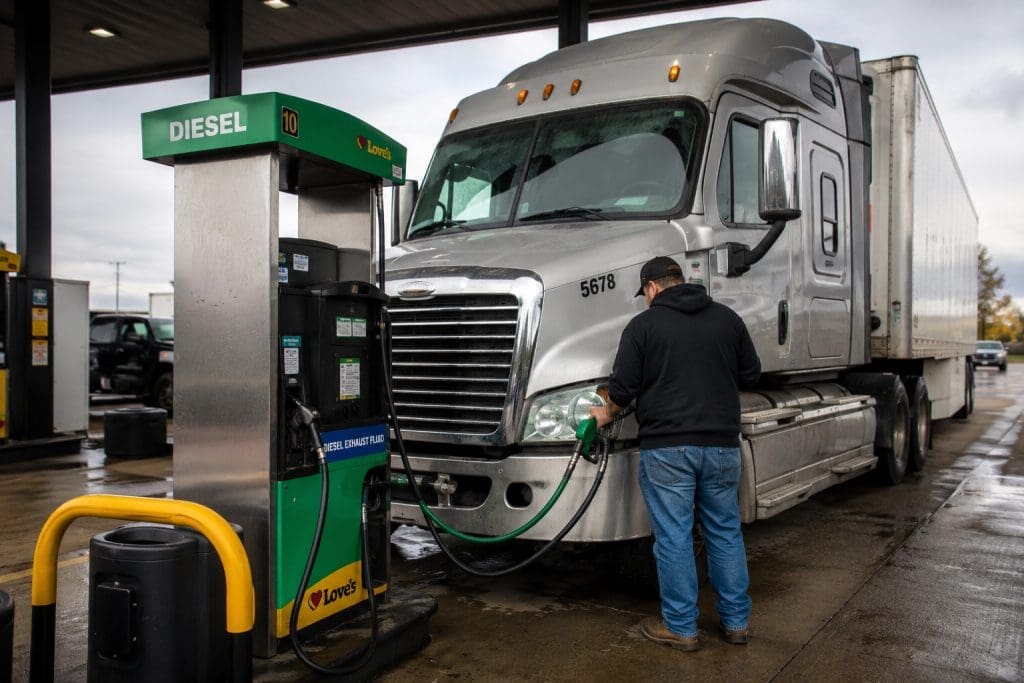
The main trigger behind the increase was the military escalation in the Middle East and fears of disruptions in global oil supply.
One of the most sensitive points is the Strait of Hormuz, through which a significant portion of the world’s oil supply passes. Chris Wright acknowledged that a possible normalization of maritime traffic in that region could help stabilize international energy prices.
“When free traffic through the Strait of Hormuz returns, energy prices will come down,” the official said.
However, he avoided making projections about the immediate future of the energy market and refused to confirm whether fuel prices could once again exceed USD 5 per gallon this year.
International uncertainty continues to put pressure on both crude oil and refined fuels, directly affecting freight transportation in the United States.
Washington’s Fiscal Dilemma
Although suspending the federal tax could generate partial relief for consumers and transport companies, the measure also opens an important debate in Washington.
The federal fuel tax is one of the main sources of funding for the Highway Trust Fund, which supports roads, highways, and transportation infrastructure across the country.
Reducing or temporarily eliminating that revenue could affect infrastructure projects precisely at a time when many U.S. logistics corridors require maintenance, expansion, and modernization.
Energy analysts also warn that the real impact on prices could be limited if oil continues rising in international markets.
In other words, a reduction of 18 or 24 cents per gallon could quickly be absorbed by further increases in crude oil prices or adjustments in refining and distribution.
Even so, political pressure continues to grow as millions of Americans feel the impact of fuel prices on their daily expenses.
Recent surveys show that rising gasoline prices have already begun changing consumption habits across the country. Many drivers have reduced travel, changed vacation plans, or cut other household expenses to cope with transportation costs.
In the case of freight and logistics, the concern is even greater because fuel affects not only individual drivers — it directly impacts the entire U.S. economy.
For now, the Trump administration remains open to the possibility of a temporary suspension of the federal fuel tax, but there is still no official decision or details regarding scope, duration, or the definitive inclusion of diesel fuel.
 Business hours: Monday to Friday from 8:00 AM to 5:00 PM. California time