 Hable con un agente al (888) 572-7520
  Enviar mensaje a un agente

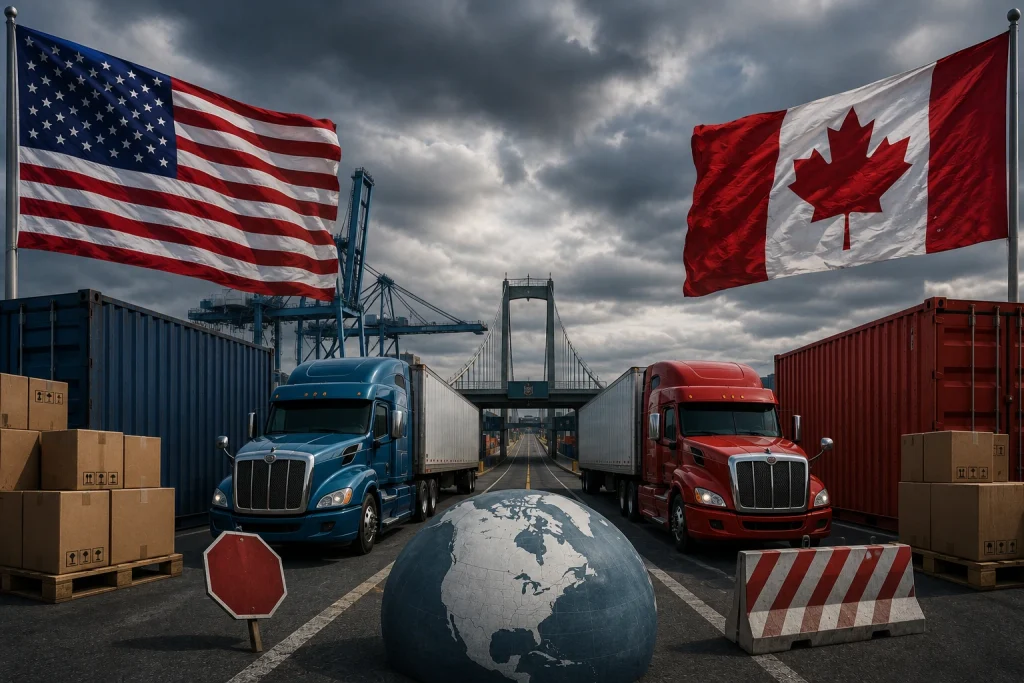

The trade dispute between the United States and Canada has entered a new chapter, with the outcome increasingly uncertain: the Canadian government has announced tariffs of up to 50% affecting more than 700 products.
The decision follows the breakdown of the latest trade negotiations between the two countries and deepens a conflict involving two closely connected economies. For the transportation industry, however, the issue goes far beyond tariffs: any disruption in trade between the United States and Canada could alter freight volumes, costs, routes and load availability for thousands of truckers and carriers.
Canada will impose tariffs ranging from 15% to 50% on a list that includes steel, aluminum, industrial products, electronics, furniture, clothing, food and other goods. Ottawa says the measures are intended to respond proportionally to U.S. tariffs and protect affected Canadian industries.
Canadian Industry Minister Mélanie Joly also urged consumers to prioritize Canadian-made products as a way to protect jobs and strengthen domestic production. The government will accompany the measures with a C$7.5 billion support package for businesses and workers affected by the dispute.
While we can’t control the storm blowing in from the United States, we can chart a new course – building Canada strong at home and diversifying our trading relationships abroad. pic.twitter.com/JBGOPbx2W8
— Prime Minister of Canada (@CanadianPM) August 24, 2026
What Does This Mean for Trucking?
The United States and Canada have one of the largest trading relationships in the world. Annual trade between the two countries is approximately $880 billion, and their supply chains are deeply integrated, particularly in the automotive, energy, agriculture and manufacturing sectors.
A significant share of those goods moves by truck.
That is why changes in tariffs can quickly make their way from the negotiating table to the highway when they influence the decisions of importers, manufacturers and distributors.
A U.S. product that becomes more expensive in Canada may see demand fall. A Canadian company may look for a different supplier. A manufacturer may temporarily reduce orders or stockpile inventory before a new tariff takes effect. Companies may also change where they source raw materials or components.
Each of those decisions changes freight flows.
For carriers operating cross-border lanes, that could mean fluctuations in volumes, changes to established routes and greater difficulty finding return loads. A truck that crosses into Canada with a profitable load but cannot secure an adequate backhaul may end up running additional empty miles, directly affecting operating costs.
Cars and Trucks Become Another Flashpoint
The automotive industry is particularly vulnerable to trade disruptions between the two countries because U.S. and Canadian production chains are highly integrated.
Vehicles, engines, auto parts and other components cross the border at different stages of production, making trucking a critical part of the industry.
The dispute took on another dimension this week when President Donald Trump threatened to impose 50% tariffs on Canadian-made cars, trucks and auto parts beginning January 1, 2027, if an agreement is not reached.
Disagreements over medium- and heavy-duty trucks were among the issues that complicated the latest trade negotiations.
An escalation in this sector could affect more than manufacturers and dealerships. It could also have consequences for companies that transport vehicles, components, steel and other materials used by the automotive industry.
Trump-Doug Ford feud boils over as U.S.-Canada tariff fight escalates.
— Fox News Politics (@foxnewspolitics) August 26, 2026
Ford fires back after Trump threatens new tariffs on Canadian autos, auto parts and steel.
Canada is now moving ahead with matching counter-tariffs set to take effect Sept. 8. pic.twitter.com/bpGD1Lsb6r
More Uncertainty for Supply Chains
The biggest challenge for logistics is the difficulty of predicting what will happen to demand.
The new U.S. tariffs cover approximately 5% of Canadian exports to the United States, while Ottawa’s retaliatory measures affect roughly 4.5% of Canadian imports from the United States.
Although those percentages suggest that a large share of bilateral trade will continue operating normally, the impact could be significantly greater in certain industries and freight corridors.
Michigan, Ohio, Indiana and other industrial states have strong trade ties with Canada. A slowdown among certain manufacturers could reduce freight volumes along some lanes and create ripple effects for suppliers, warehouses and distribution centers.
At the same time, new opportunities could emerge.
If companies replace U.S. or Canadian suppliers with manufacturers elsewhere, logistics networks will have to adjust. That could create new lanes, different distribution points and increased freight demand in other markets.
In other words, tariffs do not necessarily make freight disappear — they can also move it somewhere else.
Keep an Eye on the Border
Carriers operating between the United States and Canada will also need to pay close attention to procedures associated with the new measures.
Tariff changes can increase the importance of proper commodity classification, country-of-origin documentation and compliance with customs requirements. An administrative mistake can cause delays that, for a trucker, translate into hours of waiting without generating miles.
For that reason, carriers and owner-operators hauling international freight should confirm with brokers, shippers and customers which products are covered by the new measures before crossing the border.
It will also be important to monitor border wait times and any operational changes that may emerge once the measures take effect on September 8.
September 8: A Key Date
Canada’s announced retaliatory tariffs are scheduled to take effect on September 8, making the coming weeks critical for determining how importers, exporters and manufacturers respond.
There is still room for renewed negotiations. The United States and Canada have strong economic incentives to prevent the confrontation from developing into a broader trade war, precisely because their economies are so closely integrated.
But until an agreement is reached, uncertainty will remain part of the landscape.
For the trucking industry, the real impact of the dispute will be measured less by political statements and more by tangible consequences: available loads, rates, empty miles, wait times and operating costs.
Along a border crossed every day by goods essential to factories, businesses and consumers in both countries, any significant change in trade eventually makes its way to the road.
For truckers and transportation companies, closely following the dispute will be essential to anticipate changes, adjust operations and protect profitability along one of North America’s most important trade corridors.
 Business hours: Monday to Friday from 8:00 AM to 5:00 PM. California time