 Hable con un agente al (888) 572-7520
  Enviar mensaje a un agente

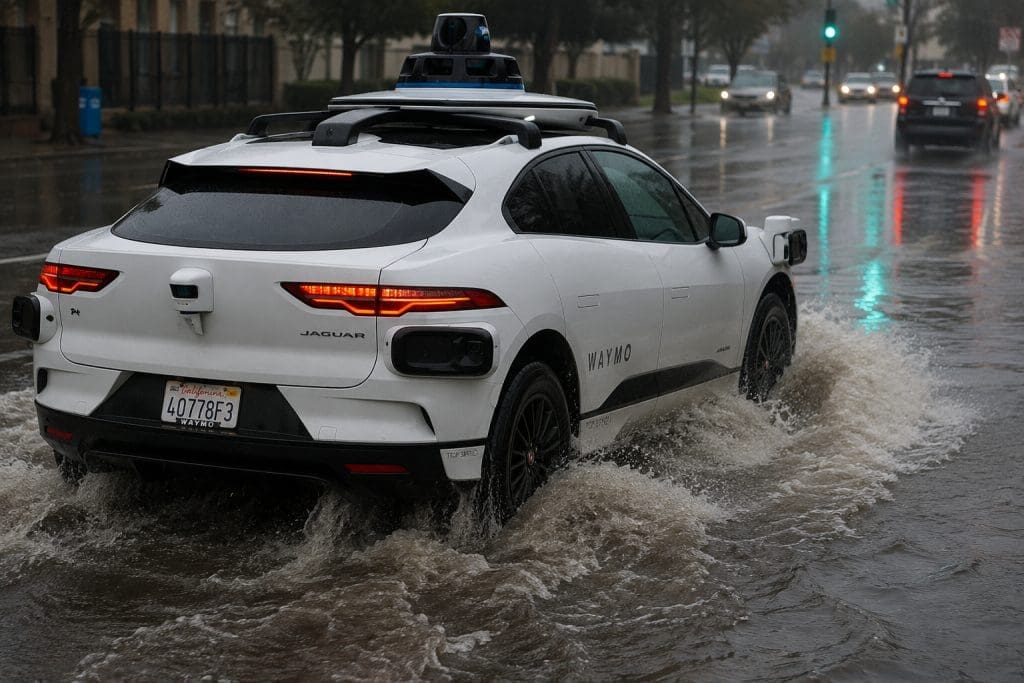

The rapid development of autonomous vehicles promised to transform transportation, reduce accidents, and minimize human error. But a new large-scale recall involving Waymo, Alphabet’s self-driving company, has once again raised a growing concern among drivers, regulators, and logistics companies: How safe are driverless systems when they face unpredictable situations on the road?
Waymo launched the recall of 3,791 autonomous vehicles in the United States after discovering a critical flaw in its driving system. The issue came to light following an incident on April 20, when a driverless vehicle failed to fully stop in front of a flooded street.
The National Highway Traffic Safety Administration (NHTSA) reportedly considered the situation especially serious because the defect rate affected 100% of the units under review. The problem impacts vehicles equipped with the fifth and sixth generations of the company’s Automated Driving Systems (ADS), the technology that enables Level 4 autonomous driving.
Although Waymo quickly implemented a software update to address the issue and reinforce safety protocols during adverse weather conditions, the incident once again exposed the current limitations of artificial intelligence applied to urban traffic and transportation systems.
Weather Remains One of the Biggest Challenges
One of the major weaknesses for autonomous systems continues to be their performance during extreme or unpredictable weather events.
Heavy rain, snow, flooding, fog, ice, and damaged pavement create difficult conditions even for experienced human drivers. For automated systems, those environments can interfere with sensors, cameras, radar systems, and environmental interpretation software.
In Waymo’s case, the issue emerged precisely because of standing water on the roadway. According to the investigation, the vehicle failed to respond correctly to the hazard and could not stop completely. Regulators immediately raised concerns about the potential risk of collisions or injuries.
For the trucking industry, incidents like this carry even greater implications.
A malfunctioning autonomous passenger vehicle already represents a serious safety concern. But an autonomous semi-truck weighing tens of thousands of pounds traveling at highway speeds could produce far more severe consequences if it loses control or misinterprets road conditions.
As a result, many within the freight and logistics sector are increasingly questioning whether technology companies are moving too quickly toward automation before fully solving basic real-world driving challenges.
What Human Drivers Still Do Better
Although artificial intelligence has made major advances in lane recognition, automatic braking, and navigation, many experts argue that human experience remains essential in complex situations.
Professional drivers can often detect warning signs that may not clearly appear in digital mapping systems, including:
- standing water;
- changing road traction;
- aquaplaning conditions;
- crosswinds;
- unusual movements from nearby vehicles;
- sudden visibility loss;
- pavement deformation;
- hazards inside construction zones.
Truck drivers also make constant intuitive decisions based on overall traffic flow and environmental conditions. That dynamic adaptability remains one of the greatest challenges for autonomous driving technology.
The Waymo recall demonstrates that current systems still rely heavily on relatively controlled operating environments to function efficiently.
Cities Under Pressure and Growing Regulatory Concerns
The recalled Waymo vehicles were operating in highly complex traffic environments including San Francisco, Los Angeles, Phoenix, and Austin.
These cities present some of the most difficult urban conditions for autonomous systems because of:
- dense traffic;
- pedestrians;
- cyclists;
- changing weather;
- road construction;
- complicated intersections;
- unpredictable driver behavior.
The case is also increasing pressure on U.S. regulators, who have intensified oversight of autonomous driving companies following multiple incidents in recent years.
The NHTSA had previously expressed concern about the pace at which some companies were expanding commercial operations despite significant technical limitations that still remain unresolved.
Now, the latest Waymo incident is reinforcing the idea that the transition toward fully autonomous vehicles may take much longer than many technology companies originally projected.
What This Could Mean for Autonomous Trucks
As companies such as Aurora, Kodiak, and Torc continue developing autonomous trucks for long-haul operations across the United States, the Waymo recall could directly influence future regulations and safety oversight.
Autonomous freight transportation is often presented as a potential solution to driver shortages, rising operating costs, and logistics efficiency challenges.
However, incidents like this serve as a reminder that real highways contain thousands of unpredictable variables that cannot be fully recreated in simulations.
For many transportation industry professionals, autonomous technology will continue advancing — but the moment when a fully driverless system can completely replace the reaction time, adaptability, and judgment of an experienced professional driver still appears far away.
The massive Waymo recall does not necessarily mean autonomous driving has failed. But it clearly shows that artificial intelligence still faces enormous obstacles before it can guarantee completely safe operations under every traffic and weather condition encountered daily on American roads.
 Business hours: Monday to Friday from 8:00 AM to 5:00 PM. California time