Llame al (888) 572-7520 para hablar con un agente

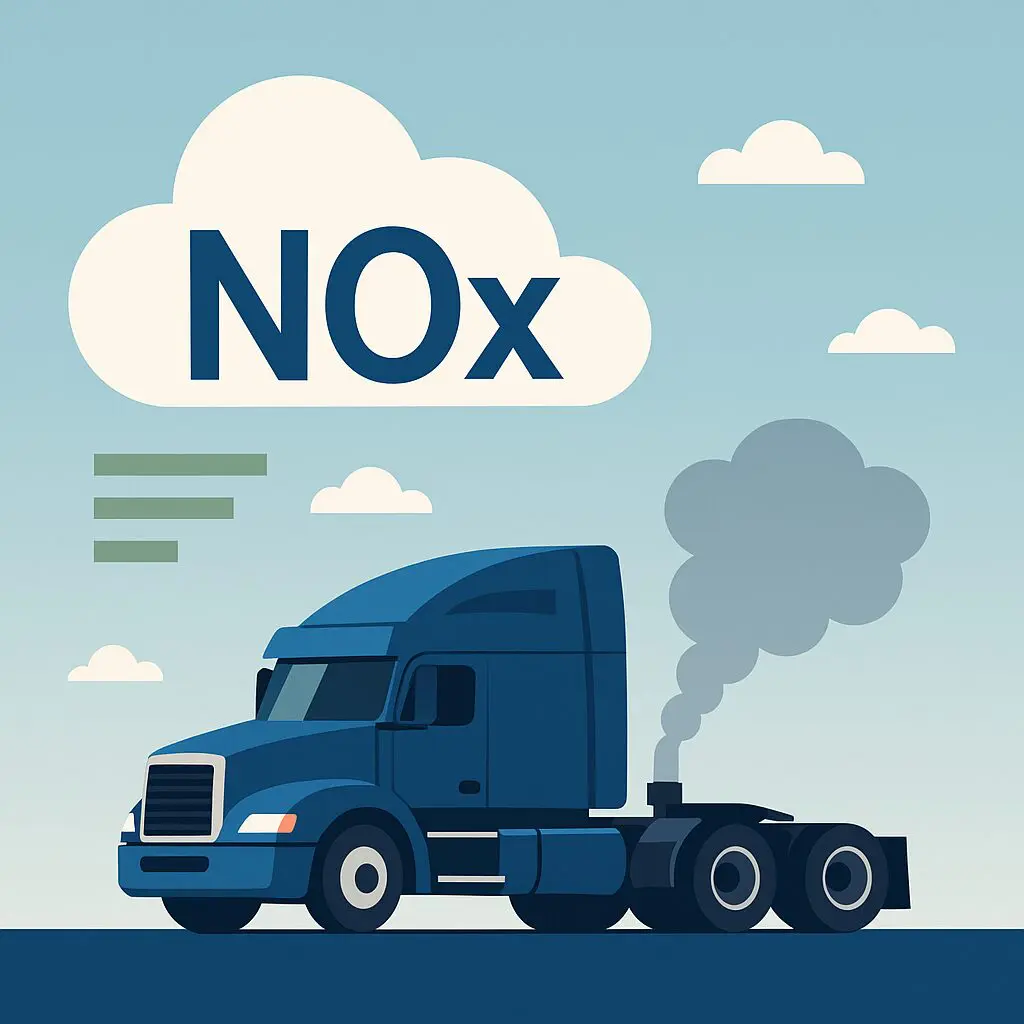
The upcoming 2027 federal NOx standards are set to reshape the U.S. trucking industry, raising concerns about higher equipment costs, tougher compliance demands, and the financial strain on fleets already navigating a prolonged freight recession.

The upcoming federal nitrogen oxide (NOx) emission standards for heavy-duty diesel engines are generating mounting concern across the U.S. trucking sector. For months, carriers, manufacturers, and industry groups have been waiting for the Environmental Protection Agency (EPA) to ease the rule scheduled to take effect in 2027. But the agency’s latest communication indicates that any adjustments will be far more limited than the industry hoped.

An Aggressive Standard at a Difficult Economic Moment

The EPA confirmed that the stringent 0.035 g/hp-hr NOx limit will remain in place, and that the 2027 implementation date will not change. This decision means manufacturers must comply with the original requirements on schedule, adding pressure to a trucking industry already struggling with rising equipment prices, high financing costs, and narrow margins after more than three years of freight recession.

According to the American Trucking Associations (ATA), heavy-duty truck emissions have already dropped 99% since 1970 thanks to continuous technological improvements. However, achieving the additional 80-plus percent reduction required under the new rule would demand far more complex and expensive aftertreatment systems—technology that ATA warns has not been proven extensively under real-world operating conditions. The association cautions that this “technology leap” could significantly raise new truck prices and introduce reliability risks during the early years of deployment.

Industry Calls for Time and Certainty

ATA’s technical analysis shows that the industry’s primary request was a four-year delay in implementation. That extension, industry leaders argue, would soften the financial hit and give fleets a more realistic timeline for capital planning—especially at a time when company closures, depressed freight rates, and higher borrowing costs define the operating environment.

ATA also reiterated comments from its president and CEO, Chris Spear, who stated that truckers are “at the limit of their ability to absorb more regulation-driven cost increases.” While the industry supports both environmental and safety improvements, Spear emphasized that carriers “cannot shoulder them in the middle of a prolonged recession.”

What Will Change: Partial Relief in Warranties and Useful Life Requirements

Although the EPA declined to relax the emissions threshold or delay implementation, the agency did signal certain adjustments that could reduce the financial burden. ATA reports that the EPA is considering dropping the extended warranty requirements originally planned for 2027 and instead maintaining the current warranty levels. This is a significant development, as longer warranties would have added substantial cost to new trucks.

The EPA also intends to revisit “useful life” standards for diesel engines and make technical adjustments that could partially reduce the cost impact of new aftertreatment systems.

The updated version of the rule is expected to be published in the Federal Register in spring 2026, triggering a public comment period during which ATA plans to push for additional revisions to lower costs and mitigate operational risks.

ATA Will Pursue Other Ways to Ease the Regulatory Burden

In parallel, ATA says it will continue advocating for policy changes that help offset the cost of compliance. Chief among them is the repeal of the federal excise tax (FET) on heavy-duty trucks—a 12% surcharge that substantially increases the price of new equipment. Eliminating the FET, ATA argues, would help fleets replace older trucks more quickly, improving both safety and environmental performance.

A Transition That Will Shape the Future of Trucking

ATA’s report concludes that the upcoming NOx standards represent the most demanding regulatory shift for diesel engines since the early 2000s. The combination of stricter limits, greater technological complexity, and an industry weakened by economic downturn could accelerate consolidation, strain small carriers, and slow investment in fleet renewal.

Ultimately, ATA argues that the success of this transition will depend on striking a balance between environmental goals and the economic realities of the trucking sector. In the months ahead, the debate will focus on whether the EPA’s partial adjustments are enough to prevent disproportionate impacts on the thousands of carriers that keep America’s supply chain moving.

Facebook
Twitter
LinkedIn

ATRI Warns: Litigation Is Rising Across the U.S. Trucking Industry

A new report from the American Transportation Research Institute (ATRI) reveals how escalating litigation, higher legal costs, and mounting insurance pressures are reshaping the U.S. trucking industry. The findings mark a critical moment for motor carriers, insurers, and logistics stakeholders who must understand the changing legal environment — and the increasingly strategic role of strong insurance partnerships.

Read More »

Leave a Reply

Your email address will not be published. Required fields are marked *

Business hours: Monday to Friday from 8:00 AM to 5:00 PM. California time
Leave your number and a member of our company will contact you
Horario de atención: Lunes a viernes de 8.00 AM a 5.00 PM. Hora california

Deje su número y un miembro de nuestra empresa se pondrá en contacto con usted

Privacy summary

This website uses cookies so that we can offer you the best possible user experience. Cookie information is stored in your browser and performs functions such as recognizing you when you return to our website or helping our team understand which sections of the website you find most interesting and useful.

More information about the privacy policy: Privacy Policy

More information about the terms of use: Terms of use 

More information about the disclaimer: Disclaimer 

More information on acceptable use policies: Acceptable Use Policies