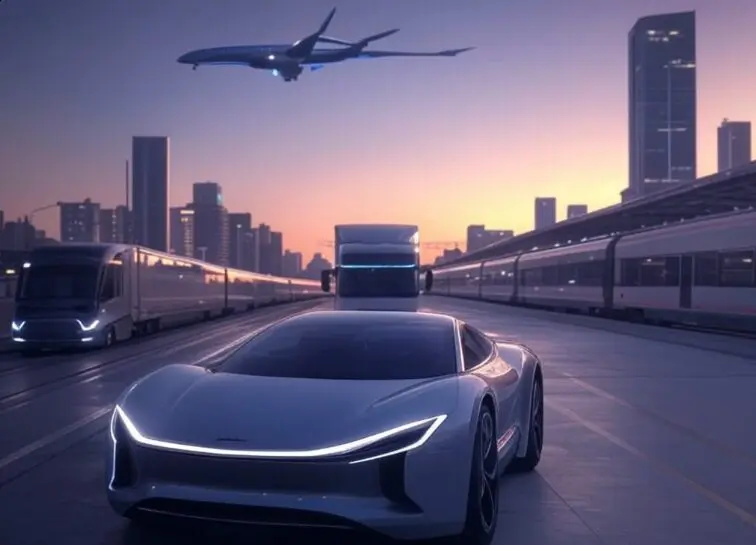
Patents for new inventions have increased by 700% in a short time. China, the US, and Japan continue to lead, but brands from Germany and South Korea also rank among the top.

The transportation sector has been one of the fields experiencing the most significant advancements in the 21st century, with an explosive growth in the number of innovations and registered patents. A recent report by the World Intellectual Property Organization (WIPO), a United Nations agency, highlights that patents in this field have increased by an impressive 700% in just over two decades, rising from 15,000 innovations in 2003 to around 120,000 in 2023.
This growth represents an annual rate of 11% and positions transportation as one of the most technologically dynamic sectors.
United States, China, Japan and South Korea lead
The WIPO report reveals that approximately 1.1 million patents related to transportation have been registered between 2000 and 2023. In this context, China has solidified its leadership with a total of 429,727 patents, representing nearly 40% of the total.
Japan follows with 240,310 patents, the United States with 159,322, South Korea with 130,122, and Germany with 82,429.
Together, these five countries account for more than 90% of the sector’s inventions so far this century, reflecting their commitment to technological innovation and the development of new transportation systems.
Other countries that stand out in the top ten nations with the most patents in the sector include France, the United Kingdom, Canada, India, and Russia. Additionally, the report highlights the specialization of certain nations in specific areas of transportation: Israel has focused heavily on space technologies, Norway has been a leader in maritime transportation innovations, and Sweden has concentrated its efforts on developing land transport solutions.
Leading Companies in Transportation Patents
When it comes to companies with the most transportation patents, Japan holds a dominant position. Toyota tops the list with 37,602 patents registered during the analyzed period, followed by Denso (15,477), Honda (14,973), and Panasonic (14,744). German presence is also notable, with Bosch in fifth place (13,611 patents), Volkswagen in seventh (11,308), and Mercedes-Benz in fourteenth (6,981).
This trend reflects the strong investment in research and development by Japanese and German automotive companies, which have focused on innovation in areas such as electrification, vehicle autonomy, and alternative propulsion systems.
While companies lead the innovation race in transportation, universities and research centers have also played a crucial role in developing new technologies. In this field, China holds an undisputed dominance, occupying the top 14 positions in the ranking of institutions with the most registered patents. The Chinese Academy of Sciences leads with 6,810 patents, followed by Beihang University (2,654) and Tsinghua University (2,485), both based in Beijing.
This academic and research dominance reinforces China’s strategy for technological leadership in the sector, supported by strong government backing and investment programs aimed at developing new mobility solutions.
Innovation Trends: The Rise of Sustainable Transportation

The WIPO study also reveals that 82% of transportation innovations over the past two decades have been concentrated in the land sector, accounting for 906,000 patents.
This is followed by air transportation with 12% (132,000 patents), space transportation with 7% (75,000), and maritime transportation with 4% (47,000).
One of the most notable aspects of the report is the exponential growth of innovation in sustainable propulsion. Technologies such as electric vehicle batteries and hydrogen fuel cells have gained prominence as countries seek alternatives to fossil fuels and commit to reducing carbon emissions.
In contrast, the development of internal combustion engines and other fossil fuel-based systems has shown a much more modest average growth of 4% per year and has remained stagnant since 2018.
WIPO highlights the economic relevance of the transportation sector, which represents between 6% and 12% of the Gross Domestic Product (GDP) in many countries. However, it also warns about its environmental impact, as transportation is responsible for 23% of greenhouse gas emissions derived from energy use.
Faced with this challenge, the future of transportation is marked by a transformation toward more efficient and sustainable systems. As WIPO Director General Daren Tang emphasized: “Nations around the world are striving to achieve net-zero emissions and create new forms of connectivity. At this crucial juncture, bold thinking and collective action are needed.”
Technological development in the transportation sector will continue to evolve rapidly in the coming years, driven by the growing need for more sustainable and efficient solutions. In this context, the nations and companies leading innovation in this field will not only define the future of mobility but will also play a key role in the transition to a greener and more connected world.


New FMCSA report examines carrier financial responsibility levels
The report states that the role of insurance in covering catastrophic accidents is currently being affected by the declining real value of the existing minimum financial responsibility levels.

Pain at the Pump: How the Iran Conflict is Driving Up U.S. Gas Prices
The military escalation in the Persian Gulf threatens consumers’ wallets and transit stability, with projections placing gas prices above historic highs following the closure of the Strait of Hormuz.

Smart Trucks: The Technology Protecting Drivers on the Road
The new generation of smart trucks is incorporating in-cab technology, fatigue monitoring, and advanced driver-assistance systems to improve highway safety. These are the innovations reshaping the industry.

Inflation at 3%: rising prices and political pressure test the Federal Reserve
Alarm bells rang again on Wall Street following the release of the latest U.S. wholesale inflation data. In the latest episode of the podcast Mercado

U.S. traffic deaths drop 12% despite increase in miles traveled
The National Safety Council (NSC) recently released a report showing a nationwide decline in traffic fatalities, despite an increase in miles traveled. The National Safety

Double Brokering in 2026: How the Scam Works and How to Protect Your Freight
Double brokering fraud is one of the fastest-growing threats in the U.S. trucking industry in 2026. From ghost brokering to email hacking and identity theft,