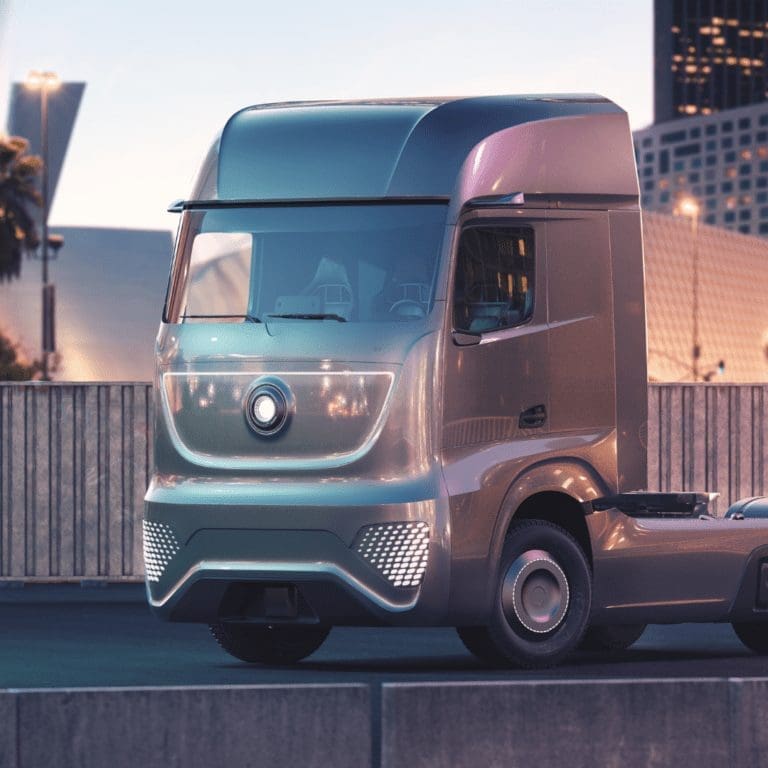
Recapping the current state of autonomous vehicle development and deployment
Much has been talked about in the last year about the future of the industry, especially with the introduction of autonomous trucks into the market. Although these vehicles are still in development and testing stages, exploring their advantages and understanding the current state of this technology will give us a clearer vision of what to expect in the near future.
With the rapid development of autonomous vehicles, the road transport sector faces the challenge of learning about them and incorporating them into their fleets gradually. Although there is no exact date for this transition, it is crucial to be aware of advances in this technology to remain competitive in the road transport industry.
Current advances in autonomous truck development
Companies like Kodiak Robotics, Aurora Innovation, Torc Robotics, and Gatik AI have taken the lead in this field. For example, Kodiak presented its driverless Class 8 truck and established an AV truck port in collaboration with Ryder in Houston. Additionally, the company has developed an autonomous Ford F-150 for testing purposes for the US Department of Defense. Although Kodiak trucks still require safety drivers, the company plans to launch driverless operations from Dallas to Houston this year.
Aurora, Continental, and Torc are preparing to commercialize their autonomous vehicles by 2027. For example, Aurora is developing a level 4 autonomous platform, while Torc plans to launch a level 4 AV Freightliner Cascadia in 2027. Gatik AI also has plans to expand its operations in Dallas, Texas, this year and has collaborated with Goodyear to incorporate smart tire solutions into its autonomous fleet in the United States.
However, some companies have faced challenges. For example, Waymo abandoned its efforts in audiovisual transportation in 2023 to focus on home delivery. Additionally, companies like TuSimple have decided to completely withdraw from the sector.

Legislation and opposition
Although companies continue to work on autonomous truck development, some states have enacted legislation that hinders their progress. For example, in Indiana and New York, bills have been proposed to ban driverless vehicles and require human operators, especially for vehicles over 3,000 kg in the case of New York.
Currently, 23 states allow driverless testing, and some are considering laws that would offer greater flexibility to regulations. For example, Tennessee is considering legislation that would only require AV operators at the front of a convoy. However, in some cases, the regulatory framework for operating fully autonomous vehicles has been completely abandoned, such as in Kentucky, where the H135 was banned in April 2023.
These decisions have led to disagreements and tensions, especially in groups like the Owner-Operator Independent Drivers Association (OOIDA), which express concern for driver safety and frustration over regulatory discrepancies between autonomous vehicles and human drivers.
Lewie Pugh, EVP of OOIDA, notes that frustrations are focused on the discrepancy between the strict regulations faced by truckers and the flexibility sought for autonomous trucks. The group does not oppose autonomous vehicles but seeks consistency and respect for the work of experienced drivers in the industry.
George O’Connor, OOIDA’s communications director, emphasizes the importance of consistency in regulatory testing to ensure safety. It is essential that regulations applied to human drivers are consistent with future regulations for autonomous trucks, while also respecting the work of driver fleets. Clear communication is fundamental for the smooth operation of the transportation industry. What’s next for the autonomous vehicle industry?

Double Brokering in 2026: How the Scam Works and How to Protect Your Freight
Double brokering fraud is one of the fastest-growing threats in the U.S. trucking industry in 2026. From ghost brokering to email hacking and identity theft,

Middle East Conflict: Impact on Diesel Prices and What U.S. Truckers Should Expect
The escalation of conflict in the Middle East has pushed crude oil prices toward $80 per barrel, reigniting global energy volatility. For the U.S. trucking

The best roadside attractions for truckers in the U.S.
America’s highways hide unique places that break up the routine, don’t hesitate to check out these roadside attractions along the way. The road is much

The trucker style: comfort, function, and identity
Truckers’ style is much more than workwear; it’s an identity. These are the most commonly worn garments among truckers. Truckers’ style is much more than

Chaos on Highway 61: Viral Wrong-Way Truck Video Reignites the CDL Debate
An 80-ton tractor-trailer traveling miles in the wrong direction on Missouri’s Highway 61 has reignited a nationwide debate over Commercial Driver’s License (CDL) standards, training

How technology affects driver retention
Friend or foe? 52% of drivers say technology directly influences their decision to stay with or leave a fleet. Fleet telematics company Platform Science published