The University of Michigan study indicates that the combination of automation and electrification can dramatically reduce greenhouse gas emissions
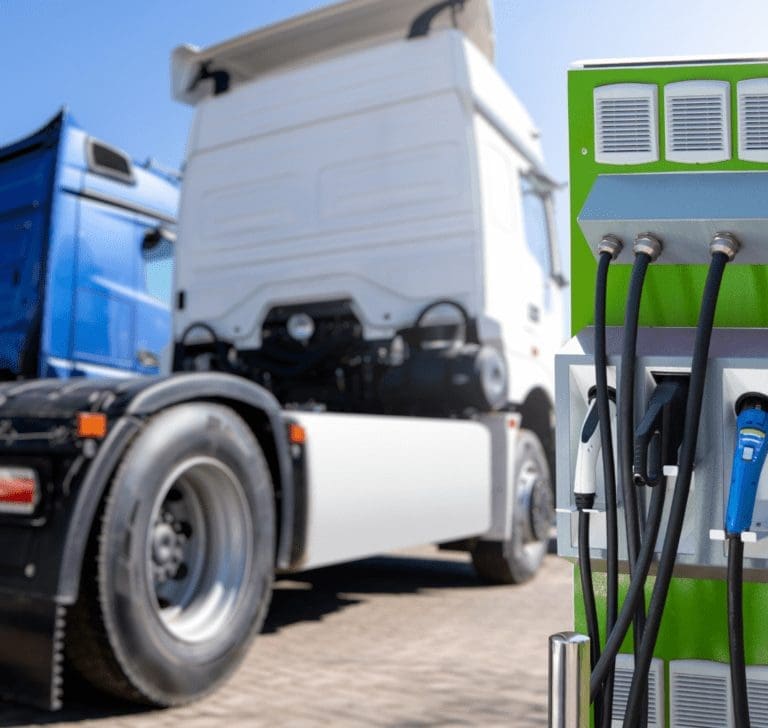
The University of Michigan has published a new study, which concludes that the automation and electrification of long-haul road transport could reduce urban health and environmental damage. Released on April 22, the study finds that air pollution and greenhouse gas damage could be reduced by 13% on routes under 300 miles due to electrification, equivalent to $587 million annually. On routes over 300 miles, electrifying urban segments, facilitated by highway driving automation, could reduce damage by 35%, equivalent to $220 million annually.
Parth Vaishnav, lead author of the study and associate professor at the School for Environment and Sustainability at the University of Michigan, states that this study is the first to analyze a realistic model of automation and electrification to assess their environmental benefits.

How automation and electrification can reduce the health and environmental impact of road transport
Vaishnav discusses how electrification and automation of road transport are advancing separately in some parts of the US. He notes that despite the challenges of electrifying very long routes, it’s feasible to build electric trucks that can travel up to 300 miles. On the other hand, automation is more viable on interstate highways than in urban areas.
To address these limitations, the study proposes combining the best of both worlds: electrifying all routes under 300 miles and, for longer routes, electrifying the segments that pass through cities while retaining human drivers. This strategy would contribute to reducing air pollution in urban areas, with significant benefits for the environment and health. According to the study, each year, around $500 million in health and environmental damage would be avoided.
Vaishnav emphasizes the need for batteries as small as possible to minimize weight and energy consumption while ensuring sufficient capacity to cover routes of different lengths and types. He suggests the necessity of building charging stations and strengthening the electrical grid. Examples include dividing long-distance routes into interstate and urban segments, where trucks could switch trailers from electric to diesel before entering or leaving the interstate.

Conclusions and limitations
The University of Michigan study indicates that the combination of automation and electrification can dramatically reduce greenhouse gas emissions compared to diesel automation. These benefits outweigh the damage caused by short-lived pollutant emissions, especially in Texas, Florida, and California, where the Port of Los Angeles generates a significant amount of truck traffic. Given California’s Clean Truck Program and its mandate for all heavy trucks operating in the state to be zero-emission by 2042, the benefits would be greater in this state.
Fully electrifying routes under 300 miles offers much greater benefits than electrifying urban segments of shorter routes since these routes represent the majority of freight transport in the United States. Additionally, adjusting the size of a truck’s battery to its mission has limited environmental and health benefits, especially on routes under 300 miles, which are responsible for most of the damage.

Trucking Transportation at the Ports of Washington: Permits and Requirements
The state of Washington is a strategic hub for many truck drivers handling maritime freight on the U.S. West Coast. When referring to trucking transportation

What Are the 5 Most Expensive Highways for Trucks in the U.S.?
These five U.S. highways have some of the highest toll costs for trucks, adding hundreds of dollars to a single trip.

Truckers in Washington: How to adapt to the new economy and come out ahead
The transportation market in Washington state is transforming. This article outlines the key factors and best strategies for optimizing routes, reducing costs, and capturing the most profitable loads.

Florida Raises Crash Reporting Threshold to $2,000
Starting October 1, Florida will quadruple the property-damage threshold that triggers the requirement to immediately report a crash. For truck drivers, however, the dollar value of the damage is not the only factor that matters.

Frequently Asked Questions About Trucking in Washington
100 questions and answers for truck drivers operating in the state of Washington.

Washington updates its freight corridors: how truck navigation will change on I-5, I-90, and other key routes.
The State of Washington is updating its planning for the state’s most important freight corridors with a clear goal: improving commercial truck traffic, strengthening supply