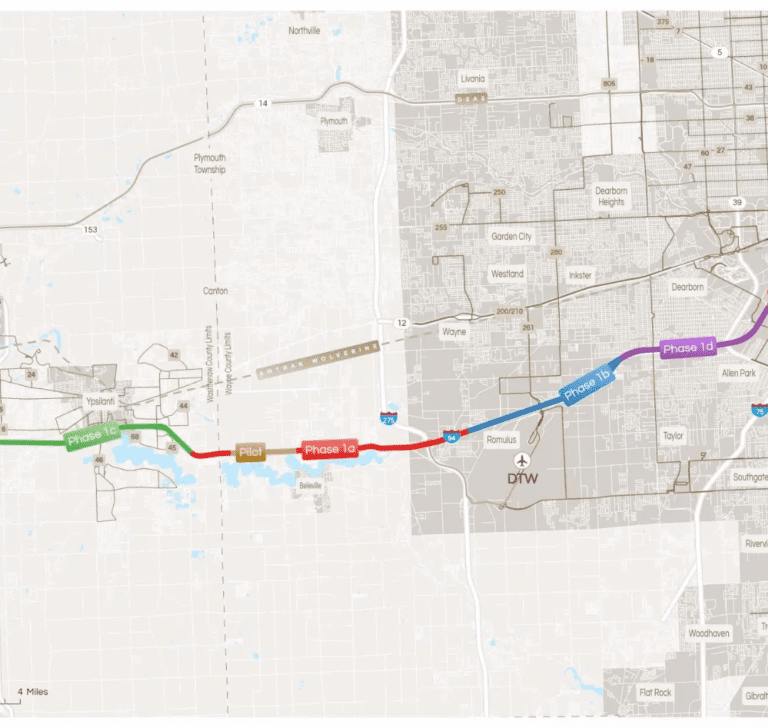
The pilot project on I-94 in Michigan has culminated in the creation of a connected corridor spanning 65 kilometers between Detroit and Ann Arbor
The future of transportation in the United States is being built along a three-mile stretch of Interstate 94 in Michigan. This highway is the site of a project led by Cavnue, which will offer lanes tailored for connected and automated vehicles. This project serves as a pilot experiment to explore what modern highways could look like and the opportunities they could offer to revolutionize mobility.
Since their inception, interstate highways have transformed transportation in the United States. However, with vehicles becoming increasingly intelligent, highways themselves must also evolve. Experts argue that integrating advanced technologies into road infrastructure would not only enhance safety but also aim to improve efficiency and reduce congestion.
The pilot project on I-94 in Michigan has culminated in the creation of a connected corridor spanning 65 kilometers between Detroit and Ann Arbor. This smart corridor will provide real-time data to the Michigan Department of Transportation (MDOT) on traffic and weather conditions, with the goal of preventing accidents and traffic jams. Moreover, it is designed to communicate directly with connected and automated vehicles.

Functionality and the future of smart highways
The intelligent infrastructure of this highway includes technology poles every 200 meters, equipped with cameras, radars, and other advanced sensors. These devices capture crucial information such as stopped vehicles, accidents, or adverse weather conditions. Using artificial intelligence algorithms, this real-time information is processed to generate alerts for both MDOT and vehicles traveling on the highway.
In the short term, these advancements are expected to improve incident response capabilities and optimize road maintenance. Long-term, the vision is that collaboration between vehicles and highways will enable safer and more efficient transportation. The expansion of similar projects in Texas and other regions underscores the growing importance and expansion of this innovative technology.
With the promise of level 4 and 5 vehicles in development, the implementation of smart infrastructures could accelerate the safe deployment of autonomous cars. This initiative not only positions Michigan at the forefront of mobility but also establishes a model for the future of highways in the United States.

In summary, the transformation of I-94 in Michigan is not just a technological milestone but also a significant step towards a smarter and more efficient transportation system that could redefine the landscape of American highways in the years to come.

Middle East Conflict: Impact on Diesel Prices and What U.S. Truckers Should Expect
The escalation of conflict in the Middle East has pushed crude oil prices toward $80 per barrel, reigniting global energy volatility. For the U.S. trucking

The best roadside attractions for truckers in the U.S.
America’s highways hide unique places that break up the routine, don’t hesitate to check out these roadside attractions along the way. The road is much

The trucker style: comfort, function, and identity
Truckers’ style is much more than workwear; it’s an identity. These are the most commonly worn garments among truckers. Truckers’ style is much more than

Chaos on Highway 61: Viral Wrong-Way Truck Video Reignites the CDL Debate
An 80-ton tractor-trailer traveling miles in the wrong direction on Missouri’s Highway 61 has reignited a nationwide debate over Commercial Driver’s License (CDL) standards, training

How technology affects driver retention
Friend or foe? 52% of drivers say technology directly influences their decision to stay with or leave a fleet. Fleet telematics company Platform Science published

Dalilah Law seeks to remove non-english speaking commercial drivers
President Donald Trump proposed the “Dalilah Law,” an initiative aimed at prohibiting undocumented immigrants from obtaining commercial driver’s licenses. On February 24, President Donald Trump