Texas, Utah and Arizona will be the first states to implement this new technology with pilot programs
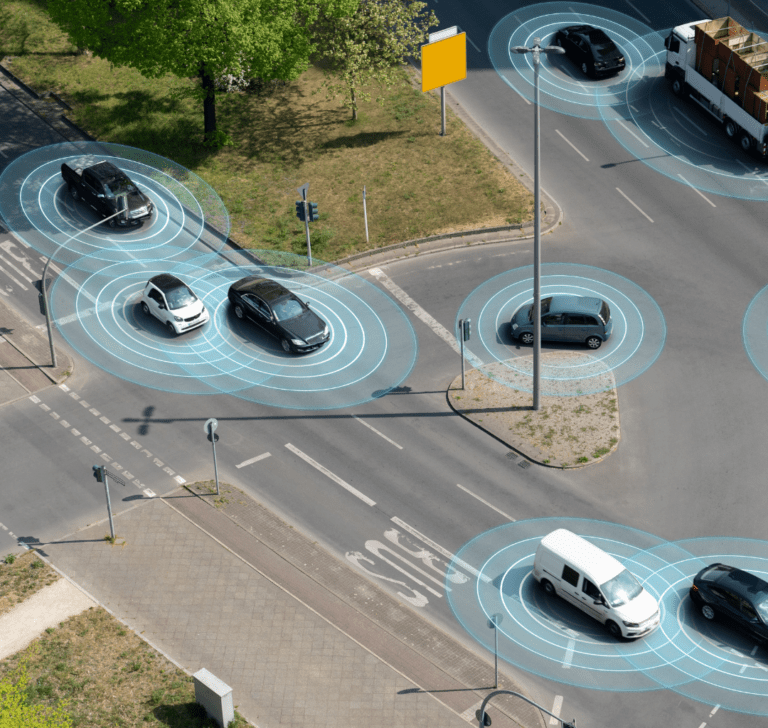
A national plan presented by the U.S. Department of Transportation (DOT) aims to advance a developing technology that will allow vehicles and roadway infrastructure to communicate with each other, with the goal of improving safety. The project, titled “Saving Lives with Connectivity: A Plan to Accelerate the Deployment of V2X,” was unveiled on August 16 at the DOT headquarters. V2X technology refers to “vehicle-to-everything,” which describes wireless communication between a vehicle and any entity that can affect the vehicle or be affected by it.
In a public statement, Secretary of Transportation Pete Buttigieg asserted that this plan marks a milestone in the transformation of travel, the national adoption of new technologies, and, most importantly, in enhancing safety. Federal Highway Administrator Shailen Bhatt described the plan as a call to action by providing a framework that allows the entire country to work towards the common goal of accelerating the deployment of V2X technology to save lives on our roads. Bhatt highlighted that this technology has proven effective and thanked the bipartisan legislation for providing the necessary funding to make it a reality.
In June, the Federal Highway Administration allocated $60 million to boost the adoption of V2X technologies through pilot programs in Arizona, Texas, and Utah. In Arizona, the Maricopa County Department of Transportation will receive $19.6 million to connect 750 physical and virtual roadway units with 400 units in transit, emergency, and freight vehicles using 5.9 GHz communications.
Additionally, Utah will receive $20 million to implement V2X communications, while Colorado and Wyoming will use the funds to deploy this technology on key routes such as I-80, I-70, and I-25. The project will include demonstrations of technology in connected intersections, various weather conditions, and safety alert systems.

V2X Technology: deployment plan and future challenges
The plan for deploying V2X technology faces several significant challenges. These include the limitation of wireless spectrum, lack of total interoperability among providers, and insufficient public funding to cover installation, operation, maintenance, and personnel costs. Moreover, reliance on manufacturers to invest in and install onboard units in new vehicles and establish communication standards also presents an obstacle.
Despite these challenges, the Department of Transportation expects to deploy 20% of its system by 2028 with the collaboration of automotive sector partners, private sector entities, and cycling and roadway safety organizations. Infrastructure Act grants totaling approximately $60 million will support the implementation of V2X in states such as Utah, Texas, Colorado, and Wyoming.
The plan will commence once the Federal Communications Commission (FCC) adopts final rules for the 5.9 GHz spectrum. The FCC has announced a vote to establish rules that will enable V2X units to operate using cellular technology within this band, which has seen limited progress in its development so far.

World Cup 2026: Three Opening Ceremonies and a Logistics Challenge
The 2026 World Cup will kick off with an unprecedented format: three opening ceremonies in Mexico, Canada, and the United States. Beyond the sporting and musical spectacle, the tournament will test urban mobility, transportation infrastructure, and logistics planning in some of North America’s busiest cities.

Freight Transportation Faces New Challenges Despite Signs of Recovery
The transportation industry continues to navigate a period of adjustment and volatility.

What Are FMCSA BASIC Scores and Why Do They Matter?
BASIC is part of the FMCSA’s safety monitoring program that evaluates the safety performance of motor carriers.

Toolbox for mastering costs and reaching the break-even point
You don’t need to be a finance expert. This is the master key to calculating the truck’s break-even point with surgical precision and protecting your business. Official data and authoritative sources.

New World Screwworm Outbreak Raises Concerns for Livestock Transportation Across the U.S.
New World Screwworm cases confirmed in Texas and New Mexico have triggered quarantines and increased animal health surveillance. As authorities work to contain the parasite, livestock haulers, ranchers, and agricultural operators are closely monitoring the potential impact that New World Screwworm could have on cattle movements, inspections, and agricultural logistics across the United States.

Cargo Theft in America: Which States Pose the Greatest Risk for Truckers?
California, Texas, and Illinois continue to lead the nation in cargo theft incidents, as organized criminal groups target freight worth millions of dollars each year. For trucking companies, owner-operators, and logistics providers, cargo theft has become one of the fastest-growing threats on America’s highways.