The U.S. Commerce Department’s Bureau of Industry and Security announced its final rule, stating that technologies from China and Russia present a risk to national security.
The U.S. government has officially announced a ban on the sale of connected vehicles in the United States that include Chinese or Russian technology, whether components or software, considering them a threat to national security.
The Commerce Department launched a public investigation into this matter at the end of September, which has now concluded with the publication of new rules aimed at “protecting the connected vehicle supply chain from external threats.”
U.S. officials argue that modern vehicles with internet-connected devices are akin to computers and have the potential to collect sensitive data, including that of drivers or owners, infringing on consumer privacy or allowing foreign adversaries to remotely manipulate vehicles.
The rule prohibits the import or sale of connected vehicles with specific hardware or software that have a “sufficient nexus” to China or Russia, as well as the sale of such components separately. It also bans manufacturers with links to Russia or China from selling U.S.-made vehicles within the country.
The finalized rule applies only to passenger vehicles weighing 10,000 pounds (4,536 kg) or less. Some bans will take effect as early as the 2027 model year, while others will begin with the 2030 model year.

Gradual Implementation
The ban will be rolled out gradually, beginning with software in 2027 and hardware in 2029, the department specified. Currently, no Chinese-made connected cars are sold in the United States, though BYD does sell buses in California, which are not included in the ban.
Some Western manufacturers, such as Volvo, a Swedish group controlled by China’s Geely, as well as Polestar, Buick (from GM), and Lincoln (a Ford subsidiary), sell vehicles of Chinese origin in the U.S. market.
“Cars are no longer just steel on wheels; they are computers. They have cameras, microphones, GPS devices, and other internet-connected technologies,” explained outgoing Commerce Secretary Gina Raimondo.
“With this decision, the Commerce Department establishes the necessary rules to protect Americans’ privacy and national security by keeping our adversaries at bay and preventing their ability to exploit these technologies to access sensitive information,” she added.
These new rules require automakers not to use any equipment or software from suppliers “that have a sufficient link to China or Russia.” Additionally, the scope of the measure extends to private vehicles. The Commerce Department notes that the supply chain for buses and trucks is more complex.“Specific rules will be outlined in the near future” for these vehicles, the statement highlighted.

The Future of the Industry
White House National Security Advisor Lael Brainard stated that “China is trying to dominate the future of the automotive industry,” but connected vehicles containing software and hardware linked to foreign powers open the door to the misuse of sensitive data or interference.
Electronics are increasingly present in modern vehicles, and most are connected to the internet through navigation systems. Driver-assistance programs and autonomous driving features heighten the risk of unwanted external interference with the control of a moving vehicle.
In mid-September, Washington announced that imported electric vehicles from China would face 100% tariffs starting September 27. Additionally, the Commerce Department indicated that it intends to launch a separate process targeting commercial vehicles, such as buses and trucks. It will be up to the incoming administration to finalize these restrictions.

Being a Parent From the Cab: The Other Life of a Truck Driver
Behind every truck driver, there is also a story that rarely appears on navigation maps: being a parent on the road.

Diesel Prices Hit Record High in the U.S. Prompting HOS exemption
The price of diesel reached a new record averaging nearly $6.45 per gallon in the United States.
$2.52 Billion I-10 Project Will Transform a Major U.S. Freight Corridor
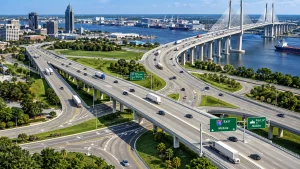
A $2.52 billion federal loan will help expand I-10 in Alabama, one of the nation’s major freight corridors. The project aims to eliminate Mobile’s long-standing bottleneck, cut travel times by up to 30 minutes, and improve truck access to the Port of Mobile.
Inside Volvo’s 2027 Truck of the Year Lineup
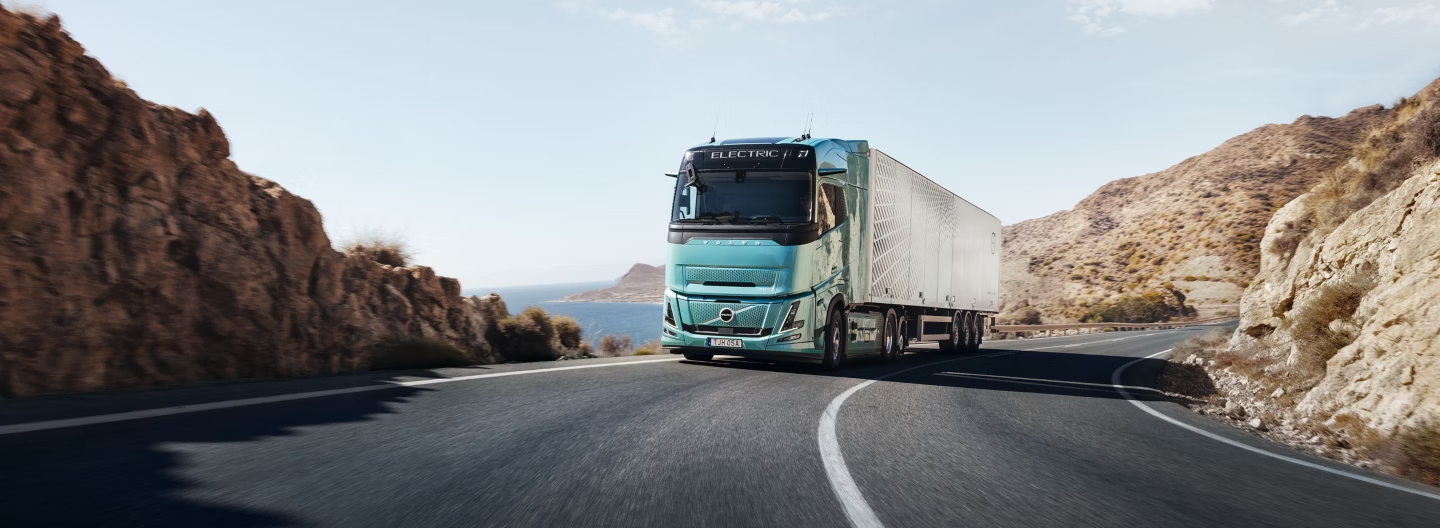
Volvo Trucks has pushed its new electric generation to as much as 435 miles of range, with increased payload capacity and faster charging. Here’s a closer look at the lineup that just earned one of the trucking industry’s biggest awards.

What Is a Department of Transportation (DOT) Background Check?
Here’s what truck drivers need to know about DOT background checks.
South Florida Diesel Prices Rise More Than 70%, Impacting Trucking Industry
Trucking operations in South Florida have come under pressure following the recent increase in diesel prices.

