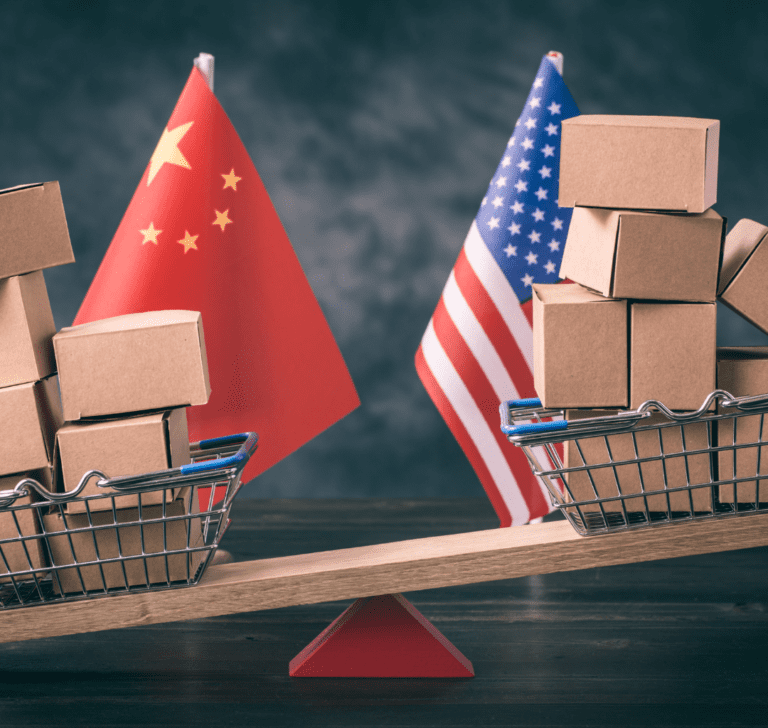
The Chinese government announced the imposition of tariffs on products such as coal and liquefied natural gas, crude oil, agricultural machinery, and large-cylinder automobiles.
China has responded to the broad tariffs imposed by President Donald Trump. On February 4, China announced that it plans to impose tariffs on selected U.S. imports. Additionally, the Chinese government announced an antitrust investigation into Google and other trade measures.
The Chinese government announced the imposition of tariffs on products such as coal and liquefied natural gas (15%), crude oil, agricultural machinery, and large-cylinder automobiles (10%). These tariffs are scheduled to take effect on February 10, according to the Chinese government. The Tariff Commission of the State Council of China highlighted that the U.S. tariffs violate World Trade Organization rules and harm bilateral economic cooperation. President Trump was scheduled to have a conversation with Chinese President Xi Jinping, but it was postponed.
China’s response was described as “measured” by John Gong, a professor at the University of International Business and Economics in Beijing. He noted that China may be seeking a solution similar to that of Canada and Mexico. This is not the first time the two countries have been involved in a trade dispute, as a tariff confrontation occurred in 2018, during Trump’s first term, and analysts believe China is better prepared this time.

Impact on U.S. Exports
However, the impact on U.S. exports may be limited. Although the U.S. is the world’s largest exporter of liquefied natural gas, its exports to China account for only 2.3% of its total gas exports. Additionally, China imports few cars from the U.S., with Europe and Japan being its primary suppliers.
On the other hand, China has announced new controls on the export of key minerals such as tungsten, tellurium, bismuth, molybdenum, and indium, which are essential for the U.S. high-tech industry. This could significantly impact the U.S. economy, as many of these materials are crucial for the manufacture of advanced technological products.
China’s response, while calculated, could have broader implications in the future. According to Stephen Dover, Chief Market Strategist at Franklin Templeton, this type of trade dispute could reduce global GDP growth, increase inflation in the U.S., strengthen the dollar, and put upward pressure on U.S. interest rates.

China will investigate Google for possible antitrust violations
On another front, the State Administration for Market Regulation of China announced that it will investigate Google for possible violations of antitrust laws. Although Google has a limited presence in China and its search engine is blocked in the country, this investigation could have implications for its operations in the Chinese market. Additionally, China included two U.S. companies, PVH Group (owner of Calvin Klein and Tommy Hilfiger) and Illumina (biotechnology), in its list of unreliable entities, which could hinder their ability to do business with China.
The inclusion of these companies on the list could be seen as a measure to pressure U.S. corporations to align with Chinese policies. According to George Chen, director of The Asia Group, the Chinese government may be using this tactic to influence companies’ decisions regarding their trade relations with the U.S.

Truck Driver Retention: The Challenge Reshaping Transportation Companies’ Strategies
Truck driver retention continues to be one of the biggest challenges facing the trucking industry. What are companies doing about it?

Trump Administration Proposes New Tariffs Over Forced Labor Concerns
New tariffs on imports from dozens of countries to prevent the entry of goods produced through forced labor.

Hurricane Season 2026: Which States Face the Highest Risk?
Even though forecasts suggest a less active Atlantic hurricane season, experts warn that a single storm can still trigger billions of dollars in damage, major supply chain disruptions, and mass evacuations across the most vulnerable coastal regions.

Can California Afford to Lose Immigrant Truck Drivers? The Impact of English Proficiency Rules
Approximately 8% of California’s truck drivers—an estimated 61,000 individuals—are immigrants. What happens if they’re gone?

Texas Resumes CDLs for H-2A Workers, Requires English-Only Exams
Texas expands CDL access for temporary farmworkers while tightening language requirements

Why Is DOT Encouraging Truckers to Stay Out of Kansas City During the World Cup?
As the World Cup brings hundreds of thousands of visitors to Kansas City, transportation officials are urging truckers to avoid the area during peak travel periods to reduce congestion and keep freight moving during the World Cup.