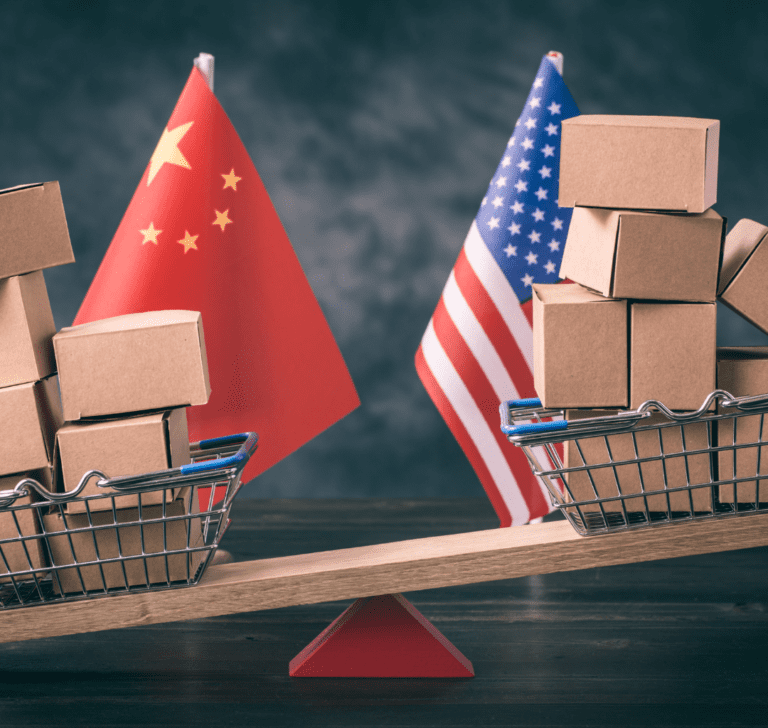
The Chinese government announced the imposition of tariffs on products such as coal and liquefied natural gas, crude oil, agricultural machinery, and large-cylinder automobiles.
China has responded to the broad tariffs imposed by President Donald Trump. On February 4, China announced that it plans to impose tariffs on selected U.S. imports. Additionally, the Chinese government announced an antitrust investigation into Google and other trade measures.
The Chinese government announced the imposition of tariffs on products such as coal and liquefied natural gas (15%), crude oil, agricultural machinery, and large-cylinder automobiles (10%). These tariffs are scheduled to take effect on February 10, according to the Chinese government. The Tariff Commission of the State Council of China highlighted that the U.S. tariffs violate World Trade Organization rules and harm bilateral economic cooperation. President Trump was scheduled to have a conversation with Chinese President Xi Jinping, but it was postponed.
China’s response was described as “measured” by John Gong, a professor at the University of International Business and Economics in Beijing. He noted that China may be seeking a solution similar to that of Canada and Mexico. This is not the first time the two countries have been involved in a trade dispute, as a tariff confrontation occurred in 2018, during Trump’s first term, and analysts believe China is better prepared this time.

Impact on U.S. Exports
However, the impact on U.S. exports may be limited. Although the U.S. is the world’s largest exporter of liquefied natural gas, its exports to China account for only 2.3% of its total gas exports. Additionally, China imports few cars from the U.S., with Europe and Japan being its primary suppliers.
On the other hand, China has announced new controls on the export of key minerals such as tungsten, tellurium, bismuth, molybdenum, and indium, which are essential for the U.S. high-tech industry. This could significantly impact the U.S. economy, as many of these materials are crucial for the manufacture of advanced technological products.
China’s response, while calculated, could have broader implications in the future. According to Stephen Dover, Chief Market Strategist at Franklin Templeton, this type of trade dispute could reduce global GDP growth, increase inflation in the U.S., strengthen the dollar, and put upward pressure on U.S. interest rates.

China will investigate Google for possible antitrust violations
On another front, the State Administration for Market Regulation of China announced that it will investigate Google for possible violations of antitrust laws. Although Google has a limited presence in China and its search engine is blocked in the country, this investigation could have implications for its operations in the Chinese market. Additionally, China included two U.S. companies, PVH Group (owner of Calvin Klein and Tommy Hilfiger) and Illumina (biotechnology), in its list of unreliable entities, which could hinder their ability to do business with China.
The inclusion of these companies on the list could be seen as a measure to pressure U.S. corporations to align with Chinese policies. According to George Chen, director of The Asia Group, the Chinese government may be using this tactic to influence companies’ decisions regarding their trade relations with the U.S.

Canada Wildfire Smoke Reaches New York Ahead of World Cup Final
Smoke from hundreds of active wildfires across Canada has significantly reduced air quality in New York and New Jersey just days before the 2026 FIFA World Cup Final between Argentina and Spain. The conditions are also creating new challenges for truck drivers and freight carriers operating throughout the Northeast.

What Regulations Have Changed for Truck Drivers in the U.S. in 2026?
Learn about the new trucking regulations in the United States for 2026, upcoming FMCSA changes, and how they will affect drivers and trucking companies.

Apocalyptic-Looking Sky in Ontario Goes Viral Amid Wildfires
Wildfires swept across Ontario, Canada and smoke spread as far as the U.S. border.

The Biggest Match of the World Cup Was Played Off the Field
More than 453 metric tons of equipment, around 5,000 trucks and support vehicles, and simultaneous operations across 16 host cities kept the largest FIFA World Cup in history running.

DEF Act: 10 Years of Legal Protection for EPA Diesel Emissions Guidance
The Diesel Engine Flexibility (DEF) Act would protect agricultural and transportation businesses by building on the diesel emissions guidance by the EPA.

License Plate Readers Raise Privacy Concerns for Truck Drivers
Concerns are growing over the impact license plate readers could have on the privacy and security of truck drivers.