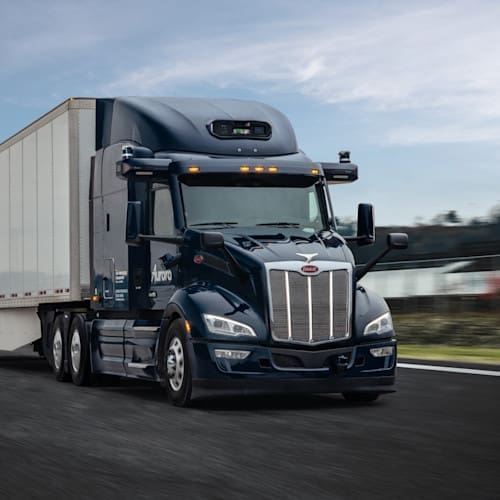
In a historic milestone for the trucking and logistics industry, Aurora Innovation has launched the first fully autonomous Class 8 trucks on U.S. highways, signaling the beginning of a new era in large-scale freight transportation.
What Does This Launch Mean for the Industry?
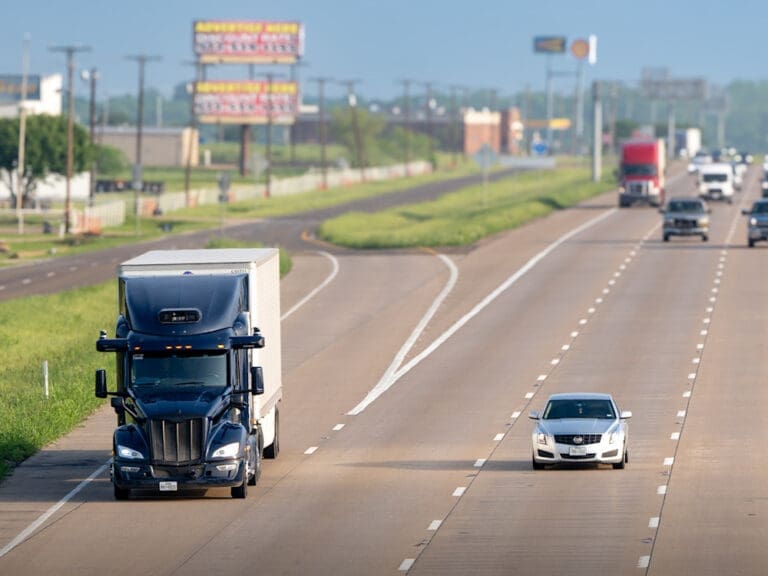
Aurora Innovation, a leading U.S. company in autonomous vehicle technology, has taken a major step by putting its first fully driverless Class 8 trucks on the road. These heavy-duty trucks — the giants of America’s highways — are now making commercial deliveries between Dallas and Houston, Texas, without a human driver in the cab.
Equipped with the Aurora Driver system, the trucks are operating as part of an advanced commercial testing phase designed to demonstrate the technical, operational, and economic feasibility of autonomous freight transport.
Aurora emphasizes that these runs are not just experimental but are structured commercial operations intended to prove the system’s readiness for broad deployment across the U.S. logistics sector.
The Advantages Behind Autonomy
Aurora highlights several key benefits that autonomous trucks can bring to the transportation industry:
Extended operating hours: Autonomous trucks don’t require sleep or rest breaks, meaning they can run nearly nonstop, increasing delivery speed.
Reduced operational costs: Companies can save on driver wages, benefits, and certain insurance costs.
Improved logistical efficiency: Autonomous systems can optimize routes, avoid delays, and offer more predictable delivery schedules.
Chris Urmson, Aurora’s CEO, remarked, “This isn’t just a tech breakthrough — it’s the beginning of a potential transformation in how goods move across the country. We’re building a future where freight transport is safer, more efficient, and more sustainable.”

Reactions: Excitement Meets Concern
The announcement has generated excitement among major logistics firms, who view autonomous trucks as a critical solution to the persistent shortage of truck drivers that has strained the U.S. supply chain in recent years.
However, labor unions and trucker associations have raised concerns about the potential social and economic impacts.
Many fear that widespread automation could put thousands of trucking jobs at risk and reshape labor standards in the industry.
A spokesperson for the Independent Truckers Association warned, “We cannot let this technological shift come at the cost of human livelihoods. There must be a fair transition plan that protects the workers who have kept America’s goods moving for decades.”
What’s Next for Aurora and the Industry?
Aurora has made it clear that mass rollout of autonomous trucks won’t happen overnight. The company plans to continue gathering data, refining its technology, and working closely with federal and state regulators to ensure full compliance with safety and operational standards.
Yet, the fact that fully autonomous trucks are already running regular routes on public highways marks a turning point for the U.S. trucking industry.
Industry analysts believe that early adopters of this technology could gain a significant competitive edge in terms of cost savings and delivery speed.
art of a Global Shift
Aurora’s breakthrough comes as part of a larger global trend. Companies across Europe, Asia, and Latin America are investing heavily in autonomous freight technologies, racing to capture leadership in a sector poised for massive transformation.
With this milestone, Aurora Innovation not only cements its position as a frontrunner in autonomous trucking but also sparks an urgent conversation: how will industries, governments, and societies adapt to a world where machines — not humans — drive the future of freight?

$170 billion at stake: 1,500 companies demand tariff refunds
Companies have challenged the global tariffs imposed by President Donald Trump, asking federal courts to reactivate proceedings to begin the refund process. The companies that

In brief: enforcement measures target speeding, CDL training gaps and more
Major enforcement actions across the U.S., including speeding, CDL fraud, and chain violations Colorado launches Speed Enforcement Program The Colorado Department of Transportation (CDOT) has

Chinese Vehicles Raise Espionage and Remote Sabotage Concerns
Investigations into Chinese technology in connected vehicles warn of espionage risks, massive data transmission, and potential remote access vulnerabilities that concern U.S. transportation and security

Between the Court and the Fed: the market redefines its roadmap for 2026
Trade policy in limbo as markets price in 2026 rate cuts and Supreme Court strikes down Trump tariff plan. In the latest episode of the

New 10% U.S. import tariff takes effect amid legal and market uncertainty
The implementation of these new tariffs has generated global uncertainty among exporters, increasing confusion around U.S. trade policy. The United States has implemented a new

Military Trucks That Moved a Base in Syria
Convoys of advanced HEMTT and PLS military trucks carried armored vehicles, prefabricated base structures, mobile workshops and heavy equipment during the U.S. withdrawal from northeastern