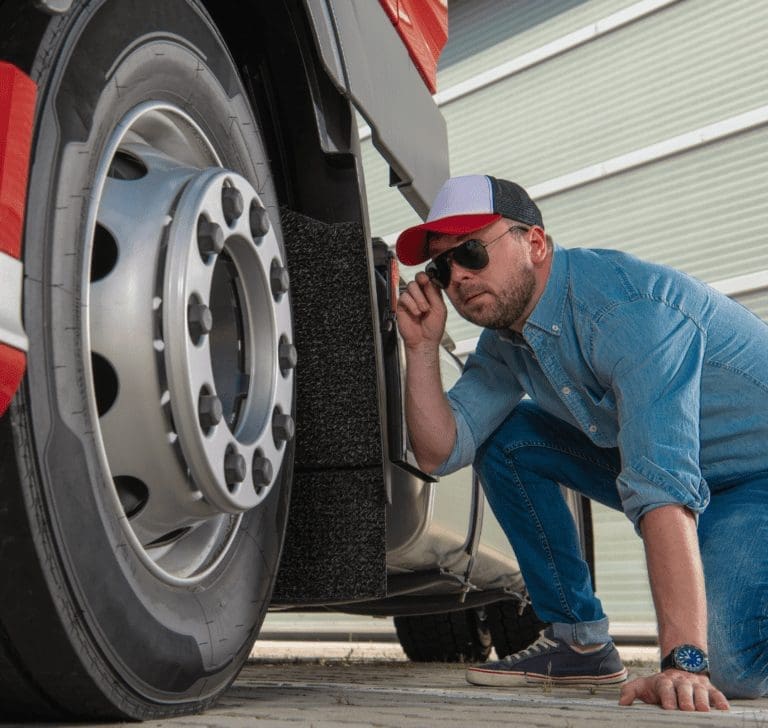
This year's CVSA International Roadcheck will take place May 13-15, learn the essential steps to get your fleet ready for the annual inspection.
The CVSA Roadcheck will take place from May 13 to 15 across Canada, Mexico, and the United States. This year, the focus of the inspection will be on tires and falsified Records of Duty Status (RODS). During the Roadcheck, inspectors will conduct a thorough evaluation of tires to identify any issues that could compromise safety, such as air leaks, punctured tires, improper repairs, and more.
In addition to tire inspections, special attention will be given to drivers’ Records of Duty Status (RODS), with the goal of identifying non-compliance with regulations and possible violations related to the tampering of Electronic Logging Devices (ELDs).

How to prepare your fleet for the 2025 CVSA Roadcheck
Records of Duty Status (RODS) and Hours of Service (HOS)
Hours of service violations are among the most common reasons drivers are detained during roadside inspections. This year, inspectors are focusing on several key aspects: the accuracy of the Record of Duty Status (RODS), detection of incomplete or falsified logs, missing or outdated Electronic Logging Devices (ELDs), and signs of driver fatigue or impairment.
To prepare, we recommend focusing on the following:
- Check your ELD data: Make sure your electronic logging devices contain accurate information that matches your physical records. Discrepancies can lead to violations.
- Prepare your documentation: Essential items for an inspection include your CDL, the ELD instruction card, blank logs, vehicle registration, insurance card, required permits, and your medical certificate. Ensure all these documents are up to date and well-organized to avoid infractions.
- Follow the regulations: In addition to knowing the hours-of-service and rest break rules, it is crucial to implement them to ensure a smooth inspection. If you are unfamiliar with the rules, visit the FMCSA website for more information.
A violation of the Hours of Service (HOS) regulations can result in an immediate out-of-service order and create serious problems for you and your company. If you know your logs are incomplete, it’s best to correct them right away.

Tire safety
Implementing a routine maintenance program is key to ensuring fleet vehicles are safe, reliable, and compliant with current regulations—all of which are closely scrutinized during roadside inspections. This year, special focus will be placed on tire condition, inflation levels, and visible damage, since blowouts not only come at a high cost but also pose a serious safety risk.
To help ensure a smooth inspection, we recommend checking the following:
- Tread depth: Verify that tread depth meets the legal minimum and complies with regulations. Be sure to use a tread depth gauge to check it accurately.
- Tire pressure (PSI): Inspectors will be paying close attention to underinflated tires, as they significantly increase the risk of accidents. Routinely check tire pressure and keep a log of these checks whenever possible.
- Visible damage: Along with tread and pressure checks, inspect tires for any bulges, cuts, or improper repairs. Replace any tires showing signs of damage to ensure safety.
Check these items in advance and carry a tire pressure gauge and air compressor with you to be ready for any situation during inspection days. Remember, keeping your tires in good condition is essential for road safety.

Avoid last-minute stress by completing these checks ahead of time. Whether you’re a driver or a fleet owner, run a mock inspection to review the condition of your tires, logs, paperwork, and lights. Keep in mind that receiving a violation during this week could lead to an out-of-service order and significant losses for your business. So, ensure your documentation is in order and your tires are properly maintained.

Truck drivers are at high risk of developing diabetes
About 11% of the adult population meets the criteria for prediabetes, and there is a particular group at high risk: truck drivers. Diabetes rates in

Starting in trucking: required permits, registrations, and compliance
Are you a new carrier? This is what you need to know about permits, registration, and compliance. The trucking industry can be quite challenging for

Alberta Clipper Brings an Early Polar Blast: A Critical Alert for Drivers
The Alberta Clipper is sweeping across the country with fast-moving Arctic air, sharp temperature drops, and dangerous road conditions that demand heightened attention from all professional drivers.

American manufacturers trigger truck “dumping” investigation
Foreign trailer manufacturers under investigation for alleged “dumping” in the U.S. The U.S. truck market is at the center of a trade dispute. After domestic

ATRI Warns: Litigation Is Rising Across the U.S. Trucking Industry
A new report from the American Transportation Research Institute (ATRI) reveals how escalating litigation, higher legal costs, and mounting insurance pressures are reshaping the U.S. trucking industry. The findings mark a critical moment for motor carriers, insurers, and logistics stakeholders who must understand the changing legal environment — and the increasingly strategic role of strong insurance partnerships.

FMCSA says no to hours-of-service exemptions
FMCSA rejects two requests for exemptions to hours-of-service rules for commercial drivers. The Federal Motor Carrier Safety Administration (FMCSA) has denied two exemption requests related