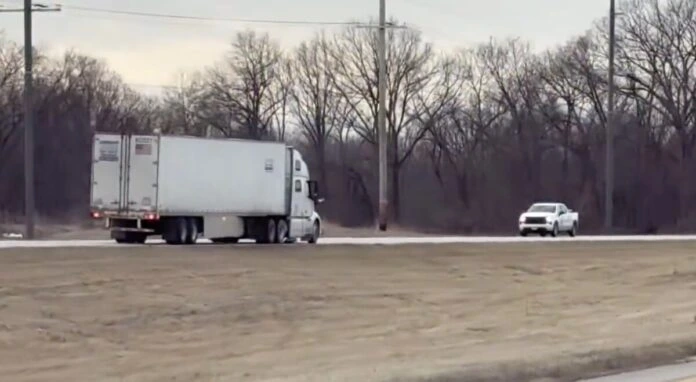
An 80-ton tractor-trailer traveling miles in the wrong direction on Missouri’s Highway 61 has reignited a nationwide debate over Commercial Driver’s License (CDL) standards, training oversight, and the federal measures now being taken to strengthen highway safety.
What began as a dashcam video posted online quickly turned into one of the most alarming roadway safety stories of the year. The footage shows a fully loaded 18-wheeler traveling at highway speed in the wrong direction near Troy, Missouri, forcing passenger vehicles to swerve onto the shoulder to avoid a head-on collision.
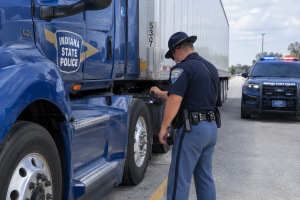
The incident occurred on February 25 and was later confirmed by the Missouri State Highway Patrol, which intercepted the driver after several miles of wrong-way travel. No fatalities were reported, but the margin for disaster was razor thin.
The CDL at the Center of the Debate
The story escalated when U.S. Transportation officials confirmed that the driver held a valid Commercial Driver’s License (CDL) issued in Minnesota but reportedly had difficulty understanding basic traffic signage.
That detail shifted the conversation from a single driver’s mistake to a broader systemic issue: Are CDL testing and training standards consistent and rigorous enough across all states? Is there sufficient oversight of driving schools and third-party examiners?
The Federal Motor Carrier Safety Administration (FMCSA) has opened an investigation into the carrier involved, Cargo Transportation LLC, to review its safety record, hiring practices, and compliance history.
A High-Pressure Environment for the Industry
The timing of the incident matters. The U.S. freight industry continues to face a complex environment: driver shortages in some regions, tight operating margins, rising insurance premiums, and increasing regulatory scrutiny.
At the same time, federal authorities have been reviewing policies related to non-domiciled CDLs and documentation requirements, adding another layer to an already sensitive policy landscape.
For many industry observers, the Missouri incident underscores the tension between filling driver seats and maintaining uncompromising safety standards.
Concrete Safety Measures Now Underway
Federal and state authorities have already signaled that action will follow. Several measures are being strengthened or accelerated:
Targeted Safety Audits
The U.S. Department of Transportation (DOT) announced expanded surprise audits for carriers with irregular safety patterns, inconsistent documentation, or operational red flags. The focus includes identifying so-called “chameleon carriers” that attempt to restart under new identities after compliance issues.
Increased Oversight of Entry-Level Driver Training (ELDT)
The FMCSA is reinforcing monitoring of the Entry-Level Driver Training (ELDT) program, mandatory since 2022. Officials are placing greater emphasis on verifying actual training hours, instructor qualifications, and digital record integrity.
Review of CDL Testing Standards
Several states are evaluating adjustments to both written and road exams to ensure stronger assessment of sign recognition, operational comprehension, and identity verification. Discussions around language proficiency requirements for interstate commerce have also reemerged.
Expanded Use of Safety Technology
Insurers and regulators are encouraging broader adoption of advanced driver assistance systems (ADAS), lane departure warnings, telematics monitoring, and inward-facing cameras. Some underwriting policies may soon require these technologies to maintain competitive liability premiums.
Improved Interstate Data Sharing
Efforts are underway to enhance interoperability between state licensing databases to better flag suspensions, disciplinary history, and inconsistencies across jurisdictions.
Insurance and Market Implications
From a risk management perspective, high-visibility incidents like this can influence underwriting models across the sector. Insurance analysts warn that small and mid-sized carriers may face increased scrutiny, particularly those with limited safety track records.
When an 80-ton truck travels the wrong way on a divided highway, it does more than endanger lives. It shifts public perception and reshapes regulatory momentum.
Individual Error or Systemic Warning?
Within trucking forums and industry associations, the central question remains: Was this an isolated lapse in judgment, or does it expose broader weaknesses in training, oversight, and compliance enforcement?
The driver has been placed out of service pending further investigation. Meanwhile, the Highway 61 incident has become a flashpoint in an ongoing national conversation.
In an industry that moves more than 70% of the nation’s freight, safety is not merely a compliance requirement—it is a strategic pillar. Viral videos may capture a moment. The policy and regulatory consequences that follow can shape the industry for years.

What if the Oscars were about trucking? Hollywood characters reimagined as truckers
This week marks the 98th Academy Awards, what if the categories were inspired by the transportation industry?

TCA Professional Drivers of the Year 2026: 5 drivers who paved the road
TCA Professional Drivers of the Year selects drivers with the greatest impact, outstanding safety records, and individuals with inspiring stories that made a difference.

Unusual Stories from the Road: When Reality Outruns Logistics
From a giant magnet moving down the highway like a spacecraft to millions of bees taking over a highway, the world of freight transportation is full of events that are as strange as they are real. Some of these stories went viral, others became legends among drivers, but all of them reveal the unexpected side of logistics.

The safest, most reliable and crash-resistant cars for protecting you on the road
Based on ratings from the NHTSA and the IIHS evaluation system, this list shows some of the safest and most crash-resistant cars.

U.S. greenlights electric flying taxi tests across 26 states
The Department of Transportation announced the selection of eight electric air taxi proposals aimed at accelerating and integrating electric aerial vehicles in the U.S.

Immigrant Drivers: How the “Second Wave” of Road Checks Will Be
A firm and more sophisticated surveillance targets thousands of drivers. The cancellation of licenses and operations on highways challenge the transport sector and reduce the labor supply. A guide to not get left behind.