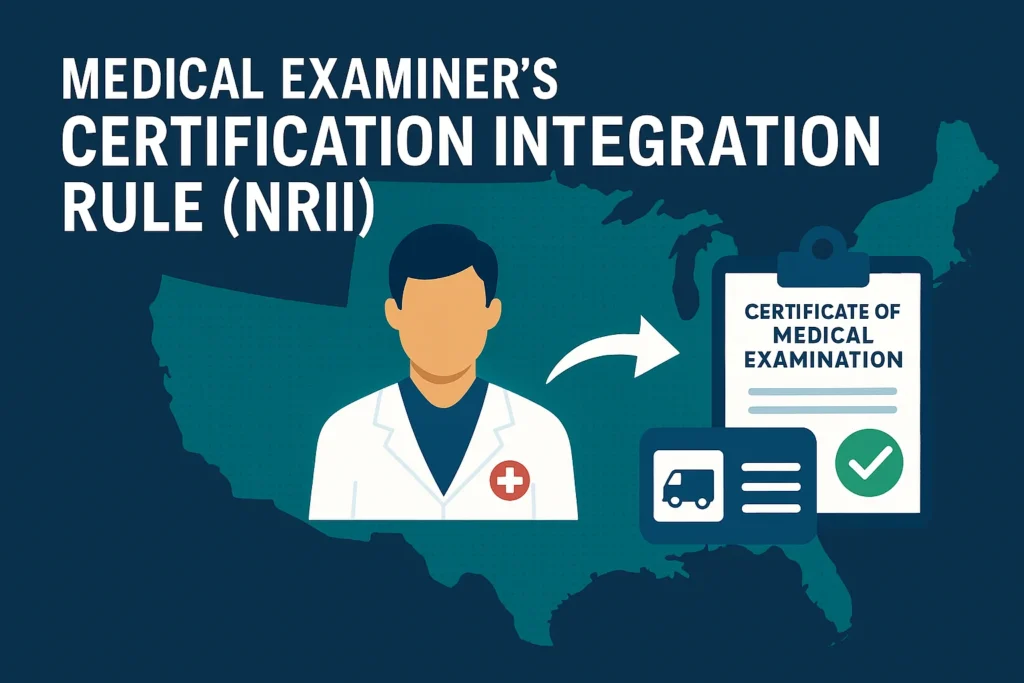
As of June 2025, the United States has officially phased out paper medical certificates for commercial drivers. In this article, we explain how the new digital system works, who is affected, and what transportation companies need to do to stay compliant.
The U.S. Department of Transportation (DOT), through the Federal Motor Carrier Safety Administration (FMCSA), implemented a new rule on June 23 that fully digitizes the medical certification process for drivers with Commercial Driver’s Licenses (CDL) or Commercial Learner’s Permits (CLP). The Medical Examiner’s Certification Integration Rule (NRII) eliminates the need for physical documents and brings the entire process online.
“This new digitalized system will make life easier for lawful truck drivers and harder for bad actors who want to commit fraud. It will also enhance safety on our roads and ensure law enforcement has access to the real-time data they need to do their jobs. America First means safety first,” said U.S. Transportation Secretary Sean P. Duffy.

What Does the New Rule Involve?
From now on, FMCSA-certified medical examiners must upload the results of a driver’s physical exam to the National Registry of Certified Medical Examiners by midnight the day after the examination.
This information is automatically integrated with the FMCSA system and shared with State Driver Licensing Agencies (SDLAs), which digitally update the driver’s record. The medical certification becomes electronically linked to the driver’s Motor Vehicle Record (MVR), eliminating the need for the driver to carry or submit a paper certificate.
Paper Certificates Are No Longer Accepted
For CDL and CLP holders, printed medical certificates are no longer valid for official processes. Employers and state licensing offices will not accept paper documentation.
This means:
Drivers are not required to present physical certificates.
SDLAs won’t accept paper medical forms.
Inspections and verifications will rely on the digital MVR.
🚛 What Changes for Trucking Companies?
While the new system reduces paperwork for fleets, it increases digital oversight responsibilities. Employers no longer need to collect or store physical medical certificates but must regularly monitor each driver’s MVR to ensure their medical status is current and compliant.
FMCSA warns that operating with uncertified drivers can result in serious penalties and fines. Companies are encouraged to automate MVR checks or implement internal protocols for routine verification.
More Security, Less Risk
Benefits of the new NRII system include:
✅ Increased security in the medical certification process
✅ Lower risk of fraud and forged documents
✅ Real-time access to certification status for authorities and employers
✅ Less administrative burden for drivers and HR staff
The digital model is also expected to streamline audits and roadside inspections, allowing officers to instantly verify a driver’s medical clearance without needing physical paperwork.
What About Non-Commercial Drivers?
The paper-based system still applies to drivers who do not hold a CDL or CLP. These drivers must continue submitting printed medical certificates to their employers or state agencies, depending on local requirements.
Summary
As of June 2025, medical examiners must electronically submit certification results to the National Registry.
Paper certificates are no longer valid for CDL/CLP holders.
Companies must monitor MVRs regularly to ensure driver compliance.
The system enhances transparency, traceability, and safety.
Paper certification remains in place only for non-commercial drivers.

Which Trucking Industry Segment Will Grow the Most in the U.S. and Why
Which trucking industry segment will grow the most in the U.S. and why is a key question for investors, carriers, and logistics operators. A new report from DataNexus Market Research points to tank trucking as the fastest-growing segment, driven by rising demand for chemicals, fuels, and hazardous materials

Jerome Powell under investigation as tensions between Trump and the Fed escalate
The investigation into Powell has raised global concerns over a potential threat to the independence of the U.S. central bank. In the new episode of

Road Alert: 25 States Under Extreme Driving Conditions
Snow, ice, strong winds, and low visibility are keeping major highways under active travel advisories. The alert now affects 25 states and calls for extra caution, especially among truck drivers and freight carriers operating along key corridors.

Human Trafficking: A Nationwide Call to Action on America’s Roads
Human trafficking is the focus of a nationwide awareness week aimed at educating truck drivers, motor carriers, law enforcement, and the public about human trafficking, how to spot the warning signs, and what to do if someone may be in danger.

TAA Compliance: When Safety Complaints Turn Into Six-Figure Losses
STAA compliance is no longer a technical detail for fleet owners—it is a financial, legal, and insurance exposure. A recent enforcement action in Texas shows how mishandling safety complaints can lead to termination claims, retaliation findings, and six-figure penalties, and what carriers must do to avoid becoming the next case

U.S. labor market raises red flags on Wall Street
The U.S. labor market closed 2025 with clear signs of weakening, as evidenced by the latest employment data released in December. In the latest episode