The U.S. Department of Transportation is advancing a plan with 52 deregulation actions aimed at simplifying road transport rules, implemented gradually through the FHWA, FMCSA, and NHTSA. Most are still in the proposal stage, while some are already in effect.
The U.S. Department of Transportation (DOT) is pursuing an ambitious deregulation agenda designed to modernize the regulatory framework and ease the movement of commercial vehicles by eliminating redundant rules that provide no meaningful improvement to safety.
The plan includes 52 regulatory actions that will be rolled out gradually through three key agencies: the Federal Highway Administration (FHWA), the Federal Motor Carrier Safety Administration (FMCSA), and the National Highway Traffic Safety Administration (NHTSA). Of these, 43 are currently in the Notice of Proposed Rulemaking (NPRM) stage, 7 have already been finalized, and 2 have been withdrawn entirely from the regulatory process.

Key Changes Affecting the Trucking Industry
The measure directly impacts truck drivers and transportation companies, who will benefit from reduced paperwork and the removal of outdated requirements. Some of the most significant changes include:
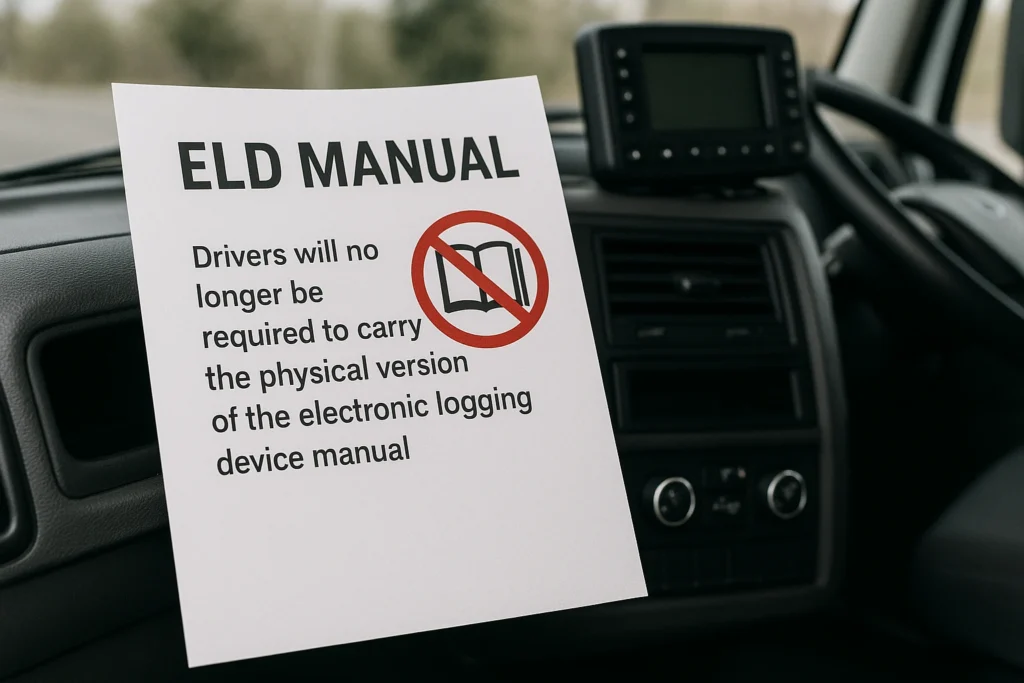
Elimination of printed ELD manuals: Drivers will no longer be required to carry a physical copy of the Electronic Logging Device manual, as long as it is accessible in digital format.
End of certified mud flap labeling requirement: The rule proposes removing the need for permanent labeling on rear splash guards, which agencies have deemed unnecessary.
Removal of self-reporting for CDL holders: Commercial drivers will no longer need to self-report traffic violations, as this information is already shared automatically between states.
Update of emergency equipment standards: Requirements for items like liquid-burning flares and spare fuses will be revised due to technological obsolescence.
Expansion of military exemptions: The new rules provide a more direct path for trained military personnel to obtain commercial driver’s licenses without repeating exams or certifications they’ve already passed.
When Do the New Rules Take Effect?
Two of the rules have been in effect since May 30, 2025, including the repeal of certain contract carrier route regulations and the simplification of civil penalty structures.
The remaining measures are currently under public comment, with deadlines closing between late June and July. After the public input period, agencies will finalize the rules, which are expected to take effect between late 2025 and early 2026, depending on the specific regulatory timeline.
A Strategy to Reduce Administrative Burdens
These actions are part of President Donald Trump’s broader deregulatory strategy aimed at reducing administrative burdens on productive sectors without compromising road safety. Secretary of Transportation Sean P. Duffy noted that the new measures could eliminate more than 73,000 words from the Federal Code of Regulations—marking a step toward a regulatory system that is “clear, consistent, and effective.”
While many trucking associations and logistics firms have welcomed the DOT’s deregulatory push as a long-overdue modernization effort, some labor and safety advocacy groups have raised concerns. They warn that easing certain requirements—such as emergency equipment standards or driver self-reporting—could weaken enforcement and oversight. However, proponents argue that the reforms strike a necessary balance between safety and operational efficiency, especially as the U.S. supply chain continues to face labor shortages and rising freight demands.

Truck drivers are at high risk of developing diabetes
About 11% of the adult population meets the criteria for prediabetes, and there is a particular group at high risk: truck drivers. Diabetes rates in

Starting in trucking: required permits, registrations, and compliance
Are you a new carrier? This is what you need to know about permits, registration, and compliance. The trucking industry can be quite challenging for

Alberta Clipper Brings an Early Polar Blast: A Critical Alert for Drivers
The Alberta Clipper is sweeping across the country with fast-moving Arctic air, sharp temperature drops, and dangerous road conditions that demand heightened attention from all professional drivers.

American manufacturers trigger truck “dumping” investigation
Foreign trailer manufacturers under investigation for alleged “dumping” in the U.S. The U.S. truck market is at the center of a trade dispute. After domestic

ATRI Warns: Litigation Is Rising Across the U.S. Trucking Industry
A new report from the American Transportation Research Institute (ATRI) reveals how escalating litigation, higher legal costs, and mounting insurance pressures are reshaping the U.S. trucking industry. The findings mark a critical moment for motor carriers, insurers, and logistics stakeholders who must understand the changing legal environment — and the increasingly strategic role of strong insurance partnerships.

FMCSA says no to hours-of-service exemptions
FMCSA rejects two requests for exemptions to hours-of-service rules for commercial drivers. The Federal Motor Carrier Safety Administration (FMCSA) has denied two exemption requests related