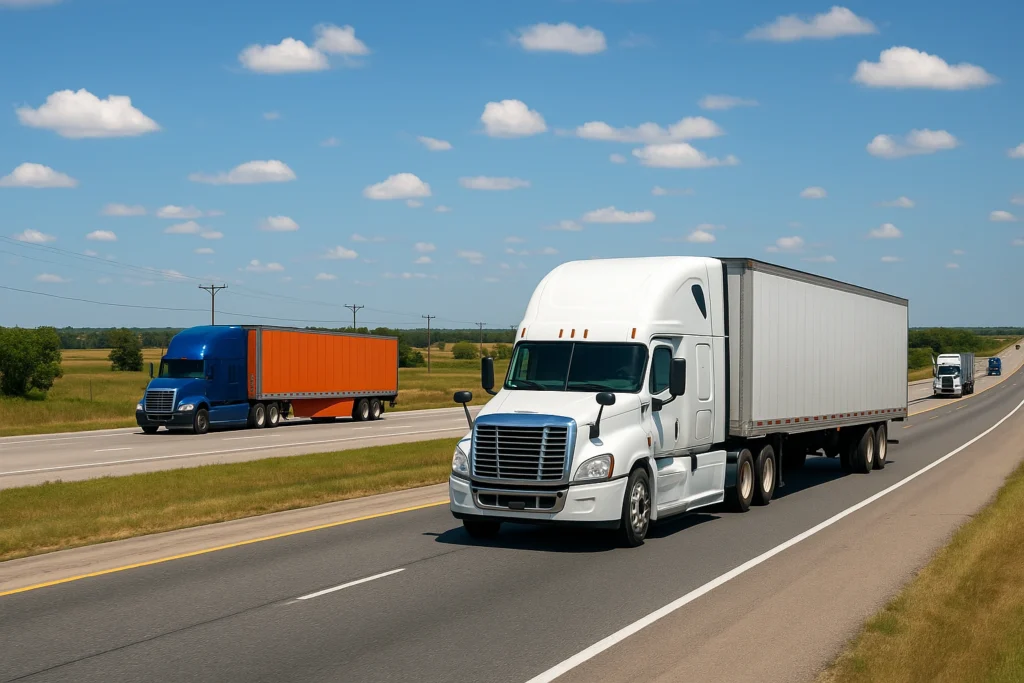
“For too long, Washington has made truckers’ jobs harder. That ends today,” said Transportation Secretary Sean Duffy, who praised the drivers that “keep shelves stocked while America sleeps.”
In a long-awaited move hailed by truckers and transportation groups nationwide, the U.S. Department of Transportation has officially withdrawn a proposed rule that would have mandated speed-limiting devices on heavy trucks. Originally introduced under the Obama administration in 2016 and reaffirmed by President Biden in 2022, the regulation sought to cap the maximum speed of trucks weighing over 26,000 pounds at 65 miles per hour
With this decision, current speed limits remain unchanged—varying by state and roadway—but typically allowing trucks to travel between 70 and 75 mph (113 to 120 km/h), aligning with the natural flow of highway traffic.
Transportation Secretary Sean Duffy explained that speed limiters are not just a logistical inconvenience but also a safety risk. “Forcing truck drivers to go significantly slower than the surrounding traffic creates dangerous conditions—especially on high-speed interstates where differences in speed can increase the risk of collisions,” Duffy stated in a press release

A Breath of Relief for Truck Drivers
The decision to scrap the proposed rule has been widely praised across the trucking industry. Truckers, unions, and logistics organizations have long voiced concern over the logistical and economic consequences of mandatory speed limiters. For many drivers, such a mandate would have translated into longer delivery times, reduced competitiveness, and added pressure on already tight schedules and incomes.
This rollback is part of a broader regulatory reform package spearheaded by Duffy under President Trump’s direction, aimed at reducing bureaucracy and improving working conditions for truck drivers.
“As the nation sleeps, truckers are out there grinding through the night—keeping shelves stocked, families fed, and businesses running,” Duffy said last month. “It’s a job that demands grit, discipline, and heart. But for too long, Washington has made truckers’ jobs harder. That ends today. Thanks to President Trump, we’re getting Washington out of your trucks and your business.”
Additional Reforms Backing the Industry
Beyond eliminating the speed limiter proposal, the reform package includes over $275 million in grant funding to expand access to safe truck parking—a longstanding demand within the industry. Another measure introduced is a new federal requirement that all commercial truck drivers must speak English, designed to improve highway safety through standardized communication.
While the original speed limiter rule was pitched as a safety and environmental measure—aimed at reducing crashes and fuel consumption—its actual impact remained widely debated. Industry veterans and analysts argued that the regulation could have worsened traffic flow, created bottlenecks, and introduced new risks rather than mitigating existing ones.
Industry Reactions and Public Response
The response from the trucking community has been overwhelmingly positive. Organizations such as the Owner-Operator Independent Drivers Association (OOIDA), as well as individual truckers, celebrated the decision as a necessary correction. On social media and trucking forums, drivers voiced relief and satisfaction.
“They finally listened,” wrote a 20-year veteran driver on a popular forum. “The speed limiter wasn’t just unnecessary—it was dangerous.”
However, not all reactions were supportive. Some highway safety advocacy groups expressed disappointment, arguing that a consistent nationwide speed cap could have reduced accident severity. Still, proponents of the rollback believe that professional experience and driver discretion should outweigh rigid one-size-fits-all rules that don’t account for real-world conditions.
A Strategic Move
The decision further cements the Trump administration’s alignment with the trucking workforce, a vital pillar of the U.S. economy responsible for hauling over 70% of the nation’s freight. By eliminating the speed limiter proposal, the administration not only addresses a symbolic grievance but also delivers tangible relief to thousands of workers who keep America moving—mile by mile.

Truck drivers are at high risk of developing diabetes
About 11% of the adult population meets the criteria for prediabetes, and there is a particular group at high risk: truck drivers. Diabetes rates in

Starting in trucking: required permits, registrations, and compliance
Are you a new carrier? This is what you need to know about permits, registration, and compliance. The trucking industry can be quite challenging for

Alberta Clipper Brings an Early Polar Blast: A Critical Alert for Drivers
The Alberta Clipper is sweeping across the country with fast-moving Arctic air, sharp temperature drops, and dangerous road conditions that demand heightened attention from all professional drivers.

American manufacturers trigger truck “dumping” investigation
Foreign trailer manufacturers under investigation for alleged “dumping” in the U.S. The U.S. truck market is at the center of a trade dispute. After domestic

ATRI Warns: Litigation Is Rising Across the U.S. Trucking Industry
A new report from the American Transportation Research Institute (ATRI) reveals how escalating litigation, higher legal costs, and mounting insurance pressures are reshaping the U.S. trucking industry. The findings mark a critical moment for motor carriers, insurers, and logistics stakeholders who must understand the changing legal environment — and the increasingly strategic role of strong insurance partnerships.

FMCSA says no to hours-of-service exemptions
FMCSA rejects two requests for exemptions to hours-of-service rules for commercial drivers. The Federal Motor Carrier Safety Administration (FMCSA) has denied two exemption requests related