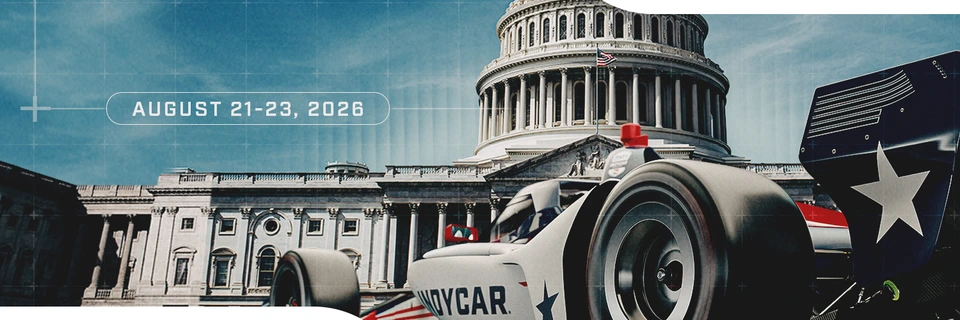
The first-ever IndyCar street race in Washington, D.C., scheduled for August 21–23, will headline the United States’ 250th anniversary celebrations — and it will trigger a massive transportation, freight, and urban logistics operation behind the scenes.
The transportation industry will play a critical — though often invisible — role in one of the most high-profile events on the 2026 national calendar. The Freedom 250 Grand Prix represents far more than speed and spectacle. It is a large-scale logistical challenge unfolding in the political and tourism heart of the country.
The event was announced by President Donald Trump alongside Transportation Secretary Sean P. Duffy as part of the official 250th anniversary programming. But long before engines fire up, the real movement will happen on highways, in warehouses, and at controlled loading zones.
A Street Circuit Demands Total Precision
Unlike permanent racetracks, a street race requires transforming an active city into a temporary motorsport venue. Streets, avenues, and landmark areas must be adapted to host race cars, grandstands, technical zones, and extensive safety systems.
That transformation means moving thousands of tons of equipment into the capital. Race cars, spare parts, tools, electronic systems, pit structures, power generators, and broadcast technology are transported primarily by specialized trucking fleets that travel with the IndyCar championship.
For the transportation sector, this type of operation requires:
Coordination of high-value freight
Strict delivery windows
Nighttime operations to reduce urban disruption
Enhanced security protocols
Any delay can affect the construction schedule, making logistics planning just as critical as on-track performance.
https://t.co/VdL0yBm61K pic.twitter.com/N4U12YWJL0
— Secretary Sean Duffy (@SecDuffy) January 30, 2026
Traffic Management Under Pressure
Hosting the Freedom 250 will also test traffic management across Washington. Building the circuit will require road closures, detours, and carefully planned routing to prevent gridlock in one of the country’s most complex urban environments.
Authorities will need to coordinate dedicated freight corridors, controlled access points for transport vehicles, and protected routes for emergency services. For regional carriers, the situation resembles operating during large infrastructure projects or major public events, where flexibility and real-time information are essential.
The Logistics Backbone of Motorsport
Every IndyCar team operates like a mobile logistics unit. Their cars and equipment travel across the country throughout the season in dedicated transport fleets. In a street race, complexity multiplies: space is limited and build time is compressed.
Beyond the teams, tire suppliers, fuel partners, hospitality providers, technology firms, and broadcast crews all depend on trucking. The action on track is only the visible layer of a supply chain functioning with near-military precision.
Indirect Impact on Regional Freight
The event will draw visitors, media crews, and technical staff, increasing demand for hotel, restaurant, and city service deliveries. This results in higher freight volumes, tighter delivery schedules, and more detailed planning to prevent congestion.
For freight carriers, these spikes in activity open up commercial opportunities, but they also mean working in dense urban environments with temporary restrictions and limited delivery access.
Temporary Infrastructure on Wheels
Safety barriers, grandstands, technical platforms, and signage systems are all transported by truck. Specialized logistics companies move extensive modular structures that must be installed and removed within a short timeframe.
These operations offer important lessons for the transportation industry, including logistics in sensitive areas, coordination between multiple agencies, and managing oversized loads in complex urban settings.
Before the Green Flag
By the time race cars speed through the streets of Washington, most of the heavy logistical work will already have traveled across the highway network. Professional drivers, logistics planners, and freight operators will have ensured that every piece of equipment is in the right place at the right time.
The Freedom 250 Grand Prix will highlight speed and competition, but it also underscores the essential role of the transportation industry in supporting the invisible infrastructure behind major national events. Before any large celebration begins, trucks are the first to move.

How to avoid ELD violations: common mistakes truckers make
Violations related to Electronic Logging Devices (ELDs) are among the most common issues found during roadside inspections by the Department of Transportation.

Drive your stress away: techniques for truck drivers
Approximately 75% of truck drivers report feeling emotionally stressed at work, and very few have the tools to cope with these situations or seek help.

California vs. Washington: regulatory dispute over trucks in the U.S.
California, the most populous state in the country, wants to remove diesel trucks from its roads. Washington wants exactly the opposite. In between, thousands of fleets are left unsure about which engine to buy.

Volvo Pushes Beyond Diesel with New Hydrogen Combustion Truck Trials
Volvo Trucks is once again taking the lead, beginning road tests with heavy trucks equipped with hydrogen combustion engines.

Trucker Fashion: A Revolution Born on the Road That Still Sets the Trend
Trucker fashion remains relevant due to its authenticity, its seamless integration into streetwear, and its reinterpretation by luxury brands, consolidating itself as a revolution born on the road that evolved from a work uniform into a global cultural symbol

North Dakota among states regaining non-domiciled CDL authority
North Dakota will reissue approximately 150 of the 526 CDLs and CLPs for non-resident drivers that were active during the FMCSA audit.