Road rage and aggressive driving is no longer the exception, it’s the norm, discovered the AAA.
Road rage, or aggressive driving, has become a growing problem in recent years, to the point that it seems many drivers navigate streets and highways in a negative emotional state. It’s a phenomenon that spreads easily, affecting both those who experience it and those who witness it. In response to this growing concern, the AAA Foundation for Traffic Safety conducted a study to examine how many drivers are influenced by road rage.
The report revealed that a surprising 96% of drivers admitted to engaging in aggressive behaviors behind the wheel over the past year. These behaviors range from speeding and tailgating to cutting off other drivers. In other words, aggressive driving has become an almost universal experience: not only is it frustrating, but it also appears to be contagious.

Road rage: an increasingly common and contagious phenomenon
“Aggressive driving and road rage are serious threats to public safety and contribute significantly to the number of crashes each year,” the AAA stated in its report. While the Foundation had previously conducted studies on this issue, the latest analysis, conducted in 2025, revealed a troubling trend: the more drivers are exposed to aggressive behavior on the road, the more likely they are to mirror it.
This cycle of aggression creates a driving culture built on impatience and hostility, where aggressive driving is no longer the exception, it becomes the norm.
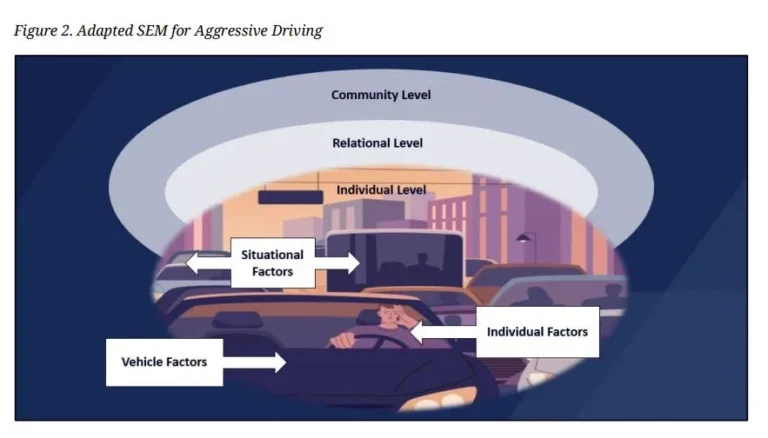
The study identified several levels of influence that help explain why drivers engage in aggressive behavior:
- Individual level: knowledge, skills, personal attitudes.
- Relational level: influence from family, friends, and social networks.
- Community level: the built and social environment.
In addition, the report emphasizes that aggressive driving isn’t always driven solely by anger. Emotions such as fear and anxiety also play a significant role. One act of aggression can trigger fear in another driver, who then responds with similarly aggressive behavior. In short, road rage behaves like a contagious phenomenon, quickly spreading across roadways and reinforcing a dangerous, reactive driving culture.

92% of drivers engage in road rage
Among the key findings of the study, 92% of drivers surveyed admitted to engaging in aggressive behaviors that endanger traffic safety. These actions include speeding, cutting off other vehicles, failing to use turn signals, tailgating, frequent horn use, and more.
But the numbers don’t stop there. AAA also reported that 11% of respondents admitted to violent behaviors behind the wheel, such as intentionally ramming another vehicle or physically confronting another driver, escalating road rage to a level rarely documented before.
The study also found that the type of vehicle driven influences driver behavior. In other words, the car one drives can be an indicator of both how they behave on the road and how they are perceived by others. Notably, drivers of sports cars, large trucks, and motorcycles are often seen as more aggressive. This perception was confirmed by testimonies from drivers who said they feel more powerful and dominant when driving these types of vehicles.
AAA’s top three tips for managing road rage
Road rage is spreading at an alarming rate, making it urgent to implement effective measures to mitigate its impact. In the meantime, each driver has a personal responsibility to manage their emotions and minimize any displays of aggression behind the wheel. To help with this, AAA offers the following recommendations:
- Breathe before you react: a deep breath can reset your mood behind the wheel.
- Don’t take the bait: ignore and avoid aggressive drivers.
- Choose time over tension: leave early, keep your distance, and arrive safely.

Volvo Pushes Beyond Diesel with New Hydrogen Combustion Truck Trials
Volvo Trucks is once again taking the lead, beginning road tests with heavy trucks equipped with hydrogen combustion engines.

Trucker Fashion: A Revolution Born on the Road That Still Sets the Trend
Trucker fashion remains relevant due to its authenticity, its seamless integration into streetwear, and its reinterpretation by luxury brands, consolidating itself as a revolution born on the road that evolved from a work uniform into a global cultural symbol

North Dakota among states regaining non-domiciled CDL authority
North Dakota will reissue approximately 150 of the 526 CDLs and CLPs for non-resident drivers that were active during the FMCSA audit.

The Growing Threat of Chameleon Fleets
A CBS ‘60 Minutes’ investigation exposes the rise of ‘Chameleon Fleets’ in the U.S. trucking industry.

US transportation begins to show signs of recovery
With tonnage at record levels and rates on the rise, carriers are leading the expansion of the logistics market. If the forecasts hold true, years of uncertainty could be over.

Trump Administration Restarts California Pipeline to Lower Gasoline Prices
Under Trump, the restart of the Santa Ynez Pipeline aims to boost local crude supply and impact gasoline prices amid persistently high energy costs in California.
All content and original artwork, unless otherwise noted, is protected by copyright. Saint George uses certain images under license from various licensing vendors for this purpose. Any unauthorized commercial reproduction or distribution of copyrighted materials is prohibited.